admin
admin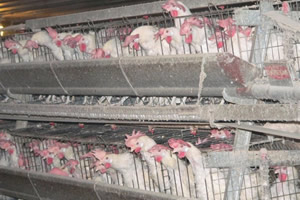
prolonged power cuts or disconnections, a report by the Agricultural Industry has revealed.
Stakeholders in the agricultural industry recently met over the escalating Zesa power cuts and disconnections, which they deemed harmful to agriculture.
They came up with the report during their deliberations.
The report, that has since been handed over to the Minister of Agriculture, Mechanisation and Irrigation Development, Joseph Made also revealed that chicken mortality had shot up with every 24-hour outage causing the death of 700 chickens out of every 10 000 birds. Power cuts, said the report, had caused 12 percent to 25 percent increase in production costs linked to buying, installation, running, maintaining and servicing of generators.
Poultry producers have also faced an increase in power tariffs, which they say was supposed to be accompanied by an improvement in supplies.
The report states that due to the prolonged power cuts, there has been a disruption of water supply causing reduced feed intake, dehydration, weight loss and eventually death of chickens.
“There has been a decrease in productivity on layer flocks and breeding units as a result of insufficient light hours especially during winter.
“Abattoirs are experiencing live weight losses of 0,25 percent for every hour of delay in slaughter of chickens when not feeding or drinking while in trucks. More than 30 minutes of disruption in slaughter leads to losses,” read part of the report.
It also stated that an hour’s disruption demanded an additional hour for warming up and this would result in overtime costs while fluctuating voltages caused motor and conductor burn outs and production downtime triggering losses. Capacity utilisation of 30 percent is being lost because of the risk associated with power cuts.
Additionally, the report highlights that power cuts are creating an artificial shortage of chicken products paving the way for imports — something that negatively impacts on agriculture, foreign currency generation and the economy at large.
Power cuts have also been blamed for the increase in production costs that unfortunately cannot be passed on to consumers due to stiff competition from imports on the market.
The Agricultural Industry appealed to Government to direct Zesa to stop disconnecting farmers with immediate effect and to do a forensic audit of Zesa bills on the agricultural sector.
“Zesa must immediately reinstate the 55 percent agricultural sector concession of the approved Zesa tariff rate as prior to 2009 and also remove the 15 percent
value added tax and six percent rural electrification levy on farmers,” read the report. The sector also recommended that Zesa institute a stop-order payment
system for farmers while making the necessary effort to repair power transmission, measuring instruments and any other related infrastructure in the farming areas. Lastly, the stakeholders also demanded that Zesa provide the correct size of transformers, metres, accounts and charge actual consumption instead of relying on estimates.
Many farmers have been left stranded after the power utility disconnected their electricity over unpaid bills — a situation that has done more harm than good to the industry and ultimately the entire economy.



 Online Reporter