Online Reporter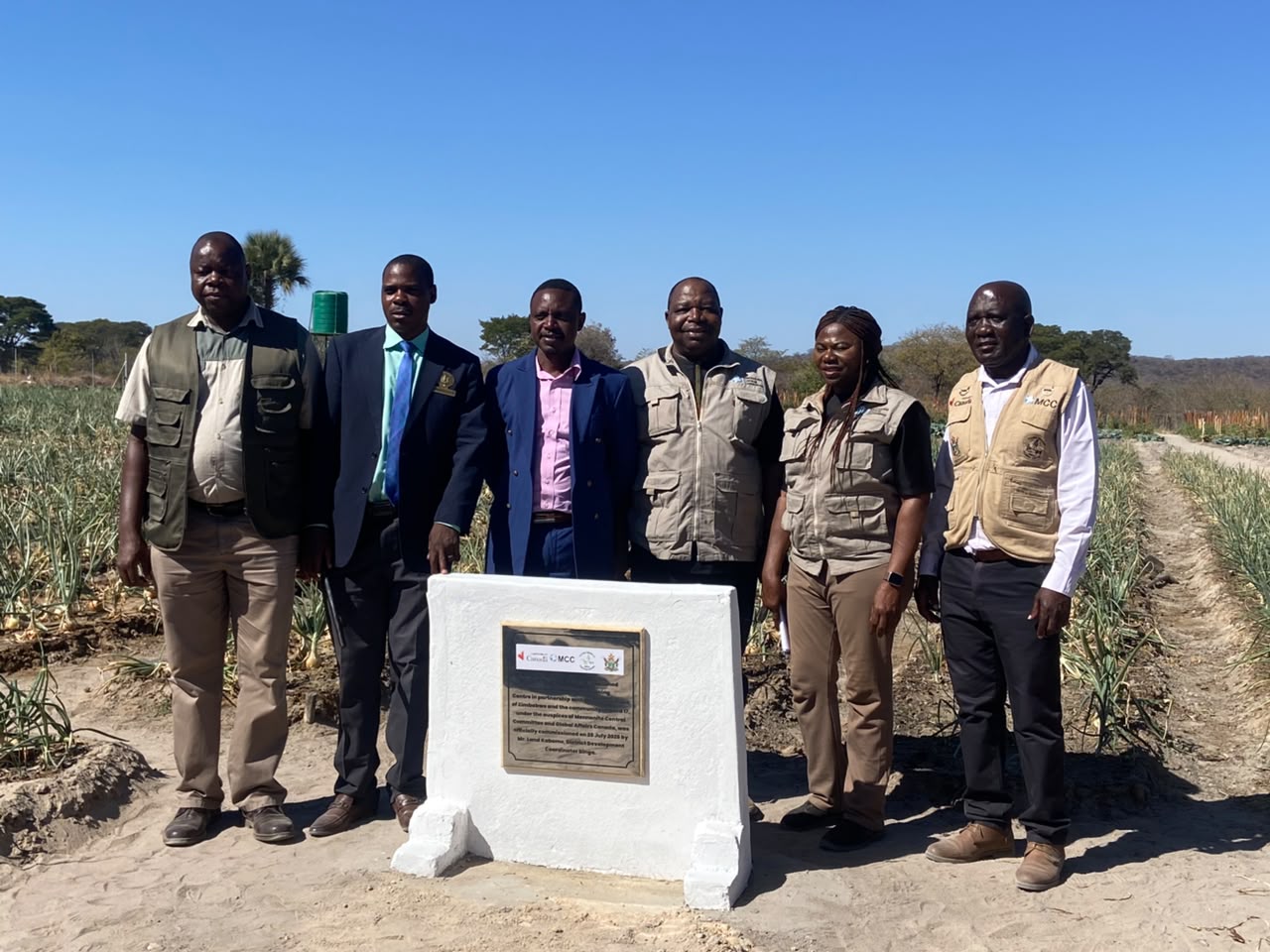
Rutendo Nyeve recently in Binga
THE Government in partnership with the Mennonite Central Committee (MCC), and Kulima Mbobumi Training Centre (KMTC) has embarked on a climate resilience and sustainable development programme that has seen the restoration of more than four critical wetlands that has seen hundreds of households in Binga now enjoying improved food security and livelihoods through wetlands community gardens.
This comes as Zimbabwe chairs the Ramsar Convention on Wetlands, demonstrating the country’s commitment to wetland conservation and sustainable management.
Dubbed the Locally-Led Indigenous Nature-Based Solutions for Climate Change Adaptation in Zimbabwe (LINCZ), the project has breathed new life into the district’s wetlands.
The transformation comes after years of unsustainable farming practices that saw villagers cultivating crops directly within wetlands, leading to the degradation and drying up of these vital ecosystems due to lack of knowledge on proper wetland management.
The commissioning of the Teteni Wetland Garden on Tuesday by Binga District Development Coordinator (DDC) marked a significant milestone in this transformation journey.
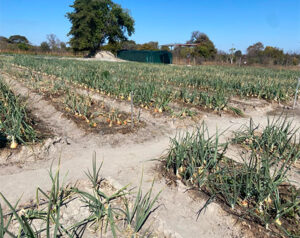
The event celebrated the restoration of what were once a degraded wetlands into thriving community assets that now supports hundreds of households.
Beneficiaries of the project have expressed profound gratitude for the intervention, sharing stories of transformation that go beyond mere food security.
Mrs Lethiwe Ncube (47), a mother of four from Ward 17, recounted how she and other community members had long-established gardens within wetlands, which proved unsustainable and contributed to their drying up.
“Before this project, we would cultivate directly in the wetlands, not knowing we were destroying the very source of our livelihood. Many wetlands were drying up, and we faced severe water shortages,” said Mrs Ncube.
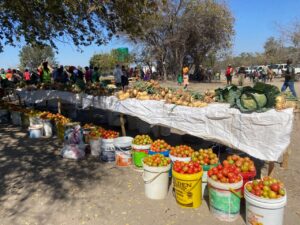
“Today, we have clean water to drink, our livestock have water, and we are food secure. From our produce which includes onions, butternuts, tomatoes and cabbages, I can now pay school fees for my children and develop my homestead,” she said.
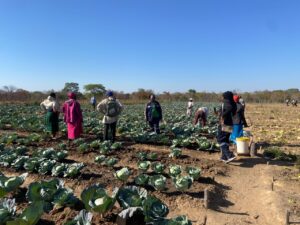
Ms Maggie Mukuki (54) echoed similar sentiments, saying the community gardens have provided a sustainable alternative to wetland cultivation.
Ms Belita Mugande and Mr Jerry Muleya also shared their success stories, highlighting how the project has not only restored the environment but also created economic opportunities for families.
Speaking at the commissioning ceremony, Binga DDC who was represented by Mr Orders Munsaka commended the collaborative efforts that have made the project a success.
“Through continued collaboration between Government, development partners, and communities, we can build stronger, more resilient, and more prosperous rural communities across Zimbabwe,” Mr Munsaka said.
The project has so far restored four wetlands and established four small irrigation schemes of 1.3 hectares each at Manjolo (Ward 7), Zyakamana (Ward 12), Kabuba (Ward 17), and Siadindi (Ward 25).
Other restored wetlands and established community gardens include Kamaziyo, Mandimoni and Dumbwe.
MCC Country Director Dr Gopar Tapkida explained the rationale behind the intervention, emphasising the importance of providing alternatives to wetland cultivation.
“We in MCC work in many countries and Zimbabwe is one of the countries that we are involved in. MCC does not have a programme of itself in any country. We try to complement the work of the Government in every country,” said Dr Tapkida.
“We look at areas of need and that’s where you find us in places where there are greater needs. Binga happens to be one of the driest areas affected by drought, so it is very proper that we should be working here.”
Dr Tapkida said the Government is very much interested in wetland management and actually chairs the wetland conventions globally.
“This particular wetland, we know that before where we are right now, there were people operating in the wetlands. The Government is also making the effort to move people out of wetlands. But what we discovered is that there were people growing gardens in the wetlands and if we remove them without providing alternatives, the question of sustainability will come in. People will go back into the wetlands,” he said.
“So we have to make a provision and that’s why we collaborated with KMTC to come out with making the alternative for the community.”
He said while about 20 people were working in the wetland before, moving them out and making this provision is now serving an even greater number, about 60 people benefiting from the decision to move out of the wetland.
KMTC Manager Mr Phenious Mpande provided an overview of the LINCZ programme.
“The LINCZ project is community-driven and strengthens the resilience of vulnerable communities to Climate Change by promoting sustainable livelihoods, environmental conservation and the use of Indigenous Knowledge Systems,” said Mpande.
The project, funded by Global Affairs Canada and MCC, has been operational in three districts, Binga, Gwanda and Mwenezi since October 2024.