Chronicle Editor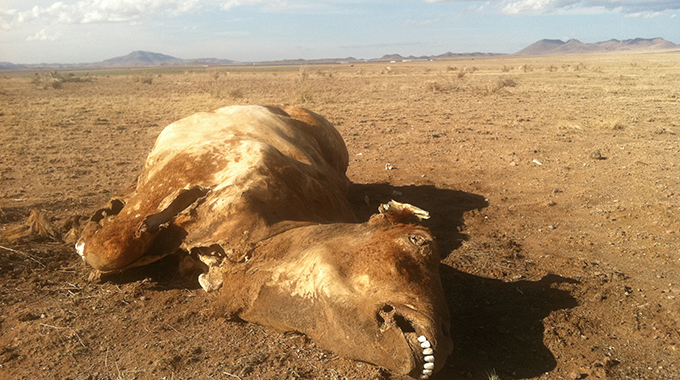
Patrick Chitumba, [email protected]
GOVERNMENT has urged livestock farmers across the country to remain vigilant in the control of animal movements as this is the main driver of tick-borne diseases such as January disease, particularly during the wet season when ticks are at their peak breeding period.
Farmers were also advised to intensify dipping their livestock and applying tick grease as a prevention measures against theileriosis, better known as the January disease.
More than 130 cattle in the Midlands province have this year succumbed to theileriosis with Shurugwi district being the worst affected.
Theileriosis is caused by a parasite (theileria parva) found in the blood which is transmitted among cattle by ticks.
The disease is responsible for huge economic losses in cattle assets and farm savings in Zimbabwe as they account for over 60 percent of cattle deaths in the country.
Signs of an animal affected by January disease include swelling of the lymph nodes under the ears and on the shoulder, cloudiness of the eyes and difficulty in breathing with froth from the nose and mouth.
The affected animal collapses and dies within a few days.
The hallmark in the control of theileriosis, like all other tick-borne diseases, is to control the tick vector.
Government, which has set a target of increasing the national herd from the current figure of 5,6 million to 11 million by 2030, is rolling out several initiatives aimed at consolidating current strides.
The Presidential Tick Grease Scheme was launched in 2020 under the Livestock Recovery and Growth Plan and to date, more than one million households have benefited.
The blitz tick-grease programme under the Presidential Input Scheme, has been running for the past two seasons as a back-up to conventional dipping and has been a game-changer in the fight against January disease.
Besides the tick grease programme, Government is also targeting to construct more than 5 000 dip tanks across the country. Last year, several dip tanks were rehabilitated to enable farmers to dip their cattle to curb the spread of tick-borne diseases.
The combination of the dipping programme and the tick grease produced great results, with a 47 percent reduction in tick-borne cattle deaths recorded 2021 when compared to 2020.
The Livestock Growth Plan is part of the Agriculture Food Systems Transformation Strategy which seeks to achieve a US$8,2 billion agriculture economy by 2025 to ensure the attainment of Vision 2030.
During the wet season, animals are susceptible to many challenges, and if a farmer is not careful, they may be killed by various diseases including tick-borne diseases.
January disease is common between December and March and is spread through the bite by an infected brown ear-tick.
Statistics show that over 500 000 cattle succumbed to tick-borne diseases from 2016 to date leading to the decline of the national herd.
Government has also manufactured tick-borne disease vaccines which are expected to save and boost livestock production in the country. The move will help to contain tick-borne diseases that have depleted the national herd.
In the Midlands province, farmers have expressed gratitude to the Government for the Presidential Tick Grease Blitz Programme, which is proving to be a game changer in saving their livestock from the ravaging January disease and other related tick-borne diseases.
Ms Kudzai Katiyo of Fig Tree 8 Farm which is now popularly known as the WeUmambo Centre of Excellence, which is located in Somabula, said they have been on the lookout for ticks through embracing the Presidential Tick Grease Blitz Programme.
“We want to thank President Mnangagwa for launching the Presidential Blitz Tick Grease Programme which is assisting us in fighting ticks. From this programme we have seen a decrease in the death of cattle due to January disease,” she said.
Ms Nancy Sithole from Mberengwa said her cattle have been increasing in number since embracing the tick grease programme.
“Unlike in the past, I am benefiting a lot because now I can send my children to school. In the past, I would lose my cattle due to tick-borne diseases,” she said.
“I am so grateful to Government for launching this programme which is being implemented by the Veterinary Services. We have a routine from the Veterinary Service we are following to make sure that our cattle are always protected from ticks and we are very happy.”
Another farmer, Mr Garikayi Chikwata from Somabula implored fellow cattle farmers to regularly dip their animals to protect their herds.
“I was one of the farmers who lost their cattle to January disease. However, Government has been assisting us with the tick grease and this has resulted in tick-borne related diseases declining,” he said.
Midlands provincial veterinary officer, Dr Martin Sibanda said there is a need for farmers to maintain healthy herds and boost livestock production.
“Farmers are being urged to intensify dipping and application of tick grease to their livestock as a prevention measure against theileriosis. There will be a rise in tick populations due to increased rainfall and therefore the need to constantly dip the cattle and also use tick grease,” he said.
While the country is predicted to receive below-normal rainfall, Government has said efforts to scale up livestock and crop production should not be affected.



 Online Reporter