

 Chronicle Editor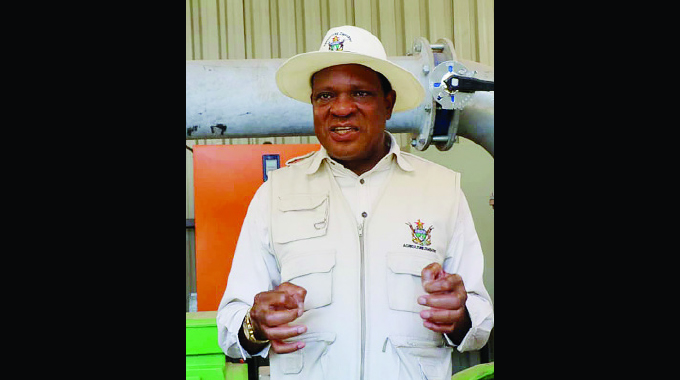
Thandeka Moyo-Ndlovu, [email protected]
THE Bulawayo Water Technical Committee has submitted a report to the Ministry of Lands, Agriculture, Fisheries, Water and Rural Development, a document that will guide the local authority in terms of implementing projects aimed at improving the city’s water supply and sanitation services.
President Mnangagwa recently approved the appointment of a 20-member Bulawayo Water Technical Committee to oversee the rapid improvement of water and sanitation services in the city over 100 days.
The committee is chaired by the former chairperson and dean of the faculty of engineering at the National University of Science and Technology (Nust), Dr Annatoria Chinyama.
Members are drawn from the Ministry of Lands, Agriculture, Fisheries, Water and Rural Development, water engineers from the Zimbabwe National Water Authority (Zinwa), Bulawayo City Council (BCC), public health practitioners, the Environment Management Agency (EMA) and members of the academia.
The terms of reference of the technical team on Bulawayo Water and Sanitation Services is to ensure improvements and rehabilitation of the Umzingwane Dam booster station, including transformer upgrade to increase delivery of water from current 125 megalitres per day to 175 megalitres per day.
The task also includes the upgrade of the 2,8km 110 mm PVC pipeline in Cowdray Park water mainline to 315mm PVC pipeline so that all the 25 000 households in Cowdray Park get water at the right pressure.
Another task of the committee is to ensure the sustainable operation of the Nyamandlovu Aquifer Water Supply system to constantly supply 16 megalitres per day.
Last week, Lands, Agriculture, Fisheries, Water and Rural Development Minister Anxious Masuka met the committee in Bulawayo during which he directed it to submit a technical plan within seven days on the Glass Block Dam progress among other interventions to ease the prevailing water crisis in the city.
Glass Block Dam is a proposed reservoir on the Umzingwane River with a capacity of 14 million cubic metres. The construction works of the Glass Block Dam, which includes a 41km pipeline connecting to the Lower Ncema Dam, would take 30 months to complete.
BCC working in partnership with private investors has proposed to construct the dam as an alternative water source, adding to the city’s six supply dams-Inyankuni, Mtshabezi, Insiza, Lower Ncema, Umzingwane, and Upper Ncema.
Insiza Dam was the last to be constructed in 1975 just a year after the construction of the Upper Ncema Dam.
Inyankuni, the city’s largest dam with a carrying capacity of 80 million cubic metres, was constructed in 1965. Umzingwane was built in 1956 with Lower Ncema the city’s oldest dam having been constructed in 1943.
In an interview yesterday, Engineer Chinyama said the committee had submitted the report to Dr Masuka. The document contains detailed plans on how the committee would implement projects to ease water woes, including the Glass Block Dam.
“Today marks seven days since we were tasked to submit a technical report to the minister outlining our strategies on how we would implement projects to ease water and sanitation problems in Bulawayo. Besides the Glass Block Dam and other measures, we are also working on improving sanitation to avert the cholera outbreak which is being experienced in other parts of the country,” she said.
Eng Chinyama said they will meet as a committee next month to track progress on issues revolving around tackling Bulawayo’s sanitation and water woes.
Government has availed $7 billion and a borehole drilling rig for Bulawayo as part of short to medium-term interventions to address the city’s perennial water challenges while pushing the Lake Gwayi-Shangani project, which is expected to start pumping water to the city next year.
The money will be channelled towards repairing broken-down boreholes at the Nyamandlovu Aquifer to ensure that 16 megalitres of water are pumped per day.
The funds will also be used to rehabilitate the city’s pump stations and leaking pipes as Bulawayo is losing huge volumes of treated water.
Bulawayo residents continue to endure prolonged water cuts, sometimes more than a week in some suburbs, at a time when some parts of the country are experiencing an outbreak of cholera and diarrhoea.
The situation is worsened by the vandalism of transformers and boreholes at Epping Forest and Nyamandlovu, which reduced the pumping capacity from 20 ML to 4 ML a day. This has affected 60 000 residents who rely on water from the aquifer.
The vandalism of electricity and water infrastructure has been described as a national security threat and in 2022, Government set up an inter-ministerial committee to find a lasting solution to the issue.
The committee is composed of representatives from the ministries of Lands, Agriculture, Fisheries, Water and Rural Development, Energy and Power Development, Local Government and Public Works and Home Affairs and Cultural Heritage as well as the Bulawayo Provincial Affairs and Devolution Minister Judith Ncube.
While the completion of the Lake Gwayi-Shangani is expected to bring a lasting solution to Bulawayo’s water woes, Government has been pumping resources to rehabilitate boreholes at the Nyamandlovu Aquifer to augment bulk water supplies from dams, which continue to receive inadequate inflows due to poor rains.


 Bongani Ndlovu
 Online Reporter