Chronicle Editor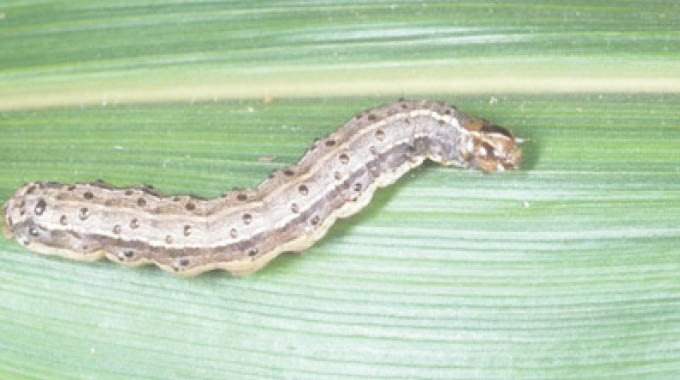
Judith Phiri, Business Reporter
THE Ministry of Lands, Agriculture, Fisheries, Water and Rural Development has urged farmers to carry out early scouting for pests in their fields to avoid crop losses.
Pests and diseases have been a threat to summer subsistence crops in Zimbabwe for years. If not controlled adequately, they can result in huge losses through reduced yields for the farmers.
Responding to questions from Sunday News Business, Migratory Pests and Biosecurity Control (MPBC) acting director Mr Shingirai Nyamutukwa said farmers should take note of early damage signs.
“Farmers should carry out early scouting for pests in their fields especially for armyworms (African and Fall). They should take note of early damage signs like windowing, shot-holes and skeletonised leaves.
“Early scouting is important for early control thus minimising impact on yield loss. Other pests to be scouted include white grubs that damage young cereal crop roots underground, hence soil drench with carbaryl treats this problem,” said Mr Nyamutukwa.
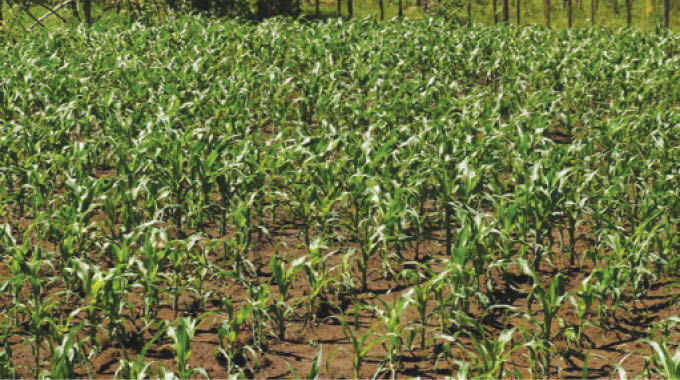
He said birds such as doves and guinea fowls were also becoming a problem on germinating maize and called on farmers to practice bird scaring.
Mr Nyamutukwa said farmers should also watch out for armoured crickets as they are a problem in maize, sorghum and millet and there was a need to control them with carbaryl.
He added: “For control of African Armyworm, the Government is responsible for procurement of chemicals to control the pest so farmers are encouraged to report early any outbreaks of pests. They should also consider the abundance of natural enemies of pests (farmer’s friends) before applying chemicals.”
Mr Nyamutukwa said these farmer’s friends include ants, praying mantis, assassin bugs, chameleons and wasps.
He said conservation of farmer’s friends was important as this reduces reliance on synthetic insecticides while reducing impact on human health and also being environmentally friendly.
“Chemicals should be sprayed against Fall armyworm when infestation levels reach 20 percent and above. The environmental conditions are favourable for pest outbreaks in 2023 and farmers should be always on the lookout for pests and report any outbreaks to the MPBC.”
According to recent updates from the Department of Migratory Pests Control, 700 kilogramme of carbaryl is currently on stand-by in case of outbreaks.

For now, the country has not recorded any major pest outbreaks save for moth catches that have been recorded in Mazowe, Chisumbanje, Banket and Beatrice. Close monitoring of the new crop is ongoing to ensure outbreaks, if any, are controlled before they spiral out of control.
Recently in an interview, Lands, Agriculture, Fisheries, Water and Rural Development chief director for Agriculture Advisory Services Professor Obert Jiri indicated that the African Fall armyworm update showed that reports received indicated low moth catches below threshold level for outbreak.
“The maize crop is still at its vulnerable vegetative stage hence frequent scouting is advised. Quelea bird breeding sites under monitoring for any huge population that may warrant control, while there is termite control in Mashonaland Central Gwese Agritex office.”
Prof Jiri said there was a meeting with the International Institute of Tropical Agriculture (IITA) representative for a Fall armyworm training as a follow up to previous trainings done with the Department.
Zimbabwe’s agriculture sector is forecast to register strong positive performance during the 2022/23 cropping season, backed by an anticipated above-average rainfall.



 Online Reporter