Online Reporter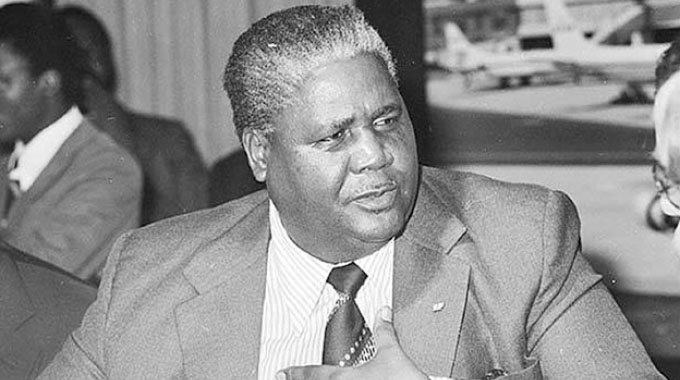
Elliot Ziwira
THE desire for unity was alive in both ZANU, led by the late former President Robert Mugabe, and PF-ZAPU under the late Vice- President Dr Joshua Nkomo.
Rooted in a shared understanding of collective struggle, this desire eventually culminated in the signing of the Unity Accord — an outcome that demanded far more than political will.
It required sustained dedication from both parties, their representatives and mediators from October 2, 1985, culminating in the peace Zimbabweans enjoy today. Then Prime Minister Mugabe and Dr Nkomo met 10 times between October 1985 and December 1987, with the final meeting held on December 10 at Parliament Building, ahead of the signing of the Unity Accord on December 22.
As enshrined in its preamble, both ZANU and PF-ZAPU were “cognisant of the fact that the two parties jointly command the support of the overwhelming majority of the people of Zimbabwe as evidenced by the general election results of 1980 and 1985, respectively.”
They were further “convinced that national unity, political stability, peace, law and order, social and economic development can only be achieved to their fullest under conditions of peace and the unity primarily of ZANU-PF and PF-ZAPU.”
For unity to be effective in achieving these objectives, it had to be driven from the political front. As the late Burkinabe revolutionary Thomas Sankara observed, revolutionaries may die, but their ideas and legacies endure.
So, it is with the signatories to the Unity Accord of 1987 — the late former President Mugabe and the late Vice-President Dr Nkomo. Their contributions merit reflection in their own right.
In this instalment, we track Dr Nkomo’s role in the liberation of Zimbabwe, his selfless devotion to unity, and his lifelong insistence on nationhood over division.
Affectionately known as Father Zimbabwe, Chibwechitedza, uMdala Wethu, Dr Nkomo’s words on unity, colonial injustice and struggle remain instructive.
After the signing of the Unity Accord, his reflections captured unity as a process rather than an event. Signatures, he said, were “the beginning of unity” and not its culmination, for “unity is not just the signing of documents, unity is what follows.”
Unity, therefore, was a commitment transcending individuals. Leaders were merely signatories whose selflessness served the collective —both present and future. This belief defined Dr Nkomo’s political life, spanning more than three decades of resistance against colonial injustice in pursuit of dignity for the black majority in Rhodesia.
Throughout the struggle, he never wavered in underscoring unity as the essence of freedom. Addressing 5 000 people at a nationalist meeting in Mufakose, Salisbury, on October 12, 1963, he declared:
“We have come here today because of the call of our land.
“You are part of a great struggle to free a great continent, and now you have a duty to free Zimbabwe. We are coming to the end of that struggle.
“With only two or three months left, we must prepare and see to it there is unity everywhere” (The Sunday Mail, October 13, 1963).
Nearly two decades later, at a rally in Victoria Falls on October 16, 1982, he reiterated the same creed: “People of Zimbabwe are one and there is no Shona or Ndebele, but there is one Zimbabwe” (The Sunday Mail, October 17, 1982).
In Geneva, Switzerland, in October 1976, Dr Nkomo told journalist Denis Sargent that the Patriotic Front was there to stay, as the two liberation movements were “fighting to build a nation of people, not of tribes or nations, or colours.”
Reflecting on its permanence of purpose, he said: “In the few weeks of its existence, it appears we are getting closer and closer. Much more understanding is developing between us.
“We are working for harmony. It is very important for the two liberation movements with some sort of armies to harmonise to avoid the possibility of a clash.”
He warned that failure to harmonise could spell disaster, adding: “If these young people can be turned into a regular force to defend the independence of their country that they had been fighting to achieve, it could save the country from the horrors of civil war.”
On the future, particularly the anxieties of whites, uMdala Wethu was unequivocal: “People are worrying about what sort of future there will be for them, in particular people of white descent.
“They look at the future and think the African leaders, particularly those of the liberation movements, would like to see whites wiped out. This is completely mistaken.”
He stressed that the struggle was never racial revenge.
“No one is fighting white people as white people. I have struggled almost 30 years to remove an evil —the separation of people by races,” he said. “I could not at the end of it find myself applying what I was fighting against.”
He affirmed citizenship and human rights as the bedrock of the new nation.
“We regard people as people . . . Those of our white friends who decided to make that country their home, are just as much citizens as anyone else. The future we are fighting for is a future of respect for human rights,” said Father Zimbabwe.
Still in Geneva, he sent a message to Zimbabweans on October 24, 1976, stating:
“We have come here to do a job that will sort out the injustices we have been fighting for years . . . to work out a constitution that will give the people of Zimbabwe the right to choose their own government.
“The struggle nor the dangers are yet over. But we are at the beginning of the end of the problem” (Rhodesia Herald, October 25, 1976).
Conscious of sacrifice as central to nation-building, during unity talks on March 14, 1987, Dr Nkomo told journalists:
“We are doing everything in our power to achieve unity and we believe we shall achieve it. If unity fails, we must give an account of why it failed. But when you bring groups of people together, they must be prepared to forgo some of their rights.
“This happens if our unity is to be meaningful. This must apply to both sides.”
In 1988, he observed: “The first struggle, that of liberation, is over and now we are faced with the struggle to create a nation and for development to eliminate the problems that have faced us for almost 100 years.”
Speaking to The Herald on September 27, 1988, he cautioned that independence without unity was hollow:
“Although we are independent, we are not fully free . . . It would be terrible . . . if we used the weapons we got to free our country against each other.
“We must unite and be an example.”
Earlier, on February 16, 1980, addressing 5 000 people at Mandava Stadium in Zvishavane, Dr Nkomo urged citizens not to fear choosing leaders aligned with their aspirations.
“This country wasn’t freed just by men with guns . . .
“It was a combination of all of you. You must now combine to give a reasonable Government that will see to it that this country is peaceful,” he said.
He warned against division, saying: “There are stories going around that this country is going to be divided. It must not be divided, and all leaders must warn their followers against this sort of thing.
“Our primary task is to create one nation. All those fighters in unmarked graves died to liberate all of Zimbabwe as a single nation.”
Opening the Nkayi District Council, Dr Nkomo reminded councillors that leadership was service.
“Councillors are there for the benefit of the people . . . No country is without problems . . . We must all work to solve the problems as they come” (The Herald, March 30, 1981), Father Zimbabwe stressed.
On land resettlement, he called for patience and responsibility: “When you eventually get your land, make sure you know how to use it. We do not want to see this country turned into a desert” (The Herald, March 30, 1981).
Dr Joshua Nkomo’s vision of unity was never episodic. It was philosophical, moral and practical — anchored in sacrifice, inclusivity and the belief that Zimbabwe could only endure as one people, one nation.