Online Reporter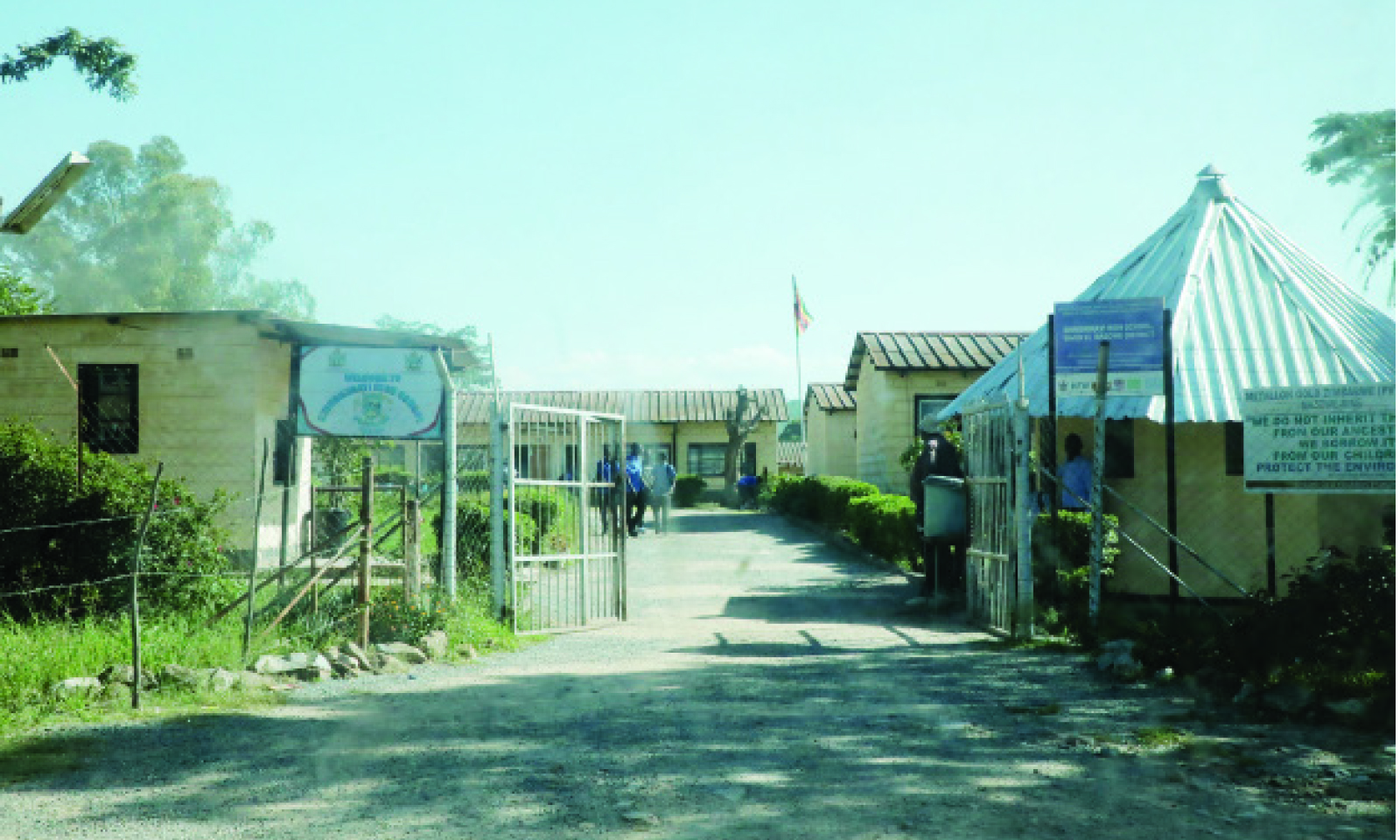
Fatima Bulla-Musakwa
LOCATED at the heart of Jumbo Mine in Mazowe district, Mashonaland Central province, Shingirirayi Secondary School falls in an area marked by eventful small-scale mining activities.
Officially opened in 1987, the school’s sphere of influence covers several mining villages.
The institution provides a lifeline to over 400 learners and teachers, as there is no other secondary school nearby.
But there are growing concerns the school faces imminent collapse due to encroaching small-scale mining activities.
A report produced following investigations by the Mashonaland Central province mines and explosives inspectorate last month revealed that teachers’ houses and roads close to the school are seriously affected by the activities.
However, the greatest danger is presented by underground excavations from previous operations.
The environment was also considered “to be not pleasant for learners, who are exposed to dust, blasts from explosives and noise from the machinery”.
The inspectorate recommended the immediate evacuation of learners and teachers.
“In view of the above, and in the interest of safety and health of learners at the school and promotion of environmental protection best practices, the inspectorate recommends relocation of the school,” reads part of the report.
Among the experts to whom the report was copied are the chief Government mining engineer, deputy chief Government mining engineer, the provincial education director and the general manager of Mazowe Mine.
Director of communications and advocacy in the Ministry of Primary and Secondary Education Mr Taungana Ndoro said they had engaged the Ministry of Mines and Mining Development, the Environmental Management Agency (EMA), and council and community leaders to assess the situation.
Immediate steps to safeguard the school, he said, included collaborating with the Department of Civil Protection and local stakeholders to evaluate the feasibility of temporarily or permanently relocating the school.
Also, the ministry is looking into implementing emergency evacuation drills, infrastructure reinforcements, air quality monitoring and engaging directly with mining companies to enforce buffer zones, reduce blasting impacts and ensure adherence to environmental regulations.
“A task force comprising education, mining and environmental experts to oversee these interventions is also being mooted,” said Mr Ndoro.
“The ministry recognises that this challenge extends beyond Shingirirayi Secondary School. To protect schools nationwide, we are establishing clear guidelines for siting schools away from high-risk zones and reviewing existing infrastructure in mining areas.”
Also, in the pipeline is a partnership with the Ministries of Mines and Mining Development; Environment, Climate and Wildlife; Local Government and Public Works; and National Housing and Social Amenities to enforce stricter oversight of mining permits near schools.
There were also plans to train school development committees and local leaders to report hazards promptly.
Additionally, relevant statutes need to be amended to include stringent protections for schools in environmentally sensitive areas.
“We urge mining operators, communities and policymakers to join us in prioritising education and child welfare above all else. Updates on Shingirirayi Secondary School and broader interventions will be shared transparently as developments unfold,” he said. EMA spokesperson Mrs Amkela Sidange encouraged mining companies to adopt responsible mining, which does not harm the environment.
“In cases where there is dust, we encourage mining corporations to apply dust-suppressing measures,” she said.
The village head, Mr Tungamirai Phiri, said previous engagements with stakeholders such as the Ministries of Primary and Secondary Education; Mines and Mining Development; Zimbabwe Republic Police; the school’s head; and EMA had resolved to close shafts close to the railway line.
“Relocating to a recreational facility is nowhere near a solution since it’s already degraded ground,” said Mr Phiri.
“Village heads, together with our councillor and chief, do not second relocation but rather spearhead for perimeter wall construction, water and energy supply, humps construction and an awareness campaign as a measure to reduce school dropouts.”
The case of Shingirirayi Secondary School is not the first to be red-flagged.
In 2023, the Government shut down Globe and Phoenix Primary School in Kwekwe, Midlands province, after 18 learners were injured when a classroom floor collapsed into an underground mining shaft.
About 1 500 learners were affected by the incident, with some falling into the shaft while others escaped through windows as the floor caved in.
According to research, apart from mining hazards such as ground collapse, fault reactivation and fissures, mine water rebound, acid mine water drainage and combustion, health concerns also include inhaling dust and fine particles from blasting and drilling processes.
This causes respiratory diseases such as silicosis or pneumoconiosis.
Lack of ear protection to filter noise from equipment such as drills or crushers can cause temporary or permanent hearing loss and speech interference.