

 Online Reporter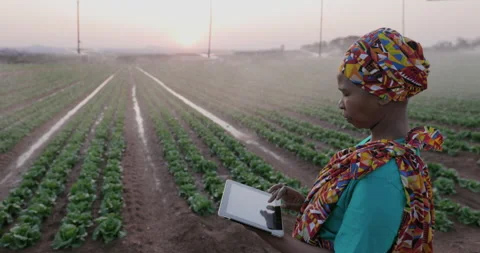
Agriculture Reporter
MORE than 77 600 female farmers are participating in Farmer Field Schools (FFS) in Matabeleland as part of Government efforts to increase agricultural productivity and ensure household food and nutrition security.
Farmer field schools are targeted at enhancing agricultural education and promoting sustainable farming practices.
Training will be provided to farmers by extension officers through field visits, demonstrations, experiments and group discussions.
The concept is inherently participatory and farmer-centred, focusing on demand-driven solutions that address local agricultural issues.
This methodology has empowered a lot of farmers, particularly women, allowing them to take active roles in enhancing agricultural productivity.
According to the Agricultural Rural Development Advisory Services (ARDAS) update, as at January 26, 762 627 individuals countrywide had participated in FFS nationally and of these 100 596 are from Matabeleland.
In Matabeleland North, 47 956 farmers comprising 29 332 females and 18 624 participated, while 48 360 (4 280 males and 48 360 female) farmers were from Matabeleland South.
Field schools have been set for crops, including cotton and livestock.
Farmer field schools teach farmers essential skills in organic fertiliser manufacturing and sustainable practices to combat climate change, promoting smarter agricultural methods.
The Ministry of Lands, Agriculture, Fisheries, Water and Rural Development is, through this initiative, promoting smart agricultural practices and aims to boost food security and nutrition at the household level, particularly targeting vulnerable households, where many active participants are women.
A farmer field school operates as a collaborative learning process, enabling participants to conduct experimental activities that deepen their understanding of their farming ecology.
Through simple experiments and group analysis, farmers learn to make informed decisions about their agricultural practices, moving away from the generalised recommendations imposed by outsiders.
Government targets to establish 35 000 field schools – one in each village – to enhance agricultural extension services and transform traditional crop production.
In collaboration with the Agricultural Advisory and Rural Development Service, Farmer Field Schools are also being established at the ward level.
The effectiveness of this training have been evident in personal success stories shared by participants.



