admin
admin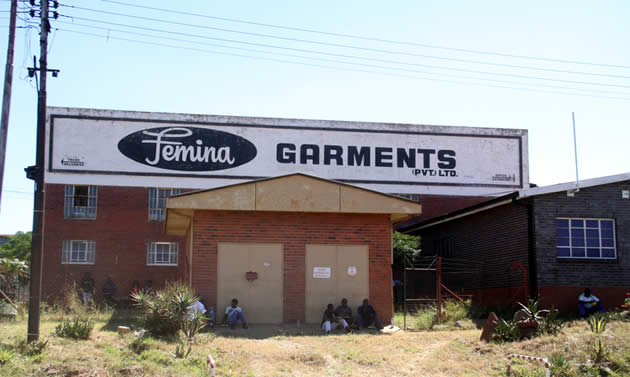
Oliver Kazunga Senior Business Reporter—
BULAWAYO clothing manufacturer, Femina Garments, requires $250,000 working capital to increase capacity utilisation to competitive levels. The company’s managing director, Julic Bonett, told Business Chronicle in an interview yesterday that currently Femina was operating at less than 65 percent.
As a result of the severe liquidity crunch in the economy and an influx of cheap imports among other challenges, the manufacturing sector has been saddled with operational constraints with firms in Bulawayo being the hardest hit.
“Like any other company, we are faced with operational constraints as a result of the economic challenges facing the country.
“If we are to recapitalise, we need about $250,000. Our machines are old but very good and solid,” she said.
At the moment the clothing firm employs 120 workers.
Said Bonett: “We do not intend to replace the manually operated sewing machines that we have with electronic machines because that will result in job losses. If we secure working capital, the money will be used to meet other production costs at the factory”.
Femina specialises in the production of women’s wear and a special range of corporate wear.
“At the moment, we are not exporting. It is difficult for us to penetrate the export markets in Europe and countries such as South Africa as they require big orders. For example, if we are to export to Europe that market places orders of 30,000 units per day and we do not have the capacity to meet that demand as we are producing 500 units a day,” Bonett said.
She said since the adoption of multicurrency five years ago her company had been able to fend off competition brought about by the cheap imports through the production of good quality products.
“When the economy was dollarised, it saw an influx of cheap imported products and as a company we have not been spared the stiff competition from imports,” said Bonett.
“Femina Garments has managed to fight competition from cheap imports by selling value and quality on the market.
“Imported clothing from China is one-size fits all and as a company we have found a niche market by selling fashion for bigger ladies up to size 58.”
She said as part of the company’s strategy to shrug off competition from imports, Femina Garments had over the years improved on quality of their products while reducing the price to customers.
The company imports good quality fabric from China, India and Indonesia.
Femina Garments has over the years been exhibiting at the Zimbabwe International Trade Fair including the just ended trade showcase.
“We did not clinch any deals with foreign exhibitors at the trade fair but we received a lot of enquiries from the local market.
“As we speak, our marketing director is in Harare and is expected to travel throughout the country following up on the leads that we secured at the trade fair,” Bonett said.
The clothing manufacturing firm has more than 40 years of experience providing quality women’s wear and it also provides styles suitable for church and office wear.
Players in the local clothing and textile industry have raised concern over the proliferation of cheap imported clothing from countries such as China.
The Clothing and Textile Association of Zimbabwe is on record as saying about 80 percent of local clothing and textile companies have ceased or scaled-down operations due to stiff competition from imported products.



 Online Reporter