Online Reporter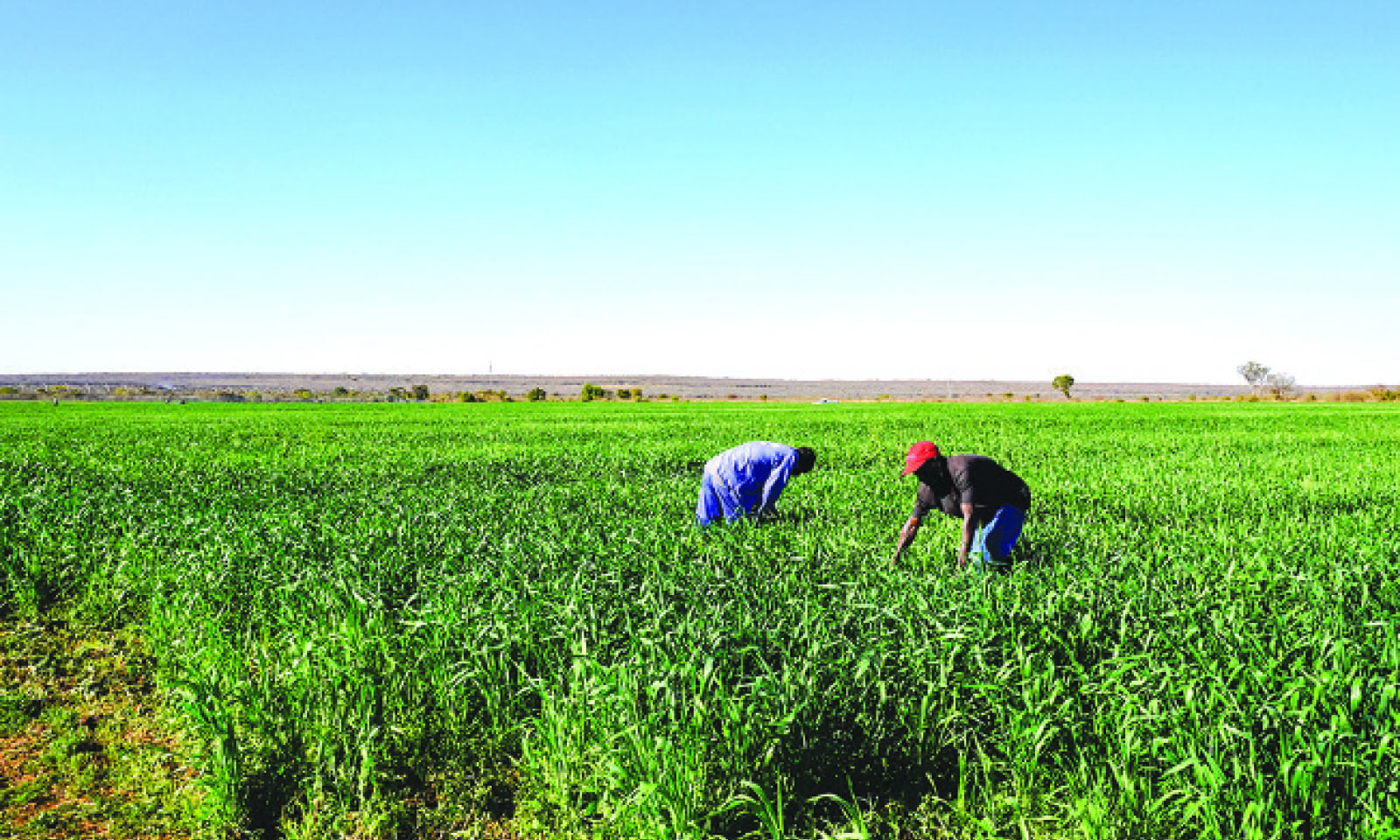
Theseus Shambare
ZIMBABWEANS across the world will celebrate Heroes Day tomorrow at a time when farmers, through their sheer industry, sweat and dedication, are writing a beautiful new story from the fields where freedom fighters once bled.
From tobacco growers in Karoi to wheat producers in Glendale, the soil is now providing both sustenance and seeds of prosperity.
Across the country, many of these new heroes are smallholder farmers, who are beneficiaries of the Fast-Track Land Reform Programme.
Zimbabwe’s status as a regional agricultural powerhouse is gradually being restored, proving that the sacrifices of sons and daughters of the soil are now literally bearing fruit.
Golden passport to a better life
In Karoi, Mr Patrick Matadi’s pride is rooted in tobacco.
In the 2024/2025 season, he delivered over 400 bales to the auction floors, enough to expand operations and plant 30 hectares (ha) of wheat for the winter season.
“After starting with just five hectares, I have expanded through contract farming.
“Tobacco has enabled me to build my house, educate my children and invest in irrigation,” he said.
Mr Matadi now owns five tractors and three centre pivots. He employs 25 full-time workers. In addition, he has over 100 seasonal employees.
In Mashonaland Central province, Mr Welphone Munaki calls tobacco “our passport to a better life”.
Their optimism reflects a sector that continues to defy the odds.
By the end of last week, farmers had delivered 352 million kilogrammes of the golden leaf — a new record — representing an increase of more than 52,6 percent from the same period last year.
Smallholder farmers, most of whom are beneficiaries of the Land Reform Programme, now constitute 85 percent of tobacco growers.
The remarkable rebound in output, from as low as 48 million kilogrammes in 2008, has largely been driven by contract farming, private sector financing and the Tobacco Value Chain Transformation Plan under the National Development Strategy 1 (NDS1), which targeted a US$5 billion industry by 2025.
Wheat: Scaling new heights
In Glendale, the Presidential Input Support Scheme has enabled smallholder farmers like Mr Lloyd Chitate to grow wheat on land once dominated by large-scale farmers.
“This year’s harvest will be my best ever,” he said, crediting improved agronomic skills and Government support.
For Ms Esther Makwara, a widow, wheat is about capacity and pride.
“Land reform gave me the means and the Presidential Inputs Scheme gave me the capacity. Breaking records shows we belong to commercial farming,” she said.
Wheat output topped 468 000 tonnes (t) in 2023, before rising to an all-time record of 560 000t last year.
With 122 000ha planted this season, production is expected to reach another record — 600 000t — underlining the country’s wheat self-sufficiency.
Annual national wheat demand presently stands at 350 000t.
Towards 11 million cattle
Under Zimbabwe’s National Development Strategy 1 (NDS1), which is encapsulated in the broader Vision 2030 that is aimed at establishing a prosperous, highly developed and industrialised country, the Government has set clear targets for expanding the national cattle herd.
By 2025, the goal is to increase the number of beef cattle from approximately 5,5 million (2019 baseline) to six million, improve calving rates from 45 percent to 55 percent and raise offtake rates from 6 percent to 20 percent.
Overall, the strategy aims to double the herd to 11 million by 2030 through improved breeding and partnerships to boost national livestock capacity.
The stud population has already surpassed 24 000 registered animals across 17 breeds, from Brahman to the indigenous Tuli.
This genetic drive is creating climate-resilient, disease-tolerant herds, especially for smallholders who supply over 90 percent of marketed cattle.
“My calving rates have improved and my animals are healthier. With the right support, we will achieve great things,” said Gokwe farmer Mr Tawanda Chikandiwa.
Fisheries: A new frontier
From the Kariba Dam to village dams, aquaculture is expanding.
Zimbabwe needs 60 000t of fish annually but produces around 33 000t.
Working with the Food and Agriculture Organisation of the United Nations (FAO) under the Fish4ACP project, the Fisheries and Aquaculture Resources Department is boosting hatcheries and community fish farms.
“Our target is 14 000 tonnes of tilapia annually by 2032, generating over US$22 million,” said project coordinator Mr Paul Mwera.
With over 12 000 dams countrywide, Zimbabwe has the resources to become a leading African aquaculture producer.
Blueberries on the rise
Blueberry output has also grown from 5 787t in 2023 to 8 000t in 2024, with 12 000 projected by year-end.
Horticultural Development Council operations manager Mr Mandla Mataure said the crop is already worth US$25,2 million, with expansion set to create 3 400 jobs.
“Local farmers are doing great and have since contributed to the employment creation,” he said.
New heroes
The Government sees these farmer-led successes as proof that the goals and aspirations of the liberation struggle are slowly being realised.
“Smallholders now earn foreign currency directly; tobacco remains a backbone of export resilience,” said Kutsaga chief executive officer Dr Frank Magama.
Tobacco Industry and Marketing Board chief executive officer Mr Emmanuel Matsvaire added: “We have enabled over 120 000 growers — 85 percent of them smallholder — to participate. Our quality leaf fetches up to US$4,10 per kg.”
The resounding success stories of Zimbabwe’s agriculture sector have put paid to negative narratives associated with the Land Reform Programme.
Instead, indigenous farmers are breaking colonial-era records, feeding the nation and exporting to the world.
This Heroes Day, as Zimbabwe honours the men and women who took up arms to fight for freedom, it also salutes those who now fight with hoes, tractors and fishing nets — today’s heroes, whose victories are measured in tonnes, litres and livelihoods.