

 admin
adminget to those who are always at the forefront of climate change impacts on time.
This was what participants attending the Apps4Africa Climate Change challenge in Harare last week agreed on.
Programme developers, civic society, environmentalists and other interested stakeholders met in Harare to explore ways of how ICTs, particularly the mobile phone, could be used to transmit effective climate change information to those who are most affected by it.
They were meeting as part of a five-nation Apps4Africa Climate Change regional challenge, a technology competition funded by the US government encouraging locals to develop country-specific applications to tackle the challenge of climate change and global warming.
The Americans have promised US$25 000 to the eventual top three winners, with the first prize set at US$15 000. Facilitator of the brainstorm, Ms Mariame Jamme of SpotOne Global Communications, a UK firm, said the contest aimed to create networks between the different environmental stakeholders and program developers in crafting applications for Africa, by Africans, that limit the impact of climate change.
“We need winners in Zimbabwe. We need winners in Africa,” said Ms Jamme during the presentations.
“Applications are needed because the use of mobile technology has increased. They are needed to disseminate information and encourage communities to engage in behaviour that is friendly to the environment, behaviour that would help reduce the impacts of climate change.”
Participants showed a deep understanding of climate change and problems it has caused for Zimbabwe.
They highlighted agriculture as the worst affected sector due to rapid changes in rainfall patterns, and the increased frequency of droughts and floods, especially in the Midlands and Matabeleland.
This had negatively affected agricultural productivity and threatened food security.
To curb poor agriculture productivity, suggestions centred on increased research on and planting of drought-resistant crops, less dependency on rain-fed agriculture, conservation farming and need for Government to encourage sustainable agriculture practices.
“We just have to do more as individuals, go crazy about the environment,” said one of the delegates.
Participants also indicated that the absence of a national climate change policy made it difficult for Government to adequately address the challenges posed by a changing climate. Although most of the participants showed a clear understanding of climate change issues, their ideas for mobile-based applications, and other technologies, were technically weak and narrow.
Some struggled for originality. The proposed applications were oblique, sometimes confusing, and failed to convince on strategies necessary for wholesale penetration of the target market. For example, proposals for an interactive two-way mobile-centred sms platform, as suggested by one of the three discussion groups could not clearly define its market nor convincingly outline modalities for administering costs of their intended design.
This group had identified agriculture as one of the several sectors, which has been continuously and severely affected by climate change.
Farmers were, therefore, singled out for what was called “sms blasting”, as a technological tool to raise awareness on climate change, increase disaster preparedness and encourage sustainable agriculture practices.
The biggest undoing for this proposed design was its one size fits all approach.
This would not work. In a country where farmers fall into several different categories, and are affected by climate change at very different levels, the “sms blasting” failed to distinguish between the diverse classes of farmers who obviously require different solutions for different challenges faced. This proposed application erroneously lumped together the subsistence communal farmer, the small-scale farmer, the large-scale individual/corporate commercial farmer and sought to “blast” them all in one breadth via sms.
Yet, in all fairness, the poor communal farmer in Chivi, dry and hot area, cannot be seen to require the same kind of climate and weather information compared with a wealthy individual commercial farmer on the outskirts of Harare, where rainfall is usually in abundance.
And where the plan targeted poor rural farmers, most vulnerable to the effects of climate change, and needing information more than any other stakeholder, its major weakness was that it transferred significant sms costs to poor village farmers, whom despite increasing access to mobile technology, struggle to make ends meet.
Ideally, the costs to the recipient of climate change information, particularly those that are most at risk, must be very limited, if at all. Indeed, mobile-based applications will be very useful for real-time conveying of climate change and weather information but their effectiveness will be limited if implemented in the hurried and desperate formats presented at the Apps4Africa session last week. Those ideas must be refined, well refined, developed and packaged, as specific technological gateways to specific climate change problems in Zimbabwe.
A combination of varying technological tools would be preferred, such as one suggested by another group, that of using a desktop application to track Government and private sector responsiveness in the fight against the causes and effects of climate change in Zimbabwe.
This application would work together with other mobile and internet-based applications, podcasting even, to, amongst other things, name and shame those that pollute, those that show poor environmental practice in a bid to encourage behaviour change at both corporate and individual levels.
However, other techno savvy individuals can still team up with those concerned with climate change and come up with innovative applications that can be used for climate change preparedness in the country and elsewhere.
The Apps4Africa contest is still open until the end of the month. It is now generally agreed that information communication technologies such as the mobile phone have been a revelation, and a great addition to everyday human life. The mobile phone is a very useful and efficient communication tool, which has, in Africa’s case, eliminated the drudgery of travelling very long distances, by foot or bus, to deliver messages.
A few years ago in Zimbabwe, the mobile phone was not a basic tool. It functioned as a status symbol, found only in the pockets of a select few due to a critical shortage of phone sim cards. Now, more people own mobile phones, nearly eight million subscribers in the country.
People are communicating easily and through these handy gadgets, news now travels faster.
The mobile phone is now being utilised to deliver bulk messages to the public on a wide range of topics such as educative texts on sex, HIV and Aids amongst others.
God is faithful.


 Online Reporter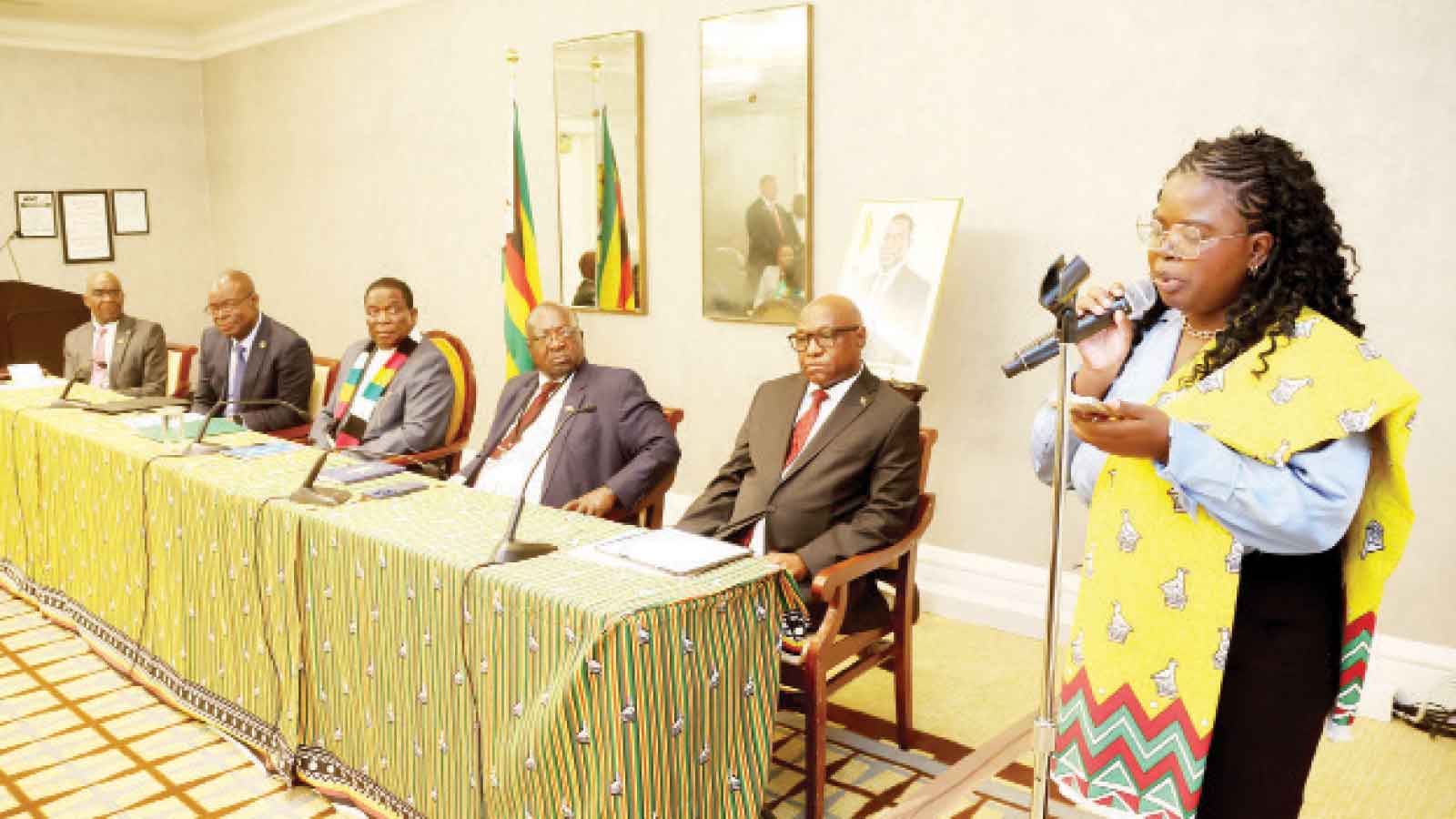
 dyton mupawaenda