admin
admin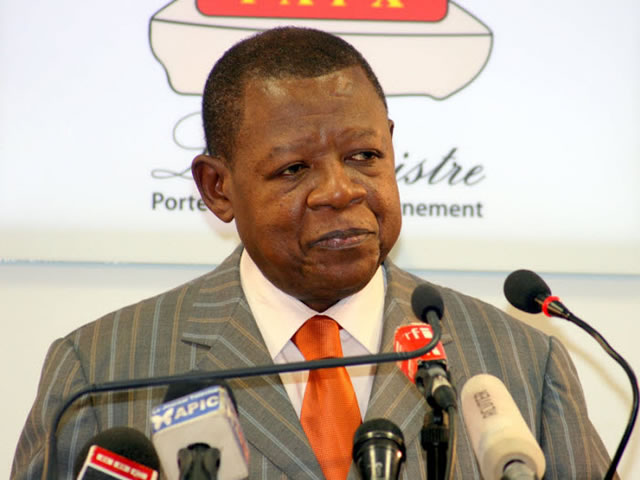

Kinshasa — Fighting flared up again on the border of Rwanda and the Democratic Republic of Congo early yesterday, according to Congolese sources, the second day of skirmishes between two neighbours locked in a decades-long dispute.Rwandan and Congolese troops traded heavy weapons fire around 06.00 GMT, said a witness and a Congolese officer.
“There were heavy arms fire explosions, rockets,” a resident said on condition of anonymity.
A senior Congolese military officer said that Rwandan troops “attacked our positions”.
On Wednesday the two sides exchanged gunfire, with each blaming the other for the outbreak of violence.
The Congolese army said the fighting started after the abduction of one of its soldiers by Rwandan troops who had crossed the border into the restive North Kivu region, while Rwanda said Congolese troops crossed into its territory and opened fire on Rwandan soldiers.
The two have long been at odds, with Rwanda repeatedly accused by the United Nations and its neighbour of backing a rebellion by the M23 rebel group that temporarily seized control of parts of eastern DRC.
Rwanda last year accused the Congolese army of firing rockets and mortar shells on its territory, and massed troops along its border in response.
Rwanda fought against the central government in Kinshasa in Congo’s two wars in 1996-97 and 1998-2003, and has been involved in several attempts to destabilise the country, backing uprisings by Tutsi-dominated militias.
There are fears the latest violence could undermine international efforts to bring stability to the DRC’s mineral-rich but lawless east after years of bloody conflict.
Meanwhile, the Rwandan and Congolese governments have blamed each other for an outbreak of heavy fighting on the border between the two neighbours.
The dawn skirmishes later escalated, with Congolese military officials saying the sides had traded heavy weapons fire, while locals reported “mortars and even rockets” being used through the afternoon.
A spokesperson for the DRC confirmed the abducted corporal had been killed, and blamed Rwandan troops.
Rwanda, meanwhile, accused Congolese troops of crossing into its territory and opening fire on Rwandan soldiers.
Rwanda said four Congolese soldiers had been killed in the fighting — the worst violence between the neighbours since October — but the Congolese army denied this.
Congolese government spokesperson Lambert Mende admitted that a Congolese soldier had crossed the border into Rwanda, but said he had done so accidentally.
He accused Rwandan troops of gunning the soldier down in cold blood, adding: “You can’t kill someone for crossing a border.”
The border situation was said to have become less violent by Wednesday evening.
Martin Kobler, the chief of the UN peacekeeping mission in DRC, said the United Nations appealed for calm on both sides.
He called on Kinshasa and Kigali “to take immediate measures to restore security” in the border area.
The two have long been at odds, with Rwanda repeatedly accused by the United Nations and its neighbour of backing a rebellion by the M23 rebel group that temporarily seized control of parts of eastern DRC.
Rwanda last year accused the Congolese army of firing rockets and mortar shells on its territory, and massed troops along its border in response.
Rwanda fought against the central government in Kinshasa in Congo’s two wars in 1996-97 and 1998-2003, and has been involved in several attempts to destabilise the country, backing uprisings by Tutsi-dominated militias. There are fears the latest violence could undermine international efforts to bring stability to the DRC’s mineral-rich but lawless east after years of bloody conflict.
The clashes took place around 20km northeast of Goma, capital of troubled North Kivu province, where rebels from a Hutu group linked to the 1994 Rwandan genocide began surrendering last month.
The rebels are members of the Democratic Forces for the Liberation of Rwanda (FDLR), which includes remnants of the militia that carried out the genocide of at least 800,000 ethnic Tutsis. The FDLR has around 1,500 men, according to UN estimates, or 4,000, according to Kigali. They have been accused of widespread violence and rights abuses in the DRC.
Western officials sought to play down the escalating rhetoric on Wednesday, as Rwandan Foreign Minister Louise Mushikiwabo (pictured left) said the country stood “ready to act to protect its citizens” against further attacks.
“We are in contact with both governments and are trying to understand exactly what happened . . . This is to reduce the tension,” a senior United Nations official said. A Western military source said no troops had been moved, and the tensions were “localised”.
Last year the Great Lakes regional body set up the Joint Verification Mechanism (JVM) – a multinational team of military officers – to defuse the M23 crisis.
A source at the JVM said a monitoring mission sent to assess the fighting at Rwanda’s request was forced to turn back to Goma “due to tension in the area”, and would remain there until the situation had calmed down. — AFP



 Online Reporter