malvernmugadzikwa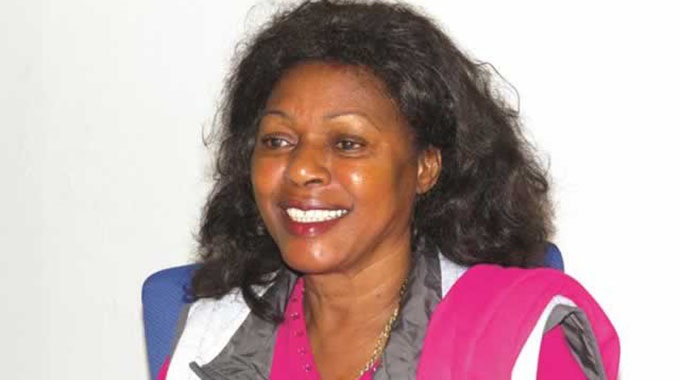
Ruth Butaumocho
As a young female entrepreneur, Ms Susan Peters found herself encountering a dilemma too many women during her time were facing — a choice between going back to work or staying home with kids.
Ms Peters ultimately decided not to settle for any of the two options.
Instead, she opted to create an opportunity to change the norm, not just for herself, but for others in a similar situation.
Such a bold move, borne out of despair and determination, saw her venturing into business. She opened a salon as a stepping stone to something bigger.
However, such a business venture, in the early 1980s, did not meet the traditional lenders’ approval criteria and Ms Peter could not get funding when she needed it.
Being a woman and with no collateral did not make it any better.
Without access to financial literacy, mentors and a formal business course, one had to possess a high level of business acumen to plod through such uncharted terrain.
The 1980s were characterised by a lot of economic activities in the informal sector as both men and women engaged in different ventures in the hope of a better life.
It was during this period that thousands of women crossed the borders in search of business and trading opportunities in neighbouring countries since movement was easier.
With no financial backup from any institution except one’s own savings and acts of benevolence from friends and relatives, these business ventures had to be well-calculated if they were to be sustainable.
Four decades later, women have since diversified into other entrepreneurial ventures, although cross-border trading remains a viable option for those with limited opportunities.
Reflecting on the era, Ms Peters says had there been an avalanche of micro-financing companies and financial literacy packages as is the case today, Zimbabwe could have witnessed a boon in viable female-owned businesses then.
Today, Zimbabwe now boasts several financial institutions, where women can borrow money from, though under various but amenable conditions.
Under the Second Republic, led by President Mnangagwa, the Zimbabwe Women’s Microfinance Bank (ZWMB) has empowered thousands of women who, for long, could not access funding for various life-changing projects.
The Ministry of Women Affairs, Community, Small and Medium Enterprises Development partnered the United Nations; the Ministry of Finance, Economic Development and Investment Promotion; and the Reserve Bank of Zimbabwe (RBZ) to open ZWMB to economically and socially empower women in their totality.
The financial institution, which was officially launched by President Mnangagwa on June 25, 2018, has provided lasting solutions to challenges facing most women, especially those not formally employed.
Since its inception, the women’s bank has provided loans for over 150 000 projects predominantly fronted by women across the country, as it seeks to address existing financial gaps among the female populace.
Several other financial institutions now have packages tailored for women and youths to bolster their income-generating projects.
The initiative has resulted in a boon of entrepreneurial projects for hundreds of women.
The Second Republic has made concerted efforts to broaden the existing financial facilities, in line with the 2030 Agenda for Sustainable Development, and Sustainable Development Goal (SDG) Number 5 — achieving gender equality and empowering all women and girls.
The Ministry of Women Affairs, Community, Small and Medium Enterprises Development recently called on companies, cooperatives, groups, female-managed businesses and businesses involving women to apply for financial support in the form of grants.
Such initiatives are welcome developments; they show the Government’s commitment to empower more women and address historical imbalances that have over the years impeded their economic progression.
However, these packages would need to be matched with financial literacy among women from various classes.
Studies conducted show that lack of financial literacy is the major barrier for the majority of women who are running small and medium enterprises.
A global research done by QuickBooks late last year revealed that 74 percent of female entrepreneurs believe financial illiteracy is the biggest challenge when running a business.
A further 90 percent of female small business owners say their limited financial knowledge and skills impact their ability to grow their enterprises.
Though it is a global research, its implications are being felt across Africa and locally as several female-led projects are struggling to survive.
Given the significance of finance in any business, a woman’s long-term success may suffer greatly if she is not financially literate.
It can also create barriers to business growth and success.
Lack of financial literacy can lead to several issues, including a higher chance of overspending, over-borrowing and failing to invest in growth opportunities.
This may also make it difficult for women to secure funding from investors or lenders because small business owners may struggle to prepare the financial statements and projections required.
With the strides that Zimbabwe has made in empowering women by providing an array of financial products, it is imperative to match the existing facilities with education of female entrepreneurs on all financial aspects of business.
This can be done by offering free financial literacy courses right from the grassroots to well-established business women.
Those already in the know can also mentor other women through properly structured programmes across all provinces.
A mentor can provide support and reassurance, based on their own experience, and in highlighting the challenges, solutions can be found.
Going beyond even that, mentors can help give women in finance the confidence to believe that it can be done, and that it is not a question of if but when.
Building a close group of women who can rely on one another is a culture the country needs to promote at a national level.
With that, together with mentoring, both formal and informal, the number of those having successful businesses and entrepreneurial projects should increase.



 Online Reporter