


 Chronicle Editor
Judith Phiri, Features Reporter
On 18 April 1980, the Republic of Zimbabwe was born from the former Republic of Rhodesia. The Rhodesian dollar was replaced by the Zimbabwean dollar at par value. Research shows that when Zimbabwe gained its independence from the United Kingdom (UK), the newly introduced Zimbabwean dollar was initially more valuable than the United States dollar at the official exchange rate.
According to the International Labour Organisation (ILO), the financial sector reforms implemented in Zimbabwe as from 1991 included the decontrolling of interest rates, removal of credit controls, the easing of financial sector entry restrictions, the decontrolling of the foreign exchange market and increased de-segmentation.
The Zimbabwe Economic Policy Analysis and Research Unit (ZEPARU) has noted that the contribution of the financial sector to economic activity has varied over different economic policy regimes since 1980. In one of its publications, it said: “Zimbabwe has a well-diversified financial sector. However, the contribution of the sector to economic activity has varied over different periods.”
It looked at the contribution of the financial sector to economic activity over four economic policy regimes since independence in 1980. These periods include 1980-1989 (controlled regime), 1990-1999 (liberalised regime), 2000-2008 (economic crisis period) and 2009-2011 (multi-currency period).
ZEPARU said the financial sector had the largest contribution to economic growth during the liberalised period, 1990-1999 and has had the least contribution in the multi-currency period.
“In terms of contribution to formal employment, the financial sector has contributed more in the economic crisis period (2000-2008) and in the multi-currency period (2009-2011).”
In an interview, local economist and National University and Science and Technology (Nust) lecturer Mr Stevenson Dlamini said the Zimbabwean financial landscape pre-independence was characterised by a few giant white-owned firms and it was not liberal.

“Post-independence, especially in the 1990s, the financial landscape witnessed a paradigm shift towards a more liberalised market. This was largely driven by the Economic Structural Adjustment Programme of the 1990s which also saw the emergence of indigenous-owned banks.”
Mr Dlamini said the removal of unnecessary taxes after independence went a long way in improving livelihoods post-independence, while the current tax regimes are a reflection of a drive towards domestic resource mobilisation, although they are punitive under the economic environment and encourage tax avoidance.
The coming in of the Second Republic under the new dispensation has seen the Government reversing the tide while introducing stern measures to tame inflation and price rises to stabilise the economy. However, the economy’s performance has been affected by unscrupulous individuals that were manipulating the currency which has seen the Government insisting on tight fiscal discipline.
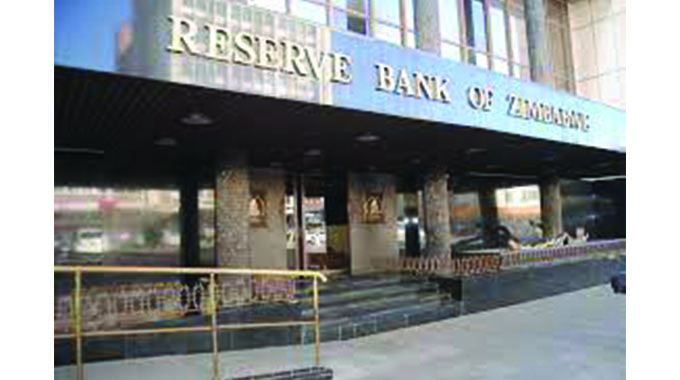
Since the advent of the Second Republic, the Government has worked tirelessly, with the Ministry of Finance and Economic Development and the Reserve Bank of Zimbabwe (RBZ) to curb growth of money supply so that the country has low inflation.
Sometime in 2022, some Government suppliers were fingered for inflating invoices or using local currency payments to mop up US dollars on the black market as they battled to preserve value.
The Government fought back with enforcement of several measures. A raft of robust economic measures put forward by President Mnangagwa and his administration proved to have a stabilising effect on the national economy as they managed to arrest the parallel market rate from whose premise prices were being hiked.
Key noticeable results saw the parallel market rate forced down from a mad high, while it continues going down to date. To continue on this positive trajectory that will ensure the growth of the economy, Mr Dlamini added: “To ensure there is investment in infrastructure and economic growth, there are a plethora of things that need to be done. A few of these include attracting Foreign Direct Investments (FDI) through creating a more consistent policy environment. Secondly, improving on the external and domestic debt management to ensure that the country’s risk is low. Thirdly, there needs to be improved economic patriotism. Finally, corruption needs to be nipped in the bud.”
He said in terms of inflation under a hyperinflationary environment, the parallel market rates were still one of the major drivers of inflation, while there was need to improve the price discovery mechanism in the foreign exchange market.
Mr Dlamini said parastatals also need to comply with internationally acceptable practices in governance in order to ensure that the state resources are efficiently utilised for the betterment of the country’s welfare and economy.
“Above all policy consistency is key and improved productivity across all sectors are very essential for ensuring that there is a successful turnaround of the country’s fortunes.”
Economic commentator Mr Morris Mpala said pre-independence was an exclusionary economic ecosystem that benefited the privileged few and it had less opportunities for most people of colour.
“It rode on an abusive economic model and it wasn’t sustainable in a modern changing world. An economy that was based on self-sustenance, segregation value addition, import substitution and agriculture was the backbone of the economy anchored on a smaller population. It was ravaged by political and economic sanctions due to the Unilateral Declaration of Independence (UDI).
“Post-independence there was an aggressive inclusive approach via transformational socio-economic inclusive agenda as infrastructure development in education and health was key. There was an opened-up economy towards a liberalised industry and commerce which was further put under political and economic sanctions,” said Mr Mpala.
He said post-independence saw the opening up of the banking sector to the indigenous people as well as the mining and agriculture sectors which have become the country’s economic cornerstones with the sectors contributing much of the country’s foreign currency earnings.
Zimbabwe’s major sources of foreign currency are mineral and agricultural exports, tourism and diaspora remittances, and funding that comes through development support from development partners.
Mr Mpala said the first years of post-independent Zimbabwe saw financial stability but later on stability was shaken up to the extent of losing the Zimbabwean dollar currency as inflation threatened economic and political stability and increased corrupt tendencies. He said over the years however, measures have been put in place to curb these and a stable economic environment was a driver for economic development.
“Fertile ground such as respect for property rights, knowledgeable human capital, vibrant financial services sector, stable microeconomic fundamentals, great savings culture, good corporate governance and less corruption among others are key to infrastructure investments of the country’s economy.”
A banker, Mrs Stella Moyo said Government measures continue to slow down the annual inflation as this was critical to preserve value for money, especially the local currency.
“When inflation continues to stabilise, the local currency will also get its rightful position as the main currency of the nation. I think development-wise, the GDP will continue to grow coupled with massive infrastructural developments.”
Despite the devastating effects of the Covid-19 pandemic, Zimbabwe’s annual inflation rate continues to slow down, dropping to 243,8 percent in December 2022 from 255 percent the previous month, on account of several interventions by the Government to curtail continuous price increases and exchange rate volatility.
Since September 2022, inflation has been falling following the coterie of tight monetary and fiscal measures implemented by the Government to stabilise the economy. Annual inflation was at 285 percent in September 2022, slowing down to 268,5 percent in October before dropping further to 255 percent in November.
Among other key measures to bring transparency and efficiency in the trading of foreign currency in the economy, the RBZ in 2020 introduced a formal market-based foreign exchange trading system. The Central Bank introduced the auction platform to improve productive sector accessibility to the much-needed forex.
The auction system continues to provide affordable and easily accessible foreign currency to the productive sector in a bid to reduce production costs and promote industrial growth as this reduces sourcing of forex from the illegal forex market, which manipulates exchange rates.
The introduction of the foreign currency auction system, consolidation of monetary policy reforms and fiscal incentives are some of the interventions that have aided industry recovery despite the disruptive impact of Covid-19 in the last two years.
To intensify financial sector growth, Government’s National Development Strategy 1 (NDS1) posted tremendous strides in the fourth quarter of 2022 with budget deficit levels declining below set targets of 1,65 percent to 0,9 percent while the extractive sector registered a 10 percent growth.
Zimbabwe is confident of achieving the projected 3,8 percent GDP growth this year despite the global economic headwinds, which continue to curtail business operations in many countries.



 Bongani Ndlovu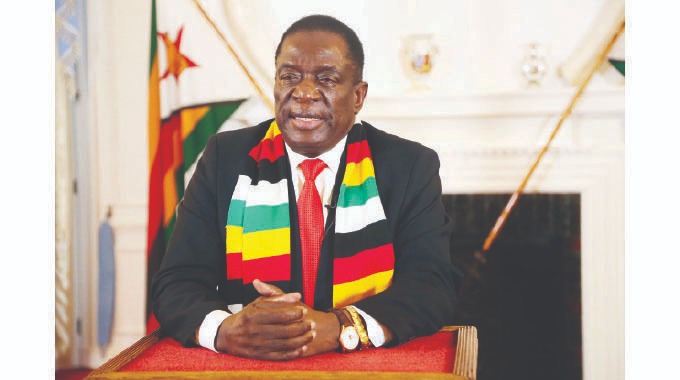
 Online Reporter