Hon. Shakemore Timburwa-The Strategic State
In October 2021, a forecast warned of possible drought in Mudzi in the new year, specifically in January and February.
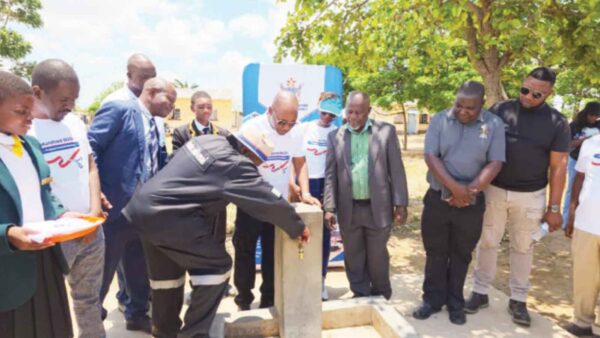
In the next month, the district activated its plan. The World Food Programme later reported that work to drill and equip boreholes, together with the provision of weather information, reached 33 000 people.
The most revealing detail in that account is the date of the decision.
In November, there was still time to organise work that would be considerably harder to undertake once people and livestock were competing for scarce water.
That experience gives Zimbabwe a question to carry into this summer.
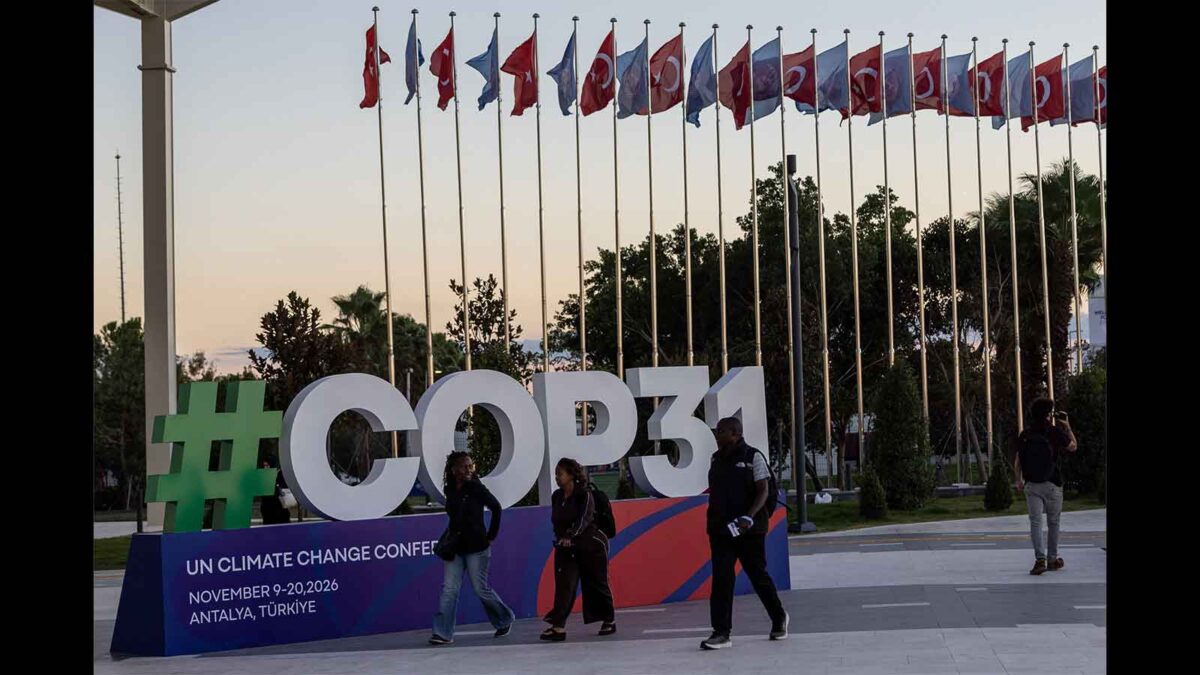
At the COP31 climate talks in Antalya this week, our country is making the case for international support to protect livelihoods against a difficult El Nino season.
At home, Cabinet has approved an update to the Summer Plan that brings financing, early warning and livestock protection into the same undertaking.
Both efforts concern a resource seldom entered in a budget: the weeks in which a family can still do something about the danger it faces. A farmer deciding whether to sell a cow or not understands the value of those weeks.
Picture a scenario: While pasture remains and the animal is still in good condition, the farmer can compare prices, keep a breeding animal or sell another one to buy feed.
Once grazing fails and neighbours are all bringing cattle to market, the buyer can afford to wait.
The farmer cannot. Assistance reaching that household afterwards may pay for food, a necessary and honourable purpose.
It cannot readily restore the terms on which the family might have traded a month earlier. Here lies a difficult feature of public finance.
An official can justify expenditure after a borehole runs dry by pointing to the queue beside it. Before it runs dry, the same official must explain why scarce money should be spent on a danger that may pass.
Yet the earlier intervention may be cheaper and give the community greater protection.
A sound budget must leave room for both judgements. Otherwise, the easiest expenditure to defend on paper may be the one that comes too late to do the most good.
Zimbabwe already has institutions capable of working on this problem.
In October, the Government and the Food and Agriculture Organisation launched the operational phase of the Drought Action Committee, which they jointly chair through the Agriculture ministry.
Its purpose includes bringing the country’s drought priorities and financing together.
The practical opportunity now is to settle, before conditions deteriorate, a question a district officer ought to be able to answer plainly: given this warning, what may we do today, who can approve it, and from which funds?
Kenya offers a useful distinction.
Between January and June 2019, its Hunger Safety Net Programme made additional household payments in four northern counties when a measure of vegetation condition crossed agreed thresholds.
Officials were responding to evidence that grazing conditions had already worsened.
Mudzi, by contrast, had acted on a forecast. Both kinds of information have value, but they answer different questions.
A rainfall outlook can give a district time to prepare; evidence from the ground can establish where further assistance is warranted.
A measure suited to Kenyan rangelands would tell a Zimbabwean maize grower little about whether enough time remains to replant. Consider how that distinction might work here.
On receiving an adverse seasonal outlook, a district could bring forward inspection of the water points on which several villages depend.
Suppose the inspection finds that one pump is failing and that the nearest functioning borehole already serves a school.
There is then a case for repair even if the rains improve.
The district can name the asset, price the spare part and explain the order of priority.
Those particulars give Treasury a better basis for a decision than a general appeal for preparedness.
A larger commitment might require stronger evidence. Before procuring supplementary livestock feed, officials could examine pasture conditions, water availability and what farmers are already paying for fodder.
They would also need to know how long delivery takes.
If the evidence threshold is reached only when animals are visibly weak, and procurement then takes several weeks, an apparently careful rule will have defeated its purpose.
The right moment to decide depends partly on how long the decision will take to reach the farm.
There is a fair objection. Money spent in anticipation of drought is money another community cannot spend on an immediate need. Forecasts can be wrong.
Even a successful borehole repair has an opportunity cost if a clinic elsewhere must wait for an equally necessary repair.
That is why I would favour a limited first release for clearly identified purpose, with larger sums tied to further evidence and a date for review.
Officials should be able to stop an intervention when conditions improve and explain why the original decision was reasonable on the information then available.
Citizens have a practical part in that review.
A water-point committee can say when a pump last worked.
An extension officer can record when advice reached growers and whether seed was still available locally.
Farmers can explain why an intervention that looks timely in a provincial return was late by the agricultural calendar.
Parliament, in examining expenditure, could usefully ask for three dates: when the warning was received, when spending was authorised and when the service reached the community.
The interval between them would show where improvement is possible and where officials acted well. Even those dates leave one question unanswered.
If feed reached a ward on a Tuesday, was that before or after households began selling breeding stock?
A delivery note can settle the date; only the people concerned can explain its significance.
Talking to people on the ground would help distinguish a season in which preparation protected livelihoods from one in which the rains simply turned out better than feared.
It would also give the next district facing a similar forecast something more useful than a list of amounts spent.
Mudzi’s experience deserves a place in our national thinking because it shows that a forecast can change the timing of a public decision.
This summer, the same principle can give practical meaning to the work Zimbabwe is advancing at home and abroad.
We should judge each decision by the risk officials could reasonably see, the choices open to them and the time a family needed to act.
When the season is over and the figures are laid before the country, the most searching question may also be the simplest: did help arrive while the family still had a choice?