Online Reporter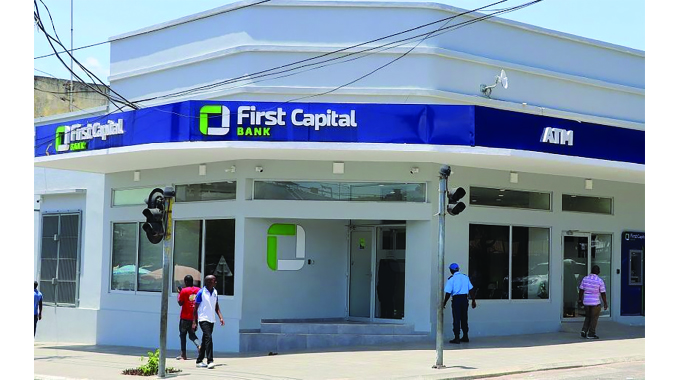
Michael Tome
Business Reporter
First Capital Bank Zimbabwe’s non-performing loans (NPLs) recorded a 48,57 percent drop in the first quarter of 2025, attributable to the bank’s enhanced credit risk management practices and efforts to strengthen its loan portfolio.
A lower NPL ratio is a key indicator of a bank’s financial health, as it suggests that fewer loans are defaulting.
As First Capital continues to refine its risk management strategies, the decline in NPLs serves as a solid foundation for sustained profitability and long-term stability.
This development makes the institution an attractive player in Zimbabwe’s banking industry, demonstrating its commitment to maintaining a strong financial profile and delivering value to its stakeholders.
With its enhanced risk management practices, First Capital is well-positioned to navigate the challenges of the economic environment and capitalise on emerging opportunities.
“First Capital Bank delivered a robust performance in the first quarter of 2025, showcasing significant growth across key financial metrics, underpinned by a favourable agricultural season, growth in customer base, deepened relationships and prudent financial management.
“Loan book grew by 187 percent year on year to ZiG3,28 billion while Non-Performing Loan (NPL) ratio declined to 3,66 percent from seven percent,” said First Capital Bank Zimbabwe company secretary Sarudzai Binha in the 2025 first quarter trading update.
This follows EU Ambassador to Zimbabwe Jobst von Kirchmann’s recent praise of Zimbabwe’s private sector for timely loan repayments, stating that the country has been exemplary in settling loans extended through intermediated lending to local banks.
“Zimbabwe’s private sector commitment to honouring its financial obligations is likely to enhance the country’s credibility and attract more investment from the European Union and other international partners,” said Ambassador Kirchmann.
The significance of First Capital Bank’s reduction in non-performing loans (NPLs) extends far beyond mere statistical improvement, as it has a direct impact on the bank’s operational efficiency and market perception.
Minimising loan defaults allows the bank to allocate a greater proportion of its resources towards growth initiatives, rather than tying up capital in provisions for bad debts which fosters a healthier loan portfolio that not only boosts investor and customer confidence but also provides the bank with a competitive edge in a sector where credit risk remains a critical challenge.
In the period under review, the bank recorded growth and operational strength as the loan book surged by ZiG3,3 billion, marking a remarkable 187 percent increase year-on-year, while deposits grew to ZiG4,12 billion, up 132 percent from the first quarter of 2024.
This expansion reflects strong customer trust and effective business strategies, enabling the bank to capture a larger share of the market.
Total income also grew to ZiG540,7 million, a 118 percent rise from the comparable period in 2024.
The bank maintained liquidity ratios well above regulatory thresholds, with liquidity at ZiG803 million and above 30 percent, signalling its capacity to meet short-term obligations and weather potential market shocks.
Its asset base expanded by 14 percent compared to the first quarter of 2024, driven primarily by the loan book surge, while regulatory capital grew by eight percent, reinforcing a solid financial foundation.
First Capital Bank’s liquidity and capital ratios suggest a stronger buffer against risks, an advantage in a sector where liquidity constraints have occasionally hampered competitors.
Looking forward, the bank anticipates a cautious economic outlook for the remainder of 2025, shaped by global political uncertainties and shifting donor funding dynamics.
With its enhanced risk management practices and solid financial performance, First Capital Bank is poised to maintain its trajectory of growth and stability, even in the face of an uncertain economic environment.