Chronicle Editor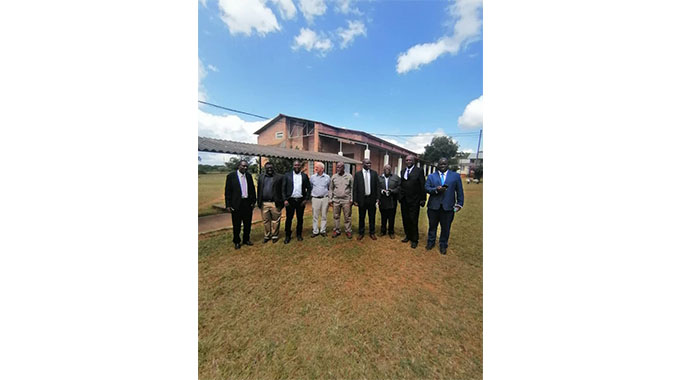
Sukulwenkosi Dube-Matutu
GOVERNMENT has established a nine-member Esigodini Agricultural College advisory board that is set to spearhead development which will see the institution becoming an agricultural centre of excellence in line with Education 5.0.
Education 5.0 is a five-mission model of teaching, research, community service, innovation and industrialisation, established to move the nation towards an innovation-led and knowledge-driven economy.
It champions utilisation of local resources for social and economic development.
The Esigodini Agricultural College advisory board is the first to be set up for the institution which was established in 1968.
Its key responsibilities are premised on four major areas which are policy and strategy, finance, administration and corporate affairs. The board will advise the college’s principal on expeditious implementation of Agricultural Education for Development (AE4D) 5.0 curricular.
The advisory board comprises members from the public and private sectors with relevant experience.
The chairperson of the advisory board is Professor Johnson Masaka who is Midlands State University Dean in the Faculty of Agriculture, Environment and Natural Resources Management, the vice chairperson is Commissioner Gift Ncube who is the director for Business Development and Production under the Zimbabwe Prison and Correctional Services (ZPCS) and chief executive officer of Pamberi/Qhubekani Investments (Pvt) Ltd.
The secretary is Matabeleland South acting provincial agricultural director rural development services, Mr Mkhunjulelwa Ndlovu while the vice secretary is Agricultural Rural Development Authority (Arda) Matabeleland regional manager, Mr Ndodana Ncube. Other board members are Dr Enat Mdlongwa Matabeleland South provincial veterinary director, Mr Obert Chinhamo who owns Biano Farm and Mr Evans who is the farm manager at Merry Ellen Estates.
Ex officio members are Engineer Edwin Zimunga chief director in the Ministry of Lands, Agriculture, Fisheries, Water and Rural Development and Esigodini Agricultural College acting principal, Mr Farai Gomo.
In a speech read on his behalf by Director of Agricultural Education Dr Jotamu Dondofema recently during inauguration of the board members, Lands, Agriculture, Fisheries, Water and Rural Development Dr Anxious Masuka said it is important for each college to have an advisory board.
“The inauguration of the agricultural colleges advisory board members is long overdue. It came up in the early stages of implementing the recently launched curriculum for the agricultural colleges.
“The Ministry through the Department of Agricultural Education has embarked on the transformational training journey in the agricultural space. This is through the establishment and implementation of the new curriculum, Agricultural Education for Development 5.0 (AE4D 5.0) as we Go for Growth, (G4G).
“For relevant training and successful implementation of the current curriculum various stake holders from the private and public sectors have to play significant roles and develop the colleges into agricultural centres of excellency which are self-sustaining.
“Agricultural business and or innovation hubs should be found running at each college guided by the niche area for the college and or any other factors addressing the value chains,” he said.
Dr Masuka said agricultural colleges also have to generate income and not solely rely on Treasury for income.
The Minister said the Agriculture Ministry is in the process of capacitating the colleges for effective execution of the duties expected out of them.
He urged advisory board members to work with the college administration in identifying key partners and further developing the college.
Esigodini Agricultural College acting principal, Mr Farai Gomo said the target is to ensure that the institution becomes a leading provider of relevant technical and professional training in science and practice of agriculture.
Mr Gomo said the college’s cropping programme comprises dry land and irrigation farming.
“The livestock production programme is composed of the Nkone beef herd, Friesland and Jersey breeds in dairy all on 28 paddocks covering a total area of 485 hectares, broilers, layers, sheep (black head persian), boer goats and pigs (large white and landrace crosses). To complement the crop and livestock production sections, the college also has an engineering section and farm and agribusiness management section,” he said.
Mr Gomo said the college is however in need of new equipment and resources in order to boost production.
“Most of the tractors and equipment are non-functional and obsolete making it difficult for the engineering section to service the production sections. Irrigation is a challenge given that the equipment is either old or non-existent. The college is also facing transport challenges making it for students to attend look and learn visits. There is also vandalism of college infrastructure, particularly fences by members of the community. The sewer reticulation infrastructure is old and expensive-to-maintain water and there is a lot of land degradation from gold panning activities,” he said.
The college is situated on a 485ha farm with 37ha being arable.
In a recent statement on advisory boards for agricultural colleges Dr Masuka said the colleges contribute about 70 percent of the technical workforce in the agro-industry.
Good governance of such institutions directly and indirectly impacts on the quality and quantity of the output from the agro-industry. He said advisory boards could add value to the governance and performance structure and systems of agricultural colleges. — @DubeMatutu



 Online Reporter