
Blessings Chidakwa-Senior Reporter
WILDLIFE Ambassador and Environment Patron, First Lady Dr Auxillia Mnangagwa, yesterday unveiled key wildlife strategies as she called upon Zimbabweans to safeguard the nation’s rich heritage of medicinal and aromatic plants while strengthening wildlife conservation efforts.
The unveiled strategies include the revised National Elephant Management Plan, the Large Carnivore Management Plan, and the wildlife research strategy of the Zimbabwe Parks and Wildlife Management Authority.
The updated frameworks align with the National Development Strategy 2 and recent legislative reforms assented to by His Excellency President Dr Emmerson Mnangagwa.
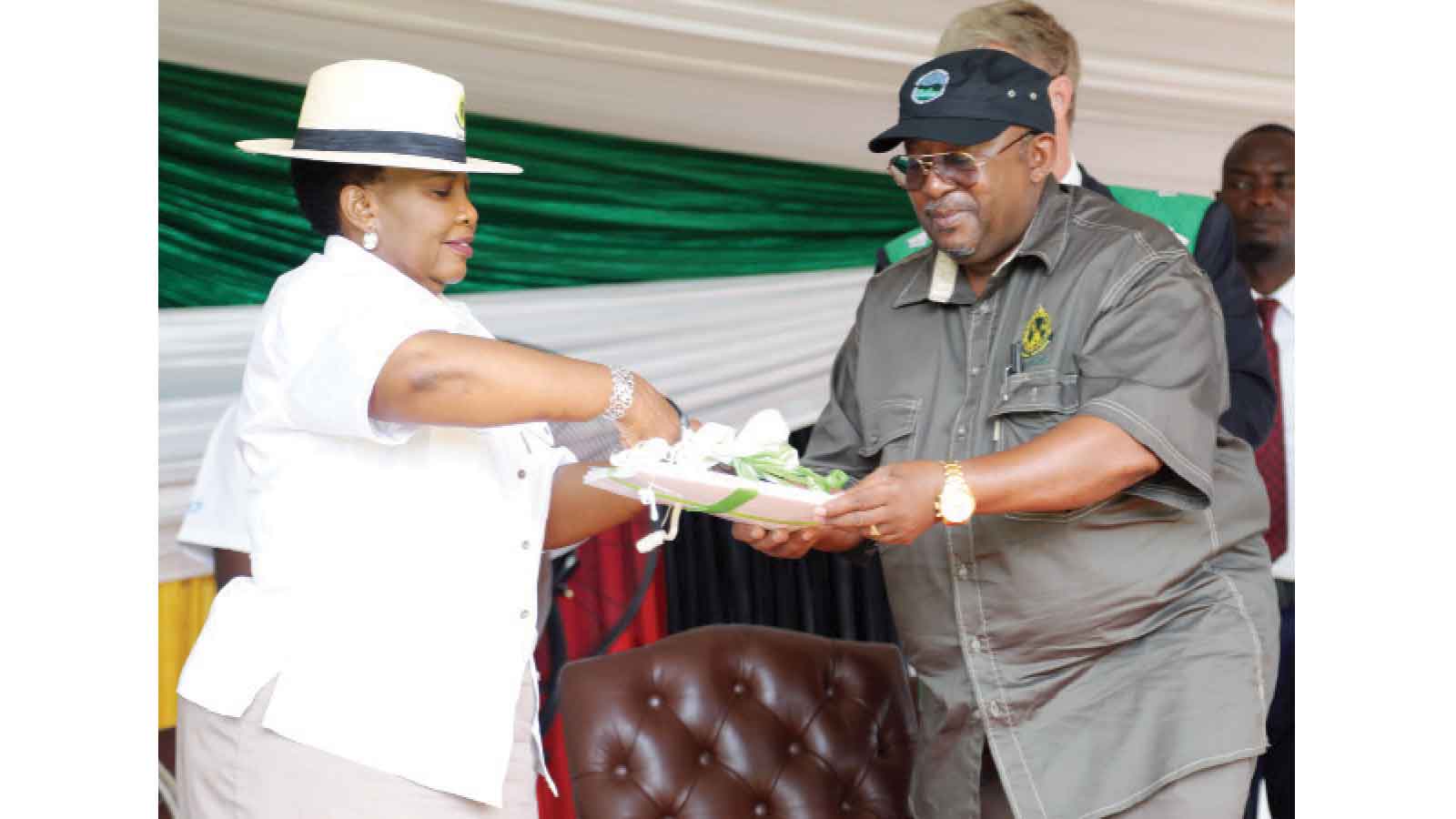
The First Lady kicked off the event by officially commissioning top-notch vehicles donated by the World Wide Fund for Nature to strengthen ZimParks’ conservation efforts.
Dr Mnangagwa then toured stands showcasing a variety of medicinal and aromatic plants, while the celebrations highlighted educational displays, awareness campaigns, and stakeholder discussions on conserving and sustainably using natural plant resources.
The celebrations at Zimparks Gardens brought together conservationists, policymakers, traditional leaders, researchers, students, community representatives, and development partners to highlight the vital role of Medicinal and Aromatic Plants in supporting both people and the planet.
It ran under the theme ‘Medicinal and Aromatic Plants: Conserving Health, Heritage, and Livelihoods,’ aligning with the promotion of the biodiversity economy under the National Development Strategy 2.
Speaking during joint commemorations of World Wildlife Day and Africa Environment Day, the First Lady underscored the interconnectedness of biodiversity, traditional knowledge, and sustainable livelihoods, urging an integrated approach to environmental protection.
Dr Mnangagwa said this year’s theme highlight the deep ties between Africa’s natural resources and its people.
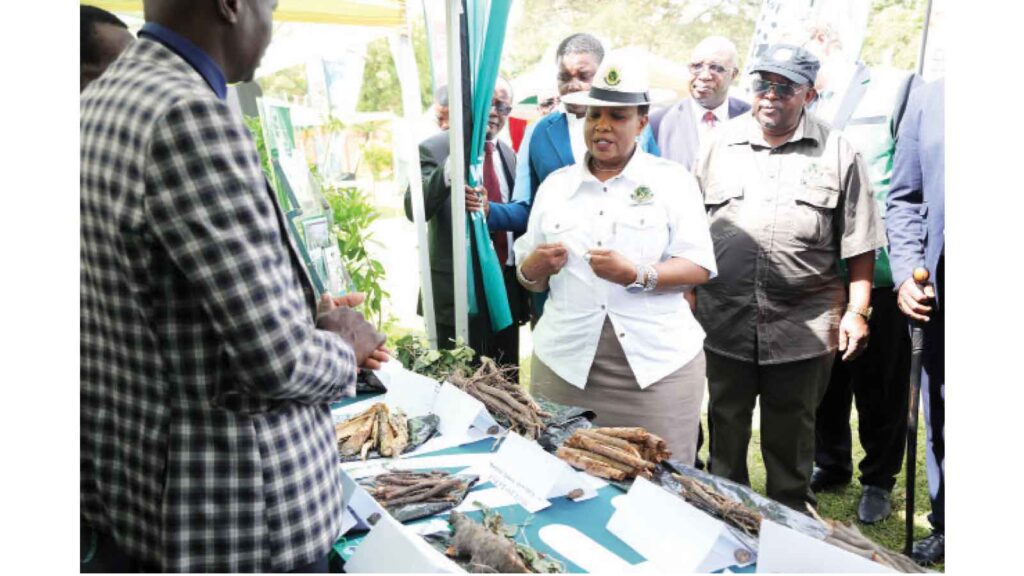
Wildlife Ambassador and Environment Patron, First Lady Dr Auxillia Mnangagwa, being shown some of the medical plants during the World Wildlife Day and African Environmental Day (Wangari Maathai Day) celebrations at ZimParks Gardens in Harare yesterday.
“This theme reminds us of the need for continuous collaboration between our traditional and indigenous knowledge systems. By observing these two days together, we recognise that our wildlife and environment are closely linked and the need to protect them through an integrated approach.”
The Wildlife Ambassador and Environment Patron said the strategic documents have been revised to align with the National Development Strategy 2 and the new ZimParks and Wildlife Management Act recently assented to by His Excellency, President Dr Mnangagwa.
“I can assure you that I remain committed to continue engaging all stakeholders at all levels, within and outside Zimbabwe, as we advance initiatives that speak to us as Africans, emphasising the importance of traditional knowledge as an integral tool in natural resource management,” she said.
Dr Mnangagwa said that World Wildlife Day is organised annually under the auspices of the Convention on International Trade in Endangered Species of Wild Fauna and Flora (CITES), a global agreement to which Zimbabwe is a party.
The convention regulates international trade in endangered animals and plants, including medicinal and aromatic species.
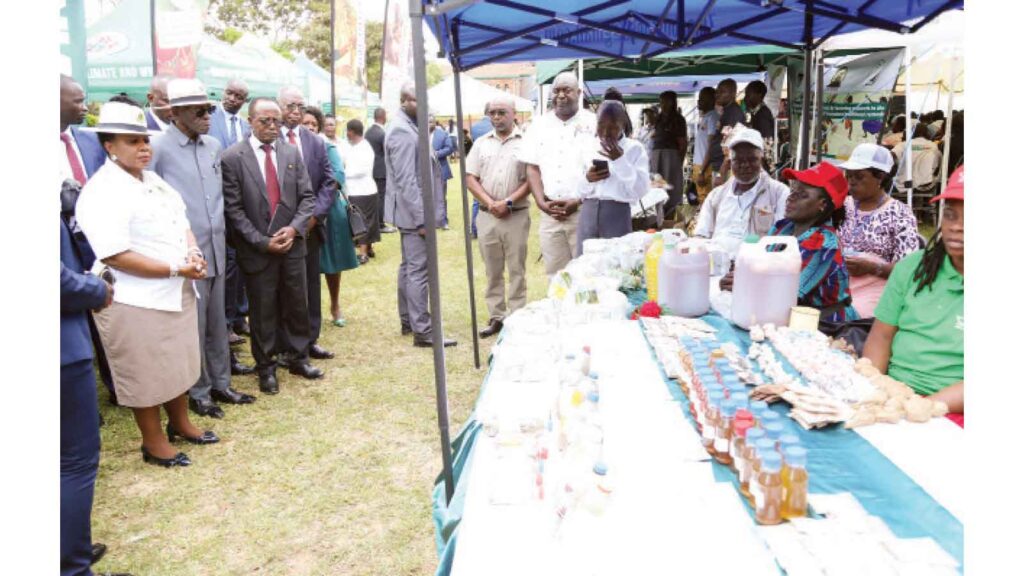
Wildlife Ambassador and Environment Patron, First Lady Dr Auxillia Mnangagwa, being shown some of the medicines made from plants during the World Wildlife Day and African Environmental Day (Wangari Maathai Day) celebrations at ZimParks Gardens in Harare yesterday.
“Research shows that medicinal plants provide some of the most essential ingredients, including bioactive compounds, for modern medicines,” she said, adding that Zimbabwe’s long-standing tradition of herbal medicine must be preserved through proper documentation and intergenerational knowledge transfer.
Dr Mnangagwa also stressed the importance of sacred sites, taboos, and totems in conservation, saying such cultural systems have historically played a key role in combating environmental degradation.
The First Lady called on universities and research institutions to ensure biosafety standards and correct dosages in herbal medicines, while promoting scientific validation of traditional remedies.
“Our institutions of higher learning, as well as research institutions, should ensure the biosafety and product dosages of the medicines,” she said.
“We should therefore engage in sincere discussions on integrating traditional knowledge of medicinal plants into our national curriculum at all levels of education, as well as developing public awareness and conservation education programs to reduce over-exploitation, support development, and commercialise products for the benefit of our indigenous people and local communities.”
Among medicinal species listed under CITES are African ginger and cycads, such as the Runde, Chimanimani, and Gorongowe varieties. Other widely used plants in Zimbabwe include Zumbani (lemon bush), the sausage tree, and bloodwood.
Dr Mnangagwa warned against over-exploitation and biopiracy, revealing that Zimbabwe is reviewing its access and benefit-sharing regulations to ensure communities equitably benefit from the commercial use of genetic resources.
The First Lady urged the establishment of herbal gardens in schools and communities to reduce pressure on wild plant populations and called for greater involvement of traditional leaders in conservation initiatives.

A top notch Toyota Landcruiser and a tractor donated by WWF and commissioned by the First Lady Dr Auxillia Mnangagwa for Zimparks at Zimparks Gardens in Harare.
“I now call upon you to develop community projects specifically for medicinal and aromatic plants, establish herbal gardens in schools and communities to reduce pressure on wild plants, and double our efforts in engaging traditional leaders in conservation,” she said.
The First Lady also commended the Ministry of Environment, Climate, and Wildlife for empowering youths through the Zimbabwe chapter of the CITES Global Youth Network, in line with the national development mantra of leaving no one and no place behind.
The Wildlife Ambassador said Zimbabwe’s leadership role as president of the Ramsar Convention COP15 further places the country at the forefront of global environmental governance. Dr Mnangagwa also said that sustainable utilisation of wetlands and wildlife must be guided by indigenous knowledge systems.
Reflecting on the legacy of the late environmentalist Wangari Maathai, Dr Mnangagwa said environmental stewardship remains a shared responsibility.
“By blending the conservation of our wildlife with the protection of our broader environment, we are securing our health, honouring our heritage, and sustaining our livelihoods,” she said.
Turning to the 2026 Africa Environment and Wangari Maathai Day, running under the theme “Biodiversity and Traditional Knowledge: Conserving Health, Heritage, and Livelihoods,” Dr Mnangagwa highlighted the local communities who have co-existed harmoniously with the environment for centuries.
Dr Mnangagwa called on Zimbabweans to embrace a shared vision of a green and prosperous nation as the country commemorates World Wildlife Day and Africa Environment Day.
ZimParks Director-General Professor Edson Gandiwa said they are grateful for Dr Mnangagwa’s leadership in advocating for environmental conservation for both present and future generations.
“Your presence here today provides us with comfort and assurance that environmental issues have a strong voice that reaches all parts of the country and beyond, in line with the national mantra that we leave no place and no one behind.
“This commemoration reinforces our long-held conviction that this day is the most important day for global wildlife conservation as well as environmental protection on the African continent,” he said.
Prof Gandiwa said Zimbabwe is renowned for its rich wildlife heritage, which includes diverse plant and animal species. He noted that Zimbabwe holds the second-largest elephant population in the world and the fourth-largest rhino population globally.
“We are also endowed with diverse wetlands, which provide various ecosystem goods and services to the nation. Despite Zimbabwe’s substantial progress in conservation and environmental protection, we continue to encounter challenges and threats to natural resource management, including habitat loss and fragmentation, illegal trade and poaching, invasive species, and pollution.
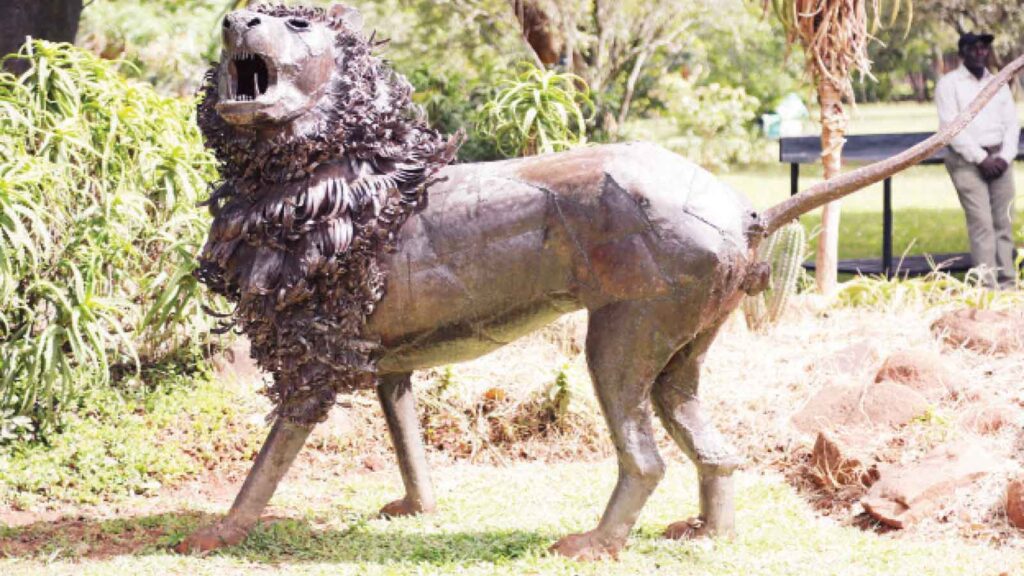
A sculptor of a lion on display during the World Wildlife Day and African Environmental Day (Wangari Maathai Day) celebrations at ZimParks Gardens in Harare yesterday.
“Your Excellency, with your unwavering support and leadership, we are pleased to report that we continue to work hard in collaboration with our diverse partners, some of whom are here today, to protect and conserve Zimbabwe’s natural resources and heritage,” he said.
Minister of State for Provincial Affairs and Devolution, Harare Metropolitan Province, Cde Charles Tawengwa, said the First Lady’s presence affirms the high level of national commitment to environmental stewardship, biodiversity conservation, and sustainable development.
“Our country is endowed with a wide variety of medicinal and aromatic plant species that have, for generations, supported traditional healthcare systems, preserved cultural knowledge, strengthened food security, and created income-generating opportunities for communities.
“The choice of venue, the ZimParks Gardens within the National Botanic Gardens, is symbolic of our collective responsibility to protect and sustainably utilise our plant and wildlife resources. It reflects our national resolve to safeguard biodiversity while unlocking its socio-economic potential,” he said.
Minister Tawengwa said that, as a metropolitan province, they are dedicated to advancing environmental sustainability in line with the National Development Strategy and the Sustainable Development Goals (SDGs), building on the achievements of the National Development Strategy 1, which focuses on environmental protection and wildlife conservation.
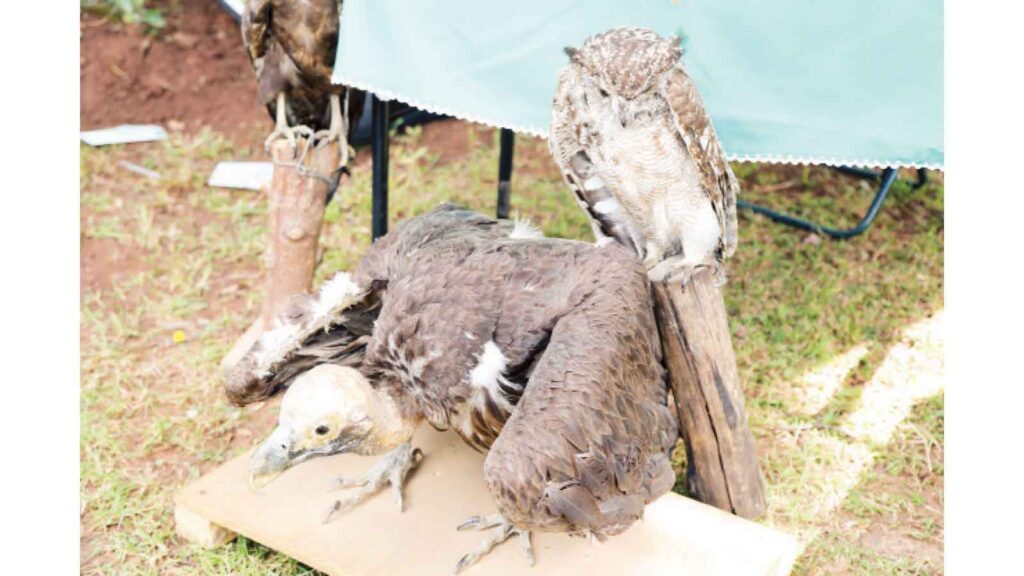
The BirdLife International Foundation display sculptures of birds during the World Wildlife Day and African Environmental Day (Wangari Maathai Day) celebrations at ZimParks Gardens in Harare yesterday.
Zanu PF Deputy Secretary for Environment and also Deputy Minister of Transport and Infrastructural Development, Joshua Sacco, also lauded the First Lady, founder of the Angel of Hope Foundation, for spearheading numerous community-based programmes.
“Through the Tree Planting Initiative, which complements the Presidential Forest Legacy Programme, she has mobilised communities, civil society, and development partners in tree planting and reforestation efforts that strengthen livelihoods, safeguard biodiversity, and build climate resilience,” he said.
“The First Lady always encourages citizens not to plant a tree only once a year during the planting season, but to make tree planting a continuous habit starting at home, in communities, and in schools. Her work reflects a profound commitment to building resilient communities, protecting biodiversity, and nurturing the health and well-being of present and future generations.”
Deputy Minister Sacco also saluted the First Lady for being honoured as UNESCO’s Queen of Gastronomy for promoting healthy eating and showcasing Zimbabwe’s rich culinary heritage.