Online Reporter
Blessings Chidakwa
Senior Reporter
FIRST LADY Dr Auxillia Mnangagwa on Saturday turned Stodart Hall Grounds in Mbare into a vibrant centre of learning and engagement as she led a family drug awareness campaign.
The programme brought together communities, health experts, law enforcement agents and Government officials for a major awareness campaign to confront the growing scourge of drug and substance abuse.
The highly interactive programme provided a unique opportunity for residents to engage directly with specialists and ask questions on the realities of drug abuse, its causes, consequences and possible solutions.
Participants were taken through the entire cycle of substance abuse, from identifying early warning signs and understanding factors that drive addiction, to learning how drugs are obtained, distributed and consumed.
They also made a collective pledge to stop drug and substance abuse, while information forms were distributed to enable anonymous reporting of drug-related activities.
The campaign also shed light on the devastating impact of drug and substance abuse on individuals, families and communities, while providing practical guidance on interventions, rehabilitation and life after recovery.
Resource persons outlined tell-tale signs of substance abuse, including loss of appetite, hallucinations, violent behaviour, memory loss and slurred speech, among several others.
Discussions further explored how drug abuse fuels criminal activities such as theft, domestic violence and sexual offences, while exposing users to serious health complications, including heart disease, liver damage, mental health disorders and sexual dysfunction.
A key highlight of the engagement created by the First Lady was the open dialogue between community members and experts, which allowed participants to share experiences and seek clarity on issues affecting their families and neighbourhoods.
Zimbabwe international footballers, national team captain Marvelous Nakamba and midfielder Tawanda Chirewa, also attended the event, expressing strong support for the First Lady’s initiatives under the Angel of Hope Foundation, particularly in the fight against drug and substance abuse.
The duo, who were allowed to tour the Angel of Hope Drug Rehabilitation Centre, also presented the First Lady with national team jerseys, including one bearing the number 1 in her honour, along with their own personalised jerseys, as a show of appreciation for her work.
The awareness campaign forms part of ongoing efforts championed by the First Lady to mobilise communities against drug and substance abuse and promote healthier, safer and more productive lifestyles.
The highly interactive and oversubscribed gathering was characterised by extensive audience participation, with Dr Mnangagwa encouraging frank discussion and ensuring every voice was heard.
“I want us to carefully look at the journey of a child, from where it begins to where it ends. Let us think about the full circle of a child’s life and development. The starting point is the home. As parents and guardians, you are the first to notice changes in a child.
“You are the ones who can say, ‘I no longer recognise my child’s behaviour. The way they walk has changed. The things they say are unusual. They no longer bathe. They no longer change their clothes.’ These signs often begin at home, and that is where they can first be identified.”

Dr Mnangagwa added: “I have come to speak with you so that at every stage of a child’s growth, we ask ourselves: Are we present? Are we paying attention? Do we know what is happening in the life of our child? This is the issue we must discuss today and understand where the problem begins.”
The First Lady urged families and communities to work together in the fight against drug and substance abuse, warning that drugs are increasingly destroying young lives and, in some cases, reaching children within their own homes.
“Some of these influences come from bad company and peer pressure, while others come from the environment around us. This is why, as mothers, fathers, grandparents and guardians, we must remain alert and involved in the lives of our children,” she said.
“Today, there is a huge gap in many families. Parents leave home for work, children leave for school, and even when fathers are present, everyone is busy and there is little time to watch over one another. As a result, our children become vulnerable and are easily caught up in the trap of drug and substance abuse.”
Dr Mnangagwa said the gathering should serve as a moment for reflection and learning, stressing that every human life is sacred and must be protected rather than destroyed.
The First Lady emphasised that parents have a lifelong responsibility to guide and nurture their children, noting that children are born innocent, with potential and talents that must be developed rather than derailed by negative influences.
She called for greater vigilance among parents and stronger cooperation between families, chools, churches and communities to safeguard children from drug abuse and support them in becoming responsible citizens.

Dr Mnangagwa added that protecting children from substance abuse is a shared national duty, urging unity in building a safer and more responsible society.
The First Lady then afforded resource persons, including Zimbabwe Republic Police Chief Inspector Hazvinei Jindu, Detective Assistant Inspector Tendai Muchengi (ZRP CID Drugs and Narcotics), Sergeant Mutawu from the Victim Friendly Unit and Health Promotion Manager Joyce Madzudzo, a chance to directly engage with participants.
Chief Inspector Jindu issued a strong warning on the growing dangers of drug and substance abuse, highlighting the increasing use of disguised narcotics and unsafe consumer products.
She said drug dealers are now mixing illicit substances into everyday foods such as “ganja cakes, chocolates and jelly sweets,” warning that these can cause red eyes, hallucinations, disorientation and aggressive behaviour.
Chief Inspector Jindu cautioned that cannabis remains illegal except for licensed medicinal use, while crystal meth, known as “dombo,” severely damages the brain and behaviour, leading to loss of appetite, paranoia and prolonged sleeplessness lasting up to two days.
The officer also cautioned against illicit alcoholic beverages brewed without licences, “tumbwa,” citing their high alcohol content and unsafe production.
She further warned that cocaine is sometimes disguised as soft drinks, while codeine-based cough syrups, especially smuggled ones, impair judgement and memory. Chief Inspector Jindu also urged the public to avoid unregulated skin-lightening creams and sexual enhancement pills, warning of serious health risks and complications, including skin damage, organ failure and other long-term health effects.

She stressed that drugs are increasingly being sold within communities and urged the public to report suspicious activity, reminding citizens of the toll-free line 406 and WhatsApp 0712 800 197.
Mrs Madzudzo explained that addiction develops in a cycle, often beginning with emotional triggers such as stress or grief, followed by cravings, repeated use and eventual guilt. She said addiction is driven by three main triggers: people, places and emotions, and is worsened by peer pressure and easy access to drugs, making early intervention and rehabilitation essential.
Mrs Madzudzo outlined the short-term effects of drug use as increased heart rate, nausea, vomiting, impaired coordination, slurred speech and altered perception, while long-term effects include liver damage, heart disease and respiratory complications, including lung inflammation caused by smoking substances.
She added that drug abuse also has serious mental health impacts, including depression, anxiety, paranoia, hallucinations and dependence, as well as social effects such as peer influence, behavioural changes and neglect of responsibilities.
Mrs Madzudzo further noted that recovery after rehabilitation requires time for the brain to heal, strong family and community support and consistent daily effort, with the involvement of family therapists playing a key role in sustaining long-term recovery.
Sergeant Mutawu said drug and alcohol abuse is increasingly contributing to sexual violence, noting that rape cases are now often being committed under the influence of substances, including within close relationships and family circles, rather than only by strangers.

She warned against normalising suspicion-free environments, urging communities to remain vigilant and report any suspected abuse immediately to the police. She emphasised that victims of rape should receive medical treatment and that silence only worsens the problem. She also reminded the public of the toll-free reporting line 575, encouraging immediate reporting of such cases.
Detective Assistant Muchengi urged communities to take collective responsibility in combating drug and substance abuse, warning that the problem is contributing to theft, robbery and the breakdown of trust within society.
She called for open discussion of the issue in homes, churches and schools, and urged communities not to shield drug dealers who may appear helpful but fuel addiction.
Detective Assistant Muchengi stressed the importance of stronger parenting, noting that many families have lost meaningful communication due to excessive mobile phone use, leaving children without proper guidance and discipline.
She also said drug education should be integrated into schools to help learners understand and resist substance abuse.
Detective Assistant Muchengi further encouraged communities to support recovering addicts and to use social media and messaging platforms to spread awareness, while urging parents to closely monitor children’s academic performance and act quickly when results decline.
After their presentations, participants were afforded an opportunity to openly ask questions regarding the devastating effects of drug and substance abuse in their communities, with many expressing appreciation for the opportunity to interact directly with key stakeholders and decision-makers.
One man asked whether drug abuse can affect fertility in men and women, with the response being: “Drug abuse can weaken the immune system and negatively affect overall health, which may reduce fertility in both men and women if the body is not in good condition.”
Another asked whether energy drinks like Dragon are also harmful since they contain caffeine, with the response being: “Socially accepted substances such as caffeine, found in tea and other beverages, are not harmful in moderation, but excessive use can lead to addiction and related health problems.”
One participant also asked what should be done if a police officer commits a crime or tries to cover up a case.
The response was that the officer should be arrested and dealt with according to the law, as police officers are also subject to legal procedures and accountability.
Another asked whether smoking cigarettes is harmful to the lungs, with the response being: “Yes, cigarette smoke can severely damage the lungs, especially when used excessively over time.”
Another question was about what support is needed after someone leaves rehabilitation.
The response was that family support is essential, as parents and family therapists play a key role in helping the recovering person reintegrate and maintain long-term recovery.
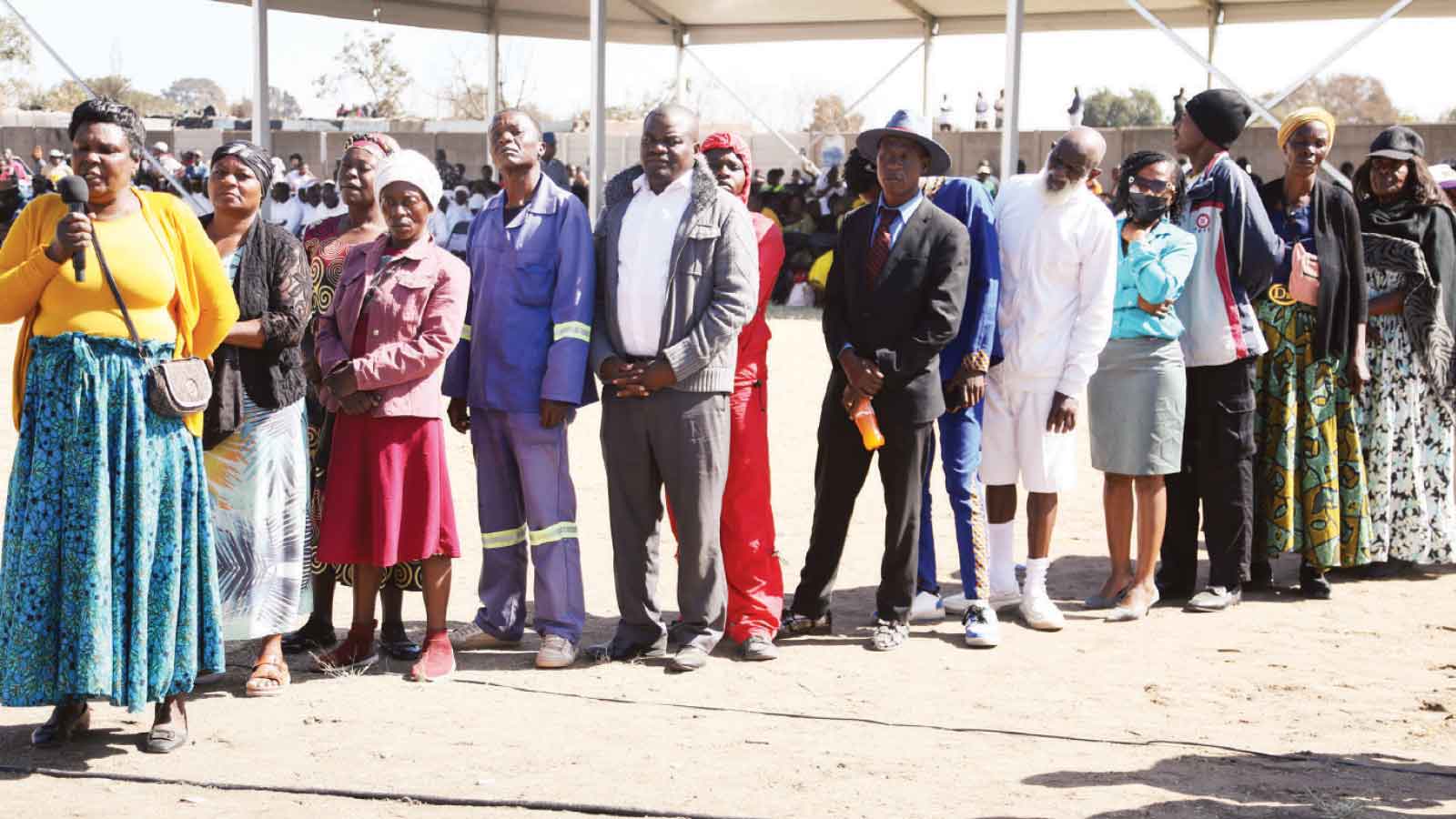
A particularly moving segment of the programme saw former drug addicts sharing powerful testimonies from Angel of Hope Foundation Drug Rehabilitation Centre beneficiaries, sharing how their lives have been transformed.
The testimonies by Shingirai Samson, Shamine Sakangenya, Blessing Muza and Partson Makuwenot only inspired the audience but also demonstrated the importance of creating spaces where survivors can share their experiences and encourage others to seek help.
For Muza, who became known during his enrolment at the Angel of Hope Drug Rehab Centre for uttering incoherent statements such as “Tsomu Tsomu,” he shared that he started using drugs while still at school, influenced by older peers.
He said he frequently attended school under the influence of marijuana and other substances, which eventually led to mental health complications.
Smartly dressed in a suit, he said life has changed for the better after rehabilitation, and he is now employed at Marondera Municipality.
Ms Shingirai said her life was severely affected by substance abuse after being introduced to satanism. She explained that she spent about four years living under difficult conditions at Mukuvisi River and became involved in harmful behaviours, including alcohol abuse, stating, “ndainwa tumbwa kusvika 10 pazuva” (I used to drink up to 10 bottles a day).
She reflected on how drugs destroyed her stability and disconnected her from normal life and family responsibilities, to the extent that her child was enrolled in Grade One without her knowledge while she was living on the streets.
Minister of Health and Child Care, Dr Douglas Mombeshora, commended Dr Mnangagwa for creating a platform that brings together communities and stakeholders in the fight against drug and substance abuse.
“This is a challenge that requires collective effort from all of us, as drug and substance abuse has become a serious national concern. As a Ministry, we recognise that addressing it demands an all-hands-on-deck approach involving Government, families, communities, churches, schools and other stakeholders,” he said.
Minister Mombeshora said Government is rolling out rehabilitation centres across the country, including the Angel of Hope Drug Rehabilitation Centre established under the leadership of First Lady Dr Auxillia Mnangagwa, which he described as the largest facility of its kind and a beacon of hope for those battling addiction.
He added that Government is also establishing national drug-testing centres and strengthening healthcare capacity, urging families and communities to support recovery as “individuals battling addiction often heal more successfully when surrounded by love, encouragement and understanding.”
Minister of Youth Empowerment, Development and Vocational Training, Tino Machakaire, led a pledge against drug and substance abuse, with participants committing themselves to becoming agents of change within their communities.
Minister Machakaire said the First Lady has been tirelessly working to ensure that young people are transformed and empowered, noting that children are now becoming responsible citizens through ongoing interventions. He called on stakeholders, together with parents, to actively report drug-related cases to the police and support law enforcement efforts.
He stressed the importance of ensuring that Government and Presidential initiatives to fight drug and substance abuse do not go to waste.
Minister of State for Harare Metropolitan Province Affairs and Devolution, Senator Charles Tawengwa, expressed gratitude and appreciation for the First Lady and all stakeholders gathered at the programme, describing it as a highly important initiative.
He said the collective efforts in fighting drug and substance abuse are helping improve the well-being of residents in Harare Metropolitan Province, emphasising that knowledge and awareness remain the first step in addressing drug abuse, commending participants for the hope and positive impact their efforts are creating in many lives.
Captain Marvelous Nakamba said it was important for players to support national efforts, stating: “It’s good for us to be here at the Angel of Hope Foundation to support what the First Lady is doing in saying no to drugs for the youth.”
He added that, as role models, footballers have a duty to encourage young people to stay away from drugs, noting his appreciation for the First Lady’s continued support for football and youth development in Zimbabwe.
Chirewa, who is based abroad, said he handed over a jersey to the First Lady in recognition of her sterling work, saying: “She is a big part of what is happening in the country in helping children through the Angel of Hope Foundation. We appreciate the work she is doing, and we came to show our support and encourage others to do the same.”
He urged fellow footballers to support their country and help young people avoid drugs, saying: “My message to players is to stay away from drugs and help youngsters stay on the right path.”
Following the awareness campaign, Dr Mnangagwa led stakeholders on a tour of the Angel of Hope Foundation Drug Rehabilitation Centre.
The delegation was warmly received with enthusiastic and energetic cheers from residents undergoing treatment during the centre’s eighth intake.
A strong advocate for a drug-free society, Dr Mnangagwa engaged with the recovering youths, whose renewed confidence, energy and optimism reflected the positive impact of rehabilitation.
The awareness campaign once again demonstrated Dr Mnangagwa’s people-centred approach, which prioritises dialogue, engagement and community participation in finding lasting solutions to national challenges.