admin
admin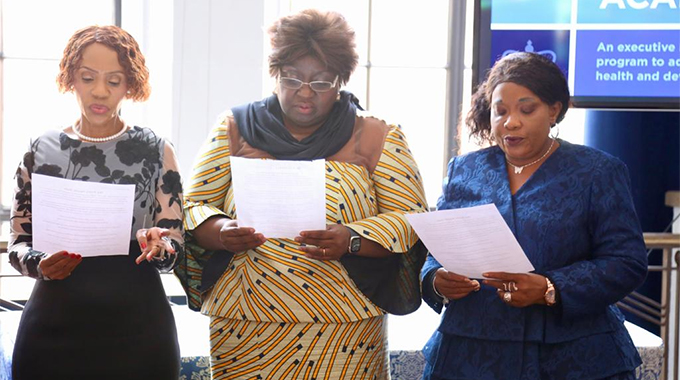
Tendai Rupapa Senior Reporter
At a time the world is grappling with the effects of climate change characterised by long dry spells and low rainfall in some countries, First Lady Dr Auxillia Mnangagwa’s drive to promote traditional grains like sorghum, rapoko and millet which thrive in adverse weather conditions, has seen her getting due global recognition.
At the start of her drive, she set the ball rolling by providing inputs to wives of traditional chiefs and headmen and no one ever thought traditional grains would capture the imagination of the world.
The grains boast high nutritional value and medicinal properties.
Her stance to promote the consumption of the grains and a variety of indigenous foods which mainly grow without husbandry for the benefit of mankind, has earned Amai Mnangagwa standing ovations at various fora.
In an era of climate change where rain-fed crops are failing because of moisture stress caused by prolonged dry spells, Dr Mnangagwa’s prescription is paying off.
Unlike some exotic dishes which expose people to some ailments, indigenous dishes ensure people grow healthy.
The just-ended Global First Ladies Academy in New York, the United States, where First Ladies held high-level roundtable discussions on their diverse activities and interventions to ease the plight of vulnerable groups in their respective countries, was another forum where Amai Mnangagwa shone like a beacon because of promoting traditional grains.
Dr Mnangagwa and her counterparts from Botswana, Burundi, Gambia, Kenya, Malawi, Mozambique and Namibia were awarded certificates by the organisers after completing an executive leadership training programme to advance critical health and development issues in their countries.
These included communicable and chronic disease management, community health, maternal and child health, climate change and gender gaps in access to healthcare.

First Lady Dr Auxillia Mnangagwa and the First Lady of Botswana Mrs Neo Masisi attending the Global First Ladies Alliance in New York, USA
Dr Mnangagwa left an indelible mark after her works were showcased.
Organisation of African First Ladies for Development (OAFLAD) president, Mrs Monica Geingos, the First Lady of Namibia highlighted a number of activities that First Ladies do to assist people in their nations, naming Dr Mnangagwa among those who were doing exceptionally well.
“The other First Lady who strikes me is from Zimbabwe. First Lady Dr Auxillia Mnangagwa has a programme on nutrition, which is particularly important for pregnant mothers. It is about educating people on the nutritional value of traditional grains and other indigenous food. What that means is rather than telling people that you need to get a balanced diet by eating some things that aren’t available in countries, She is reminding people of the nutritional value of food that is available and healthy. She is teaching people that they can have nutritious meals from what they have,” she said.
She added, “This programme by Dr Mnangagwa I like it because it has regional implications and it is something I would like Namibia to do, something that will also work in Malawi, Gambia Kenya and other African countries because we are the same.”
Journalists jostled for interviews with her and media groups were awash with reports of her sterling works, especially the fight against drug abuse, Human Papilloma Virus (HPV) vaccinations for girls aged between 10 and 14 years and promotion of traditional dishes.
The highlight of the academy was the meeting with US First Lady Dr Jill Biden who was more than pleased to meet her peers for a sisterly chat and enthralling moments which ended with a photo session.
“You’ve raised your voice to help more children and women prevent HPV and combat cervical cancer – one of the leading causes of death for women in African nations. And you’ve used the platform of the Organisation of African First Ladies for Development to further this important cause.
“I look forward to bringing us together at the United Nations General Assembly (UNGA) to address HPV,” she said.
In 2018, Amai Mnangagwa launched a programme of vaccination against HPV targeting girls aged between 10 and 14 years to ensure they do not develop cancer.
More than 800 000 girls were vaccinated and she is looking forward to continuing the HPV vaccination programme with the aim of one jab per girl.
During the training programme, the First Ladies collectively agreed to be there for one another, fundraise for different causes within the Organisation of African First Ladies for Development (OAFLAD) and hold regular meetings among themselves to exhaustively deal with issues directly affecting women and girls.
“As mothers we said let us not close doors on each other. Let us be there for one another. When invited by one of us, let us show solidarity and assist if there are some challenges that they will be facing.
“As First Ladies, we should not just meet on the sidelines of meetings of Heads of State and Government like the United Nations General Assembly (UNGA) and the African Union (AU). We should have our own time, programmes and schedules so that we can exhaustively deal with our issues,” Amai Mnangagwa said.
It was also agreed that outgoing First Ladies should be involved in OAFLAD to mentor their incoming sisters for continuation of programmes in their organisation and nations.
Coming back to the issue of traditional grains, as Agric4She patron, Dr Mnangagwa gave out inputs for free to women including traditional grains seed. Leading by example, the First Lady also enters the fields and performs in the many farming operations showing that she does not preach that which she does not practice.
She also encourages women to have their own granaries to store the grains for future use, and the practice has not been without its benefits for the people.
The benefits of indigenous dishes are well documented.
Apart from their high nutritional value and medicinal properties, consumers of traditional grains are not susceptible to hypertension, diabetes, cardiovascular challenges and obesity.
Dr Mnangagwa went beyond providing seeds.
She introduced traditional meal cookout competitions where winners not only scooped prizes, but helped other contestants appreciate the way certain traditional dishes are prepared.
Other contestants came up with exciting recipes to enhance demand for traditional dishes.
She also came up with a menu book of recipes that can be prepared and their nutritional benefits, showing her resolve to make the nation appreciate the benefits of traditional grains.
Only recently, the competitions went regional where other countries participated thus promoting gastronomy tourism.
At the recently held Kigali Global Dialogue in Rwanda, the issue of traditional grains was topical and the First Lady was commended for spearheading the drive.
On the sidelines of the Kigali dialogue, Mrs Susana Malcorra, president of Global Women Leaders (GWL) voices, an advocacy group of multilateralism and gender equality applauded the First Lady’s efforts to mitigate the effects of climate change which is a threat to all countries of the world.
“We talked about the efforts she makes towards mitigating the effects of climate change to traditional ways of cooking that women can keep and that is so significant these days when crops are being affected by climate change. Traditional crops are the way to go if we are really to move forward. We discussed matters that can be done at the level of the United Nations.
“We are very operational at the United Nations so we have already some ideas in that regard. I implored her to take the traditional grains story to the United Nations General Assembly to inspire others and we will go about supporting her to bring that story to the United Nations,” she said.
Amai Mnangagwa was quoted saying; “Because of climate change that we are experiencing as the whole world, traditional grains have come in as a form of food security to many families and this has become a topical issue here in Kigali to promote traditional grains to mitigate the effects of climate change.
People have now realised that what I am doing back home is not for Zimbabwe alone, but for the whole world because climate change is now everywhere.
“I urge all women around the globe to go into the fields and plant these traditional grains. Every woman must have a granary at home where we have these crops to avert hunger and it also brings food security,” she said.
International Chefs at the dialogue also spoke glowingly of the benefits of traditional grains and served some of the dishes prepared using the grains to showcase just how important they are.
Dr Mnangagwa partook in the millets themed dinner dubbed “Celebrating Millets”.


 Online Reporter