

 Chronicle Editor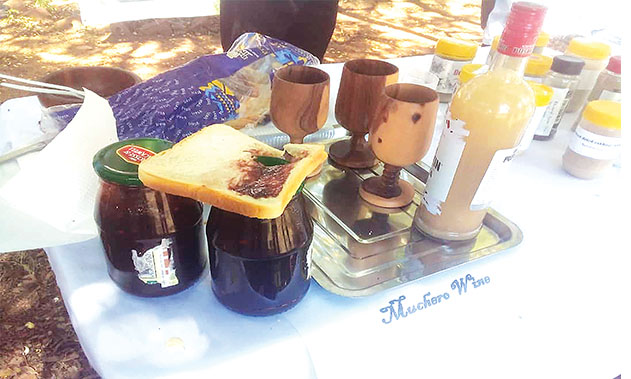
Michael Magoronga, [email protected]
INSPIRED by First Lady Dr Auxillia Mnangagwa’s cook-out contest, Kwekwe Polytechnic students have manufactured wine and jam using wild fruits.
Dr Mnangagwa is the brains behind the cook-out contests that have been rolled out across the country where local chefs, both professional and amateur showcase their culinary talent by preparing traditional dishes.
The competition, which has captured global attention, has since been introduced in tertiary institutions.
Munashe Kahiya and four of his friends took part in the Kwekwe District Competition and made it to the Midlands Provincial competitions where they eventually fell by the wayside.
Instead of crying over spilt milk, the team saw a window of opportunity for them to manufacture and industrialise their jam and wine made from wild fruits.
During the Kwekwe Polytechnic 2024 symposium, where students showcased their innovations and discoveries, dignitaries and visitors took turns to visit their stand and taste the wine and jam manufactured from wild fruits.
Kahiya said they draw inspiration from the First Lady’s cook-out contest.
“After the competition that is when I started to think that our elders used to eat wild fruits and I thought of ways of how we could harness wild fruits,” he said.
“We sat down and discovered that the current generation no longer ventures into the bush to gather wild fruits. The idea of packaging them into something, which we can drink, came.”
The team then researched fermentation and certain requirements like temperatures for jam and they seem to have struck the right code.

“We purchased the required wild fruits at the market and we made jam and wine and the project was a success. Although it is still a prototype, we are looking forward to fine-tuning our discoveries before we expand production and industrialise,” said Kahiya.
Kahiya and his team are currently studying hotel and catering at the certificate level.
Head of department for the Kwekwe Polytechnic’s Adult and Continuing Education, Mrs Susan Gurajena said the production was also in line with the Education 5.0 philosophy.
“After they took part in the First Lady’s cook-out competition, they were inspired to take the visions and produce these two products using wild fruits. These are still prototypes, but they will industrialise them as they are thinking of growing their business,” she said.
Mrs Gurajena said the college will assist in the registration and professionalising of the business.
“Our education philosophy is promoting self-employment and eradicating poverty, we will help them register through SAZ and also through intellectual property rights. We want them to create employment for others,” she said.
Speaking on behalf of the acting secretary for the Tertiary Education Services Council (TESC) Mr Elisha Ndanga, TESC human resources officer, Mrs Emeri Fayinandi said the innovations showcased by the students, not only provide practical solutions to real-world problems, but also contribute to the preservation and promotion of the country’s rich heritage.
“These innovations demonstrate the immense potential we have in our hands to shape a sustainable future as a nation. I urge companies to partner with the college in enhancing innovations and solving local challenges,” he said.
“By collaborating with this institution, we can combine academic expertise with practical industry knowledge to drive innovation and economic growth. Such partnerships align perfectly with the vision outlined in Vision 2030, NDS 1 and the Education 5.0 philosophy.”
Kwekwe Polytechnic principal, Mr Evans Musara said tertiary institutions were moving to support the Government in coming up with solutions for local problems.
“At the heart of our collective endeavours lies a term that resonates deeply within the walls of the Second Republic and encompasses the broader Vision 2030, NDS1 and the Heritage-Based Education 5.0 Philosophy,” he said.
“Innovation permeates our aspirations for industrialisation, our pursuit of an upper middle-income economy and society by 2030 and our commitment to sustainable development.”
Mr Musara said the preservation of traditional values was being modernised by tertiary institutions.
“Institutions of higher and tertiary learning, particularly polytechnics, hold a pivotal role as key stakeholders in driving human capital development and nurturing the critical skills required for progress. However, in this transformative era, polytechnics are transcending their traditional role by spearheading the provision of innovative solutions to the pressing challenges that afflict our industries, societies and commerce,” he said.
The symposium was held under the theme; “Enhancing Sustainable Development Through Heritage-Based Innovations”.


 Online Reporter
 Bongani Ndlovu