admin
admin
Tendai Rupapa-Senior Reporter
Efforts by health ambassador, First Lady Dr Auxillia Mnangagwa, to improve health systems countrywide, received a major boost yesterday with Qiagen, an international organisation from Germany, giving her Angel of Hope Foundation 15 cervical cancer screening machines and cervical cancer self-sampling kits.
The move comes as the First Lady intends to invite other First Ladies in the region for an awareness workshop on non-communicable diseases (NCDs).
NCDs are the major cause of mortality and morbidity globally, and awareness about their risks is critical in preventing and managing them.
Dr Mnangagwa said the knowledge they will acquire as mothers of the nations, will help them in saving the lives of women.
Qiagen, the manufacturer of WHO approved and prequalified cervical cancer screening machines, sent its senior executives from Germany to hand over the donation to Dr Mnangagwa.
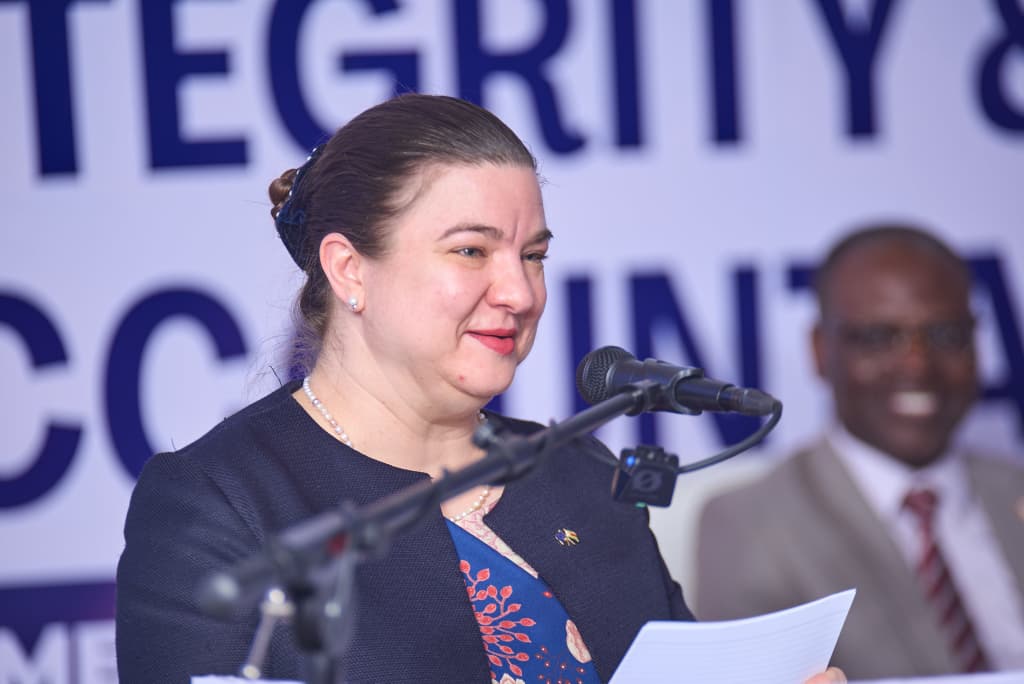
The company’s director, head of Global Emerging Markets Mrs Simona Grandits said they were in support of the First Lady’s efforts of promoting public awareness towards potential risk factors for NCDs and the screening services she is offering using her foundation’s mobile clinic.
“As Qiagen, we have been fighting cervical cancer for many years. Cervical cancer can be 100 percent preventable. Today we have come to donate to Angel of Hope Foundation and offer them a solution towards the fight against cervical cancer.
“These machines we have donated, will help in cervical cancer screening because we are saying no woman should die from cervical cancer. Thank you Amai for the good work you are doing in this country through your Angel of Hope Foundation which is touching lives,” she said.
Qiagen’s senior manager in Africa, Mrs Tandie Mpabanga-Nyathi said the self-sampling kits were painless and easy to use.
“As Qiagen, we commit to working with your Angel of Hope Foundation so that we reach as many women in Zimbabwe in the fight against cervical cancer in order to save lives. We hope to continue to support your foundation in your endeavours. We have heard so much about it and have been following your programmes with admiration. We are behind you Amai and will support you in saving the lives of women in Zimbabwe,” she said.
Accepting the donation, the First Lady commended Qiagen for the kind gesture, saying it would go a long way in helping women.
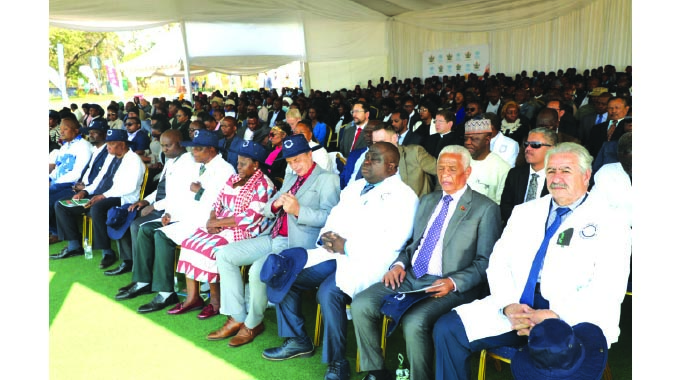
She said the machines would be distributed to various hospitals, especially in rural areas.
“Angel of Hope Foundation’s mission is to assist where possible the vulnerable and marginalised groups in society and one of its core principles is the accessibility of quality healthcare to the general populace. Therefore, I would like to thank Qiagen for this generous donation as it will go a long way in assisting women and girls in our communities in accessing the much needed medical awareness on cervical cancer,” said Dr Mnangagwa.
She said she had experienced a lot during her cancer screening outreach programmes.
“I get to meet the elderly who testify that they have never been screened for cervical cancer because of lack of knowledge about the silent killer. Therefore, they are benefiting a lot through the outreach programmes I am conducting through my Angel of Hope Foundation whereby I go with the Foundation’s mobile clinic,” she said.
She said Angel of Hope Foundation would like to contribute to the global vision of eliminating cervical cancer as a public health concern by the year 2030.
“Ladies and gentlemen, we need to work even harder in ensuring our women and girls are protected from factors which lead to the exposure of contracting cervical cancer,” said the First Lady. “When I traverse the length and breadth of the country interfacing with women, the response is so overwhelming.
“I came to a conclusion that it is important for information to be disseminated from the grassroots level. The way they flock to get screened for cervical and breast cancer and to be checked for other non-communicable diseases for free, touches my heart.
“They are really in need of these services, especially in remote areas. They were lagging behind due to lack of knowledge about their reproductive health system.”
Further, the First Lady said 90 percent of girls needed to be vaccinated which helped prevent them from contracting HPV.
“Those that would have tested positive should be followed up, treated and managed,” she said. “Two years back I had this programme when we went for the HPV vaccination in schools and we managed to vaccinate more than 800 000 school girls aged between 10 to 14 years.
“We were also advocating that they have to be aware and be careful of this disease. We were also urging them not to rush into sexual relationships.
“Cervical cancer has proven to be preventable and we can bridge the gap by raising awareness as I am doing through my ongoing cancer screening programme which offers free cancer screening to the marginalised groups residing in remote areas across all the 10 provinces of Zimbabwe.
“Angel of Hope Foundation will continue complimenting efforts from the Ministry of Health in ensuring quality health care for all. We have also been moving from province to province engaging men discussing various issues including health.
“Judging from their questions, they too lacked knowledge. We are working with the National Aids Council (NAC) and we discovered that men are reluctant when it comes to visiting clinics for check-ups. They rely on their spouses’ results of which we are saying no to, and encourage men to have regular checks so that they are placed on treatment if any ailments are detected.
“As parents, we should lead by example so that our children follow the right path. We are going to work extra hard because education is very important.”
Dr Justice Mudavanhu, the Deputy Director for the NCDs and also the National Cancer Coordinator in the Ministry of Health and Child Care, said: “Cancer is one of the most pivotal conditions that as a ministry we are facing and we are in the process of developing the National Cancer Control Plan for Zimbabwe which will run from 2021-2025.
“Cervical cancer is one of those top priority cancers that we face and is going to feature prominently in the strategy that we are doing and will be anchored from community up to the national level. All the structures will be involved. Covid-19 has also shown us that people with NCDs are the ones who may be most affected by Covid-19. I am really happy that we are working together with Amai to make sure that we mitigate the burden of NCDs in the country.”


 Online Reporter