admin
admin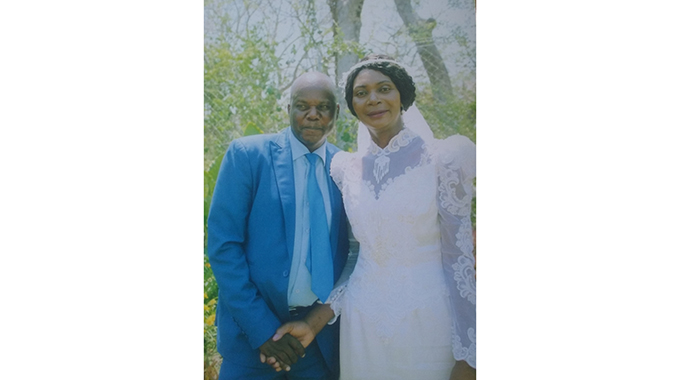
Tendai Rupapa Senior Reporter
Communities are beginning to appreciate the importance of First Lady Auxillia Mnangagwa’s nationwide inheritance programmes by taking measures to ensure their families do not wallow in poverty in the event of death. Benjamin Franklin (1706-1790) once said, “we never know the true value of water until the well runs dry”.
True to this view, very few people understand how privileged they are till the day they lose their breadwinner when reality starts showing its brutal face to them, with greedy relatives looting properties they are not entitled to.
Amai Mnangagwa has been on a countrywide tour with experts to conscientise people about inheritance matters.
She was prompted to interact with widows, widowers and orphans by frequent calls and visits from people who lost properties and were evicted following the death of their spouses, due to ignorance of the law.
This motivated her to engage representatives from the Ministry of Justice, Legal and Parliamentary Affairs, the Master of the High Court, Law Society of Zimbabwe (LSZ) and Office of the President and Cabinet (OPC), to raise awareness on property and inheritance issues.
The programme is now in its second phase and being conducted at district level following the successful first phase, which was conducted at provincial level countrywide.
Since time immemorial, widows and orphans have been left destitute by greedy relatives who throw them out of their homes and take away property in the event of a breadwinner’s death.
To avoid such problems and after being empowered by the First Lady’s teachings, some couples are coming out to wed to safeguard their families before calamity strikes.
One such family is a Kariba-based couple of Mr Samu Mawawo (51) who married his wife Pedzisai (49) under an unregistered union in 1991.
They have two children aged 24 and 8.
But the question is, what drove them to tie the knot last week at Kariba Magistrates Court after 28 years?
“The First Lady came to Mola in Kariba after she had mobilised a team of 18 medical professionals from the United States of America to provide free medical treatment to the country’s marginalised communities,” said Mr Mawawo.
“It was during that visit when she introduced to us her eye-opening programme where we were equipped with knowledge on property rights and inheritance law.
“We have also been following her programmes in the newspapers, taking notes on what the experts were saying on inheritance issues. Armed with the knowledge, I then sat down with my wife Pedzisai and we agreed to have a white wedding under the registered civil marriage – 5:11. I do not want my family to suffer when I am gone. You never know what my relatives would do to my family, they might loot all that we worked for together with my wife, leaving my family in the open.”
Mrs Mawawo was on cloud nine, saying back then the importance of entering into a registered union never crossed her mind.
She thanked the First Lady for initiating the eye-opening programme.
Mrs Mawawo said even the marriage officer, magistrate Mr Toendepi Zhou, congratulated them saying they had taken the right path.
“Most women have lost their properties following the death of their husbands because of lack of knowledge and this has caused untold pain and sorrow to a lot of women,” she said.
“We decided to go the 5:11 way so as to safeguard our properties besides it does not have room for polygamous marriage. We decided to prepare for the future before misfortune strikes.
“Amai’s nationwide programme really opened our eyes. We are grateful to the First Lady and her team.”
During one of the interfaces recently, Master of the High Court Mr Eldard Mutasa said the type of marriage that existed between the deceased and the surviving spouse determined how the inheritance issues would be handled.
“Unregistered customary law union is when couples decide to stay together and the man pays a little token to his in-laws,” he said.
“When he then decides to pay bride price to the extent of paying rusambo or part of it, in that case it becomes customary law marriage which is only recognised for purposes of inheritance and for claiming maintenance.
“However, this union has lots of limitations because if you have nothing registered, you need to prove the existence of customary law and for you to prove its existence, there is need for confirmation from your in-laws to confirm that their son indeed paid something.
“Usually it affects the wife because relatives might turn against her and dismiss that a token had been paid for her. The moment they cast doubt in that process of customary marriage, you would then need to approach the court to obtain confirmation of customary marriage or a court order declaring you as the surviving spouse.”
Mr Mutasa said unregistered customary law union had challenges and limitations as it was recognised for specific purposes.
Speaking of the registered civil marriage – 5:11, Mr Mutasa said, “It gives proof and confirmation that you are in a valid marriage. It also has advantages in that many people believe it gives extra security between spouses as it prohibits the man to enter into another marriage with another woman.
“Almost 90 percent if not all women prefer the 5:11 because it gives them security against polygamy. When it comes to inheritance, if a person has 5:11, the squabbles are less.”
Mr and Mrs Mawawo said they planned their future wisely and urged other couples to follow suit.



 Online Reporter