Trust Freddy
Herald Correspondent
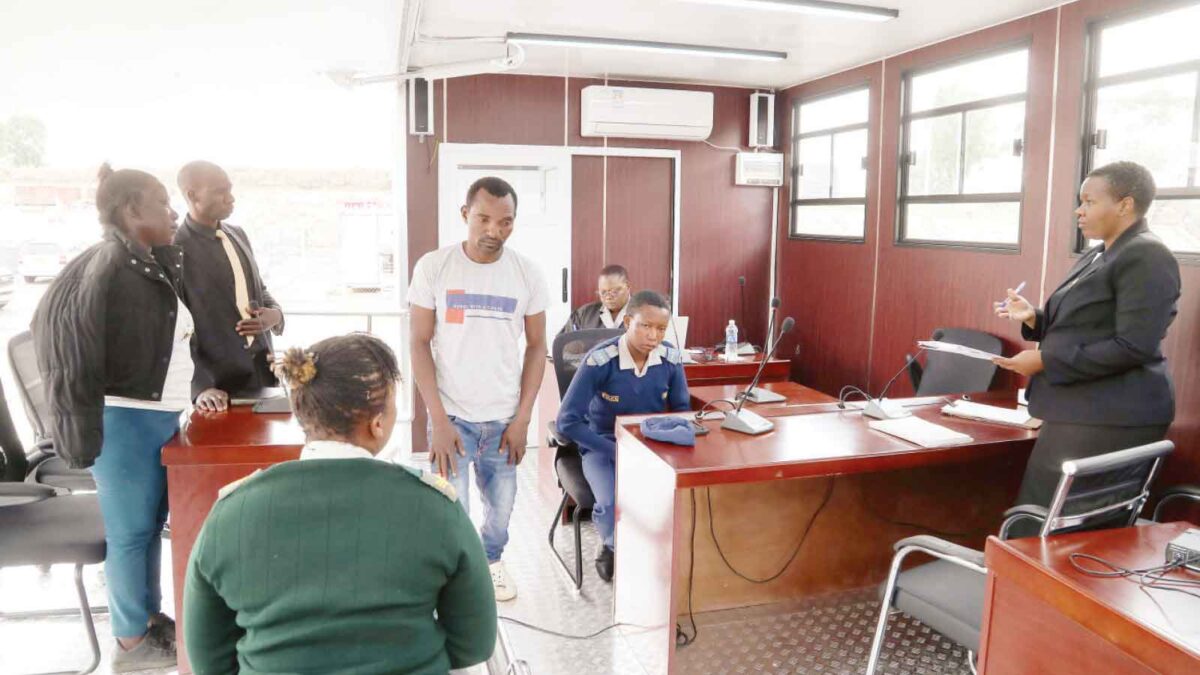
THE country’s first mobile court officially commenced sittings at Southlea Park Police Station in Harare yesterday, ushering in a decentralised judicial system that has drawn praise from residents.
The development follows the official commissioning of the mobile court by Chief Justice Elizabeth Gwaunza in Harare on Thursday last week.
The initiative seeks to enhance access to justice, ease financial pressure on litigants, and reduce the heavy backlog at Mbare Magistrates’ Court.
Speaking at the launch site, Judicial Service Commission (JSC) Deputy Head of Corporate Services Mr Daniel Nemukuyu said the mobile court dealt with four cases on its first day of sittings.
“The first sitting of the mobile court was launched by the Chief Justice last week on Thursday. Today, we have four cases at Southlea Park Police Station. Of the four cases, the court has so far handled two cases, and the other two cases are pending. The court will continue sitting until all cases are cleared,” Mr Nemukuyu said.
He also revealed that the mobile unit was operating on a structured weekly rotation to cover high-density residential areas surrounding the Mbare court station.
Under the schedule, the mobile court sits at Southlea Park Police Station on Mondays, Budiriro Police Station on Tuesdays, Glen Norah Police Station on Wednesdays, and Glen View Police Station on Thursdays.
“The mobile court has already started working, and there is an overwhelming response. People are utilising the court in our quest to promote access to justice for all,” added Mr Nemukuyu.
Hopley resident Ms Synodia Moyo described the local court sitting as a major reprieve for women and vulnerable community members who frequently struggle with transport fares.
“Going to Mbare Magistrates’ Court meant spending money on transport that many of us simply do not have, on top of losing a whole day of work or taking care of household chores,” Ms Moyo said.
“Seeing the court bus parked and operating here shows that the Government is listening to the needs of the community.”
Another resident from Southlea Park, Mr Farai Kamunga, said the mobile court stops witnesses and complainants from abandoning cases due to logistical challenges.
“In the past, many people would drop minor cases or miss court dates because they could not afford back-and-forth trips to Mbare,” Mr Kamunga said.
“Having the magistrate come right here to our local police station makes justice accessible for ordinary people.”
The pilot mobile court project is part of the JSC’s 2026–2030 Strategic Plan, which envisions rolling out mobile court units to every province across the country by 2030.