admin
admin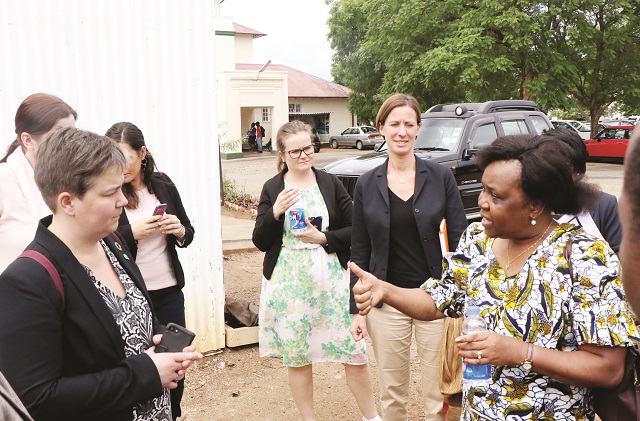

Nyaradzo Bakari, Chronicle Reporter
A FISTULA Treatment Unit at the United Bulawayo Hospitals (UBH) is expected to be operational by the end of the year following the completion of the first phase of the project.
The project, which is meant to benefit women who develop complications during or after birth, is being spearheaded by the Ministry of Health and Child Care in partnership with the United Nations Population Fund (UNFPA).
Speaking during a tour of the project by Swedish Parliamentarians and United Nations representatives in the city yesterday, UNFPA country representative, Dr Esther Muia, said the unit would go a long way in assisting women with vesicovaginal fistula (VVF), a medical condition of having uncontrollably leaking urine due to complications experienced when giving birth.
“In Zimbabwe, teenage pregnancy rates are high. Girls go into labour at a tender age and their bodies can’t cope with the pregnancy. So when they go into labour, they have complications and their bladder gets damaged. That young woman then has difficulties with urine leakages. So to that effect we decided to help the hospital to be able to repair fistula by supporting the construction of this building,” she said.
Dr Muia said the UNFPA was working on capacitating the Family Care Unit to counter challenges faced by women during and after giving birth.
She said the organisation was also helping in reducing maternal and infant mortality.
“We have been helping the hospital and we noticed the challenge with the Family Care Centre, which takes care of women during pregnancy and after, HIV positive women and victims of GBV. The unit is crowded, there is no privacy and confidentiality. This is a violation of the right to privacy and dignity,” said Dr Muia.
“As UNFPA we want zero maternity deaths, during pregnancy, birth and after birth. We also don’t want women to lack contraceptives.”
UBH Clinical Director Dr Narcisius Dzvanga said the unit would offer services to women in the Southern region of the country.
“The fistula project is a partnership between the Ministry of Health and UNFPA. Our catchment area includes Bulawayo, Matabeleland North, Matabeleland South and Midlands. We will be the only centre to offer fistula repairs in the Southern region. We are hoping to be a trainer of trainers when the unit is up and running,” he said.
Dr Dzvanga said the project was in the second phase and they are appealing to partners who are will to help complete the project to come forward.
He said the unit would be operational by the end of the year if funding is availed.
“The second phase includes plastering, flooring, glazing, ceiling and painting. This needs about $110 000 including labour. We are failing to get partners for the second phase as most private partners want to chip in buying equipment, which is our third phase,” Dr Dzvanga said.
The clinical director commended the Government for supporting the hospital and facilitating partnerships to improve service delivery at the hospital.
Dr Dzvanga said apart from infrastructure challenges, the hospital was also facing financial and human resource challenges.
“The hospital was built a long time ago and now we are serving a bigger population. We have been trying new projects to expand but we have budget constraints. We are also limited by our staff establishment. Even if we source funds to expand, we will need more human resources and that’s difficult because there are certain limitations to hiring workers. Our staff establishment is not conducive,” he said.
The Swedish Ambassador to Zimbabwe, Ms Sofia Calltorp, said the tour was aimed at seeing how far the project has gone and what challenges are being faced by the hospital.
“The purpose of the visit is to look at some of the Swedish supported projects in Bulawayo. Sweden is a large donor of development assistance to Zimbabwe. We spend about $50 million every year and one of our focus areas is health, women and mothers’ health in particular.
“We are visiting the Family Planning Unit, Maternity ward and the Youth centre. We want our interventions to reach out to the most vulnerable groups,” she said. — @NyarieBakie


 Online Reporter