Online Reporter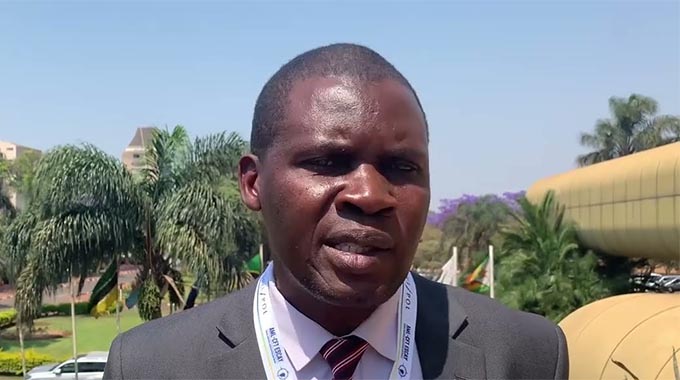
Tapiwanashe Mangwiro, Senior Business Reporter
THE Reserve Bank of Zimbabwe’s (RBZ) crackdown on illicit financial activity has placed the country’s burgeoning car dealership industry under the spotlight, with the bank’s Financial Intelligence Unit (FIU) revealing that automobile trading ranks high across all risk metrics for money laundering.
FIU Director General, Mr Oliver Chiperesa, warned that the sector has become the most vulnerable point in Zimbabwe’s financial system.
“The National Risk Assessment is a vital instrument in identifying, assessing, prioritising and understanding risks associated with money laundering, which emanate from both within and beyond our borders,” said Mr Chiperesa.
He also chairs the National Task Force on Anti-Money Laundering (AML), Combating the Financing of Terrorism (CFT) and Countering Proliferation Financing (CPF).
Mr Chiperesa said the recently completed third National Risk Assessment (NRA), covering the period from November 2023 to November 2024, rated Zimbabwe’s overall money laundering risk as medium. However, car dealerships stood out as the industry with the highest risk ratings.

According to the NRA report, 95 percent of sampled car dealers import vehicles and trade exclusively in United States dollar cash. This cash-heavy model, coupled with the sector’s lack of licensing and supervision, makes it a prime target for criminals seeking to launder proceeds from smuggling, corruption and tax evasion.
Between 2019 and 2023, Zimbabwe’s vehicle population surged by 25 percent — from just over 1,23 million to nearly 1.6 million — creating what investigators describe as a growing cash bazaar for illicit funds.
“Car dealers remain unregulated. The cash-intensive nature of their transactions makes it difficult to trace the source of funds,” the NRA warns.
Out of the 14 sectors assessed by the RBZ, car dealerships were the only industry categorised as high risk across all three metrics: threat rating, vulnerability rating and money laundering risk. The sector was followed by real estate agents and dealers in precious metals and stones, both of which were rated medium-high risk across the same metrics.
The 2024 assessment identified smuggling (US$920 million), illegal gold and precious metals trading (US$880 million), corruption (US$730 million), fraud (US$500 million), and tax evasion (US$300 million) as the top drivers of illicit financial flows. Combined with drug trafficking, these crimes generated an estimated US$6,15 billion over the past five years — equivalent to around 3,4 percent of Zimbabwe’s GDP.
Mr Chiperesa emphasised that the NRA is not only about identifying risks but also about building stronger defences.
“By undertaking this third NRA, Zimbabwe is not only aligning with international standards but also reinforcing its commitment to safeguarding the integrity of both the national and global financial systems,” he said.
Despite being central to financial transactions, the banking sector was rated medium risk, with a low threat level but a medium-high vulnerability score. Products most at risk included corporate banking, private banking, trade finance, and SME lending.

The report acknowledged progress in compliance. Most banks have strengthened customer due diligence and suspicious transaction reporting systems, while regulators have improved risk-based supervision. However, weaknesses remain. Bank compliance departments were found to be under-resourced, and sanctions for non-compliant institutions were deemed inadequate.
Recommendations to address these risks include increasing staff capacity at both commercial banks and the RBZ’s supervisory unit, and introducing tougher penalties for breaches.
The securities sector was rated medium-low risk, largely due to its reliance on electronic transactions. However, new instruments such as contracts for difference (CFDs) on the Victoria Falls Stock Exchange were flagged as having medium-high vulnerability.
The insurance industry was also rated medium-low risk, thanks to limited cash exposure and the establishment of a dedicated AML/CFT unit at the Insurance and Pensions Commission. Nonetheless, the unit is under-resourced, and insurers are under pressure to strengthen compliance.
Real estate agents, like car dealers, were rated medium-high risk due to their exposure to high-value cash transactions. While the Estate Agents Council has improved awareness of anti-money laundering obligations, compliance remains inconsistent.
The NRA urged the Council and the FIU to allocate more resources to monitoring the sector, enhance suspicious transaction reporting, and enforce deterrent penalties.
Dealers in precious metals and stones were also rated medium-high risk, reflecting widespread vulnerabilities linked to smuggling and illegal gold trading between 2019 and 2023. Awareness of AML obligations in the mining sector was found to be low, prompting recommendations for tighter border controls, increased capacity at the Ministry of Mines, and stronger enforcement against rogue operators.
Lawyers were assessed as medium risk, with particular vulnerabilities in handling real estate transactions and managing trust accounts. Some firms were found to act as intermediaries for opaque company structures that obscure beneficial ownership.
The Law Society of Zimbabwe has now made AML training mandatory for lawyers renewing their practising certificates—a move praised in the report. However, the NRA noted that the sector still reports far fewer suspicious transactions than expected, given its risk profile.
Separate thematic assessments flagged environmental crimes — particularly illegal mining and forestry — as medium-high risk. Tax crimes were rated medium, with the informal economy and cash-based businesses identified as hotspots for evasion.
Meanwhile, virtual assets such as cryptocurrencies remain relatively unused in Zimbabwe, but the NRA called for urgent regulation of virtual asset service providers. Non-custodial wallets were identified as posing the highest risk of misuse for money laundering or terrorist financing.
The findings will inform Zimbabwe’s Anti-Money Laundering and Counter Financing of Terrorism (AML/CFT) Strategy for 2025–2029, which aims to tighten oversight of high-risk sectors, close loopholes in gold and car trading, and demand stricter compliance from real estate and professional services.
“All relevant stakeholders in the AML/CFT value chain must be guided by the results of the assessment in undertaking institutional or sectoral risk assessments and deploying mitigatory measures,” Mr Chiperesa said.
The NRA process involved over 80 public and private institutions and spanned 12 months.
Authorities say the upcoming five-year AML/CFT strategy will target these sectors with measures including compulsory licensing, enhanced supervision, and tougher penalties.