Online Reporter
Rutendo Nyeve, Victoria Falls Reporter
THE Financial Intelligence Unit (FIU) has registered significant progress in the fight against money laundering and financial crimes, achieving a remarkable 37 out of 40 compliance rating with global standards, a development credited with contributing to the country’s ongoing monetary stability.
The milestones were revealed during the fourth annual Public-Private Sector Dialogue on Anti-Money Laundering and Financial Crime, held in Victoria Falls on Friday.
Acting Governor of the Reserve Bank of Zimbabwe (RBZ), Dr Jesimen Chipika, revealed that the country has achieved one of the best ratings in the region for technical compliance with the Financial Action Task Force (FATF) 40 Recommendations.
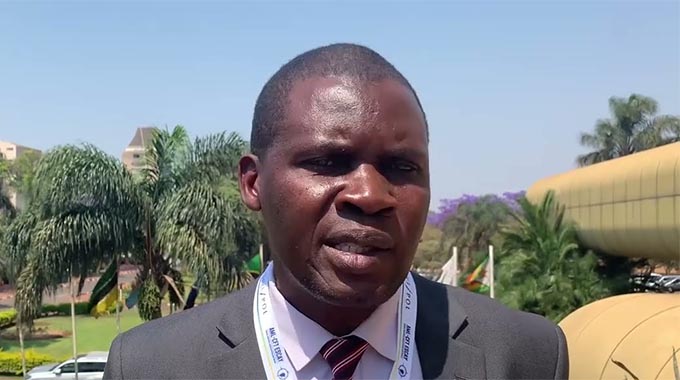
“I note with a sense of pride that, in terms of Technical Compliance with the FATF 40 Recommendations, Zimbabwe is now rated either fully compliant or largely compliant in 37 out of the 40 recommendations, which is one of the best rating levels achieved by any country in our region,” said Dr Chipika.
This marks a dramatic turnaround from 2019, when the country was placed on the FATF’s “grey list” due to major weaknesses identified in a 2015 assessment.
Dr Chipika credited national collaboration for this success.
“Through stakeholder collaboration, the country has since made good progress in addressing some of the major deficiencies that were identified in the Mutual Evaluation Report, culminating in the country’s removal from the FATF’s Grey List in 2022,” she said.

She, however, issued a call to action, warning that the next round of assessments, scheduled for June 2026, will be more demanding.
The focus will shift from the existence of laws to their effectiveness in producing tangible results.
“The next round of assessments, however, will have a different focus. They will focus less on Technical Compliance where we have done very well. Instead, the focus will now be on assessing effectiveness, how well we are performing as a country to effectively combat money laundering and related financial crimes,” she said.
Echoing this sentiment, the Director General of the FIU, Mr Oliver Chiperesa, provided a detailed breakdown of the upcoming challenge.
He confirmed that Zimbabwe will undergo its third mutual evaluation in 2026.
“So, the countries are assessed on two levels. There is what we call technical compliance, which assesses the adequacy of our legal and institutional frameworks. Zimbabwe has done extremely well in that. We are rated compliant in 37 out of the 40,” said Mr Chiperesa.
He, however, cautioned that the forthcoming assessment is going to focus less on the institutional and legal framework.
“It is now going to be a results-based assessments focusing on a collection of statistics that demonstrate how well we have implemented our laws our frameworks to combat money laundering,” he said.
This, he admitted, is likely to be a little bit harder.
The assessors will scrutinise prosecution rates, convictions, and the value of assets confiscated from criminals.
While progress has been made, Mr Chiperesa conceded that law enforcement agencies still require to be capacitated in terms of resources.
To bridge this gap, the FIU is working with international partners through an EU-funded project to develop a specialised training curriculum for financial investigators and prosecutors.
“We are working with international experts so that we put together well-trained financial investigators and prosecutors so I am confident once that project is fully rolled out we will be having a large pool of experts on financial crimes,” said Mr Chiperesa.
Beyond high-level crimes, the FIU Director General also highlighted the unit’s role in stabilising the local currency.
He revealed that the FIU’s inspectorate has been active in market surveillance, cracking down on businesses refusing to accept the Zimbabwe dollar (ZIP) or engaging in extortionate pricing.
“I can say yes, the FIU has played this part in supporting the Central Bank and Government’s initiatives to stabilise our currency, stabilise prices and stabilise the economy and we continue to be vigilant,” he said.