admin
admin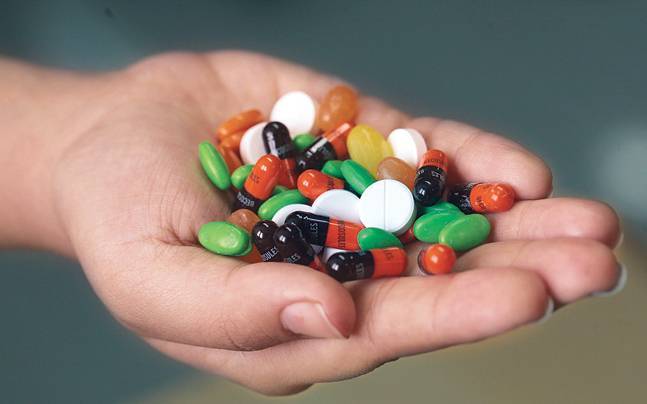
LITTLE Thabo’s incessant cough, which started off as a simple winter cold, became a source of pain, worry and puzzlement for his parents.
For several months, Thabo’s mother, Ms Letwin Tshabangu failed to make sense of what was afflicting her three-year-old bundle of joy.
Living in Nhwali village, Gwanda South, a rural set up where superstition often reigns, various theories flew from kith and kin explaining the boy’s unrelenting condition.
“He was bewitched”, some suggested with conviction, while the few enlightened ones insisted on Thabo being taken to hospital.
Caught in between science and superstition, Mrs Tshabangu tried both traditional and modern remedies to her son’s affliction.
Amid the dissonance, Thabo’s condition continued to deteriorate with each passing day.
Ms Tshabangu, realising that her son was slowly losing the battle, finally sought medical attention at Nhwali Clinic but the cough persisted in December 2015.
Bouts of high temperature, vomiting, loss of appetite and consequent weight loss worsened the little lad’s suffering.
“We tried everything, from herbs prescribed by local herbalists to antibiotics prescribed at the clinic but the cough didn’t go away. It actually got worse,” said Ms Tshabangu.
“After completing a course of antibiotics, I moved to administer him on herbs as well as cough syrup but nothing changed. The cough continued for months.
“I was later advised by my aunt to go back to the clinic. Only then Thabo was transferred to Manama Mission Hospital after the realisation that his condition could be worse than earlier anticipated,” she said.
At Manama Mission Hospital, Thabo, whose body had now given in to his affliction, was admitted and a series of tests were conducted to ascertain his ailment.
He was diagnosed with tuberculosis (TB) and immediately put on treatment. A glimmer of hope shone for Ms Tshabangu as she became hopeful that her son would soon be healed.
For close to two weeks, Thabo lay unresponsive on the hospital bed; his eyes shut and face wan, he was losing the fight. Administering the medicine to her son was Ms Tshabangu’s mammoth task.
“He wouldn’t swallow the pills. They were bitter. Even when I tried mixing the medicine with food, he would vomit immediately,” she related her ordeal as a pool of tears formed in her eyes.
After nearly a year of battling TB, little Thabo succumbed to the disease in October 2016.
Matabeleland South Provincial Medical Director (PMD) Dr Rudo Chikodzore said the province had the highest TB burden in the country and a high death rate of about 18 percent.
She said the high TB burden in the province also explains the high paediatric TB cases.
“For January to June 2017, the notification rate for all TB cases is 154 per every 100 00 people. Notification rate for those aged 15 years and below is eight per 100 000.
“The death rate is 18 percent and we have a treatment success of about 72 percent,” she said.
Dr Chikodzore added: “We are one of the provinces with the highest TB and HIV burden in the country. The high TB cases may also translate to high paediatric TB cases”.
She said detecting TB in children was a difficult undertaking and often diagnosis was done when damage had already been done.
Great strides have however, been made in the fight against paediatric TB following the unveiling of fixed dose flavoured TB treatment formulations customised for children.
The formulations were unveiled by the World Health Organisation (WHO), at a conference on lung health in Cape Town, South Africa at the end of 2015.
Three most commonly used drugs to treat drug-sensitive TB (rifampicin, isoniazid and pyrazinamide) are combined to produce the fixed dose.
Previously children were give regular TB pills which were cut, often imprecisely, into halves or crushed into the requisite dosages.
Director of Aids and TB Unit in the Ministry of Health and Child Care Dr Owen Mugurungi said the country had already started rolling out the flavoured remedies.
He said the new medicines would help increase adherence to treatment and save more lives.
“The right medicines in the right doses will increase adherence to treatment and save more lives.
“This is an important step in improving treatment and child survival from TB, and slowing the spread of drug-resistant TB,” he said.
Dr Mugurungi added that using fixed-dose combinations for children also helped ease procurement of TB medicines as fewer pills would simplify ordering and storage, and facilitates scale-up of paediatric treatment.
He said child-friendly medicines helped improve the daily lives of children and their families struggling with TB.
“Six months is a long time to take medicine. The availability of treatment that tastes good because of being flavoured and is simple to provide will ease the daily struggles of children, parents, and caregivers alike,” he said.
Dr Mugurungi added that the new formulation, which was found in banana and strawberry flavours started being rolled out in Matabeleland South province in July this year.
According to WHO estimates, at least 400 children succumb to TB everyday globally, while one million children get sick with TB every year.
Zimbabwe is one of the countries with the highest TB burden in the world.
Dr Mugurungi said the actual burden of childhood TB in Zimbabwe was difficult to estimate due to limitations in case detection.
“The true burden of childhood TB in Zimbabwe is not known due to acknowledged limitations in case detection and under-reporting. For the last three years 10 percent of all TB notifications were in children but this proportion is expected to be as high as 15 percent,” he said.
Dr Mugurungi added that the country has however, made some significant strides in dealing with childhood TB.
“Guidelines, standard operation procedures and training materials for health care workers and community health care workers have been developed and trainings were conducted.
“We have also introduced GeneXpert technology for TB diagnosis in children. New WHO recommended childhood TB medicines have been procured and distributed,” he said.
Dr Mugurungi added that the country was also maintaining a high coverage of BCG immunisation as part of efforts to fight childhood TB.
He pointed out several factors that contribute to paediatric TB, among them household contact with smear positive TB adults.
“Because these are young children the immune system is still not mature, it is easy for TB to afflict them as they may fail to fight off the infection.
Illnesses or conditions which weaken the immune system also contribute, for example HIV, malnutrition, post-measles, chemotherapy and prolonged steroid therapy.
“Other factors include environmental factors, for example, overcrowding and dusty conditions that predispose children to infection,” he said.
International Union Against Tuberculosis and Lung Disease (The Union) country director, Dr Christopher Zishiri said parents should quickly visit a health care facility nearest to them once their children started showing signs and symptoms of TB.
“It is important for parents to visit their nearest clinic if they see any of the following signs and symptoms of TB in their children: a persistent cough which does not improve, failure to gain weight, loss of weight, unresolved fever and/or night sweats, reduced playfulness, fatigue and loss of appetite,” he said.
Dr Zishiri warned that TB can have long term devastating effects on children if untreated.
“Failure to treat TB in children can result in, death, spinal cord complications which are characterised by back pain and stiffness, joint damage which can occur as a result of Tuberculous arthritis which usually affects the hips and knees.
“Other effects include, swelling of the membranes that cover the brain (meningitis). This can cause a lasting or intermittent headache that occurs for weeks. Mental changes can also occur as a result,” he said.
Dr Zishiri added, “Failure to treat TB in children can also lead to Liver or kidney complications. The liver and kidneys help filter waste and impurities from the bloodstream. These functions become impaired if the liver or kidneys are affected by TB.
“Rarely, tuberculosis can infect the tissues that surround your heart, causing inflammation and fluid collections that may interfere with your heart’s ability to pump effectively. This condition, called cardiac tamponade, can be fatal.”
Dr Zishiri emphasised that TB in children was curable and children who suffer from TB could be treated successfully and could live happy healthy lives after completing their treatment.
The diagnosis and treatment of TB is available for free at any government clinic or hospital.
With the introduction of improved formulations, TB treatment has been enhanced by ensuring that the right medicines are administered in the right dosages. Adherence to treatment is consequently expected to improve.
An air of hope thus pervades the country, particularly among parents whose children have been diagnosed with TB and are on treatment.
— @irielyan



 derick.khumalo