Chronicle Editor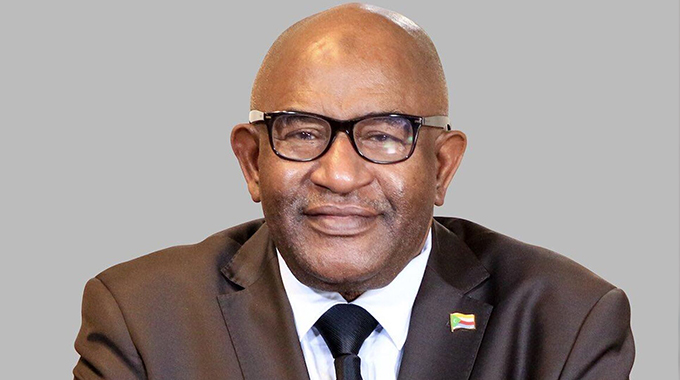
The Union of the Comoros was admitted into the Southern African Development Community (Sadc) at the 37th Sadc Summit of Heads of State and Government in August 2017 and then became a full member at the 38th Summit of Heads of State and Government on August 2018 in Windhoek, Namibia.
The Comoros is a volcanic archipelago, composed of four islands, located off the east coast of Africa, in the warm waters of the Mozambique Channel in the Indian Ocean between Madagascar and the southeast African mainland, about 290 km off the eastern coast of Africa.
The islands from northwest to southeast include Grande Comore (N’gazidja), Mohéli (Mwali), Anjouan (Ndzuwani), and Mayotte (Mahore). The Grand Comore (N’gazidja), the largest island in the nation-state, is surrounded by beaches and old lava from the active Mount Karthala Volcano.
Each of the islands has an economic and tourist potential characterised by the abundance of Arab and African cultures. The Comoros is a country of peace and security whose economic wealth, based in particular on agriculture, tourism and the blue economy, remains untapped and to be discovered. Although the early history of the islands is uncertain, they are thought to have been explored by Arab and Persian traders in antiquity and, like Madagascar, settled by small numbers of Malayo-Indonesian people, gaining a sizable population only when Bantu-speaking people from the African mainland settled there.
President: Azali Assoumani Currency: Comorian Franc Official Languages: Comorian, French and Arabic
Currency: Comoros franc
Population: 836 774
Size of Country: 2 235 square kilometres

Climate
The tropical climate has two clearly marked seasons: a cooler, dry period between May and October and a warmer, humid season between November and April. In November, the summer monsoon (kashkazi) brings the highest afternoon temperatures – about 33 degrees Celsius. The highest monthly rainfall occurs in January with about 275 to 375 mm, and the rainy season is the season of greatest tropical cyclone frequency. Dry season daily maximum temperatures fall to their lowest, about 29 degrees Celsius, in July. The average annual rainfall varies between 1 100 and 2 900 mm, being highest on the windward northeast sides of the islands. Rain sinks so deeply into the hardened lava and porous rocks of Grande Comore that wells are difficult to drill. Traditionally, most of Grande Comore’s water supply has come from reservoirs filled in the rainy season and from freshwater springs along the coasts (foumbous). People The islanders reflect a diversity of origins. Malay immigrants and Arab and Persian traders have mixed with people from Madagascar and with various African people. Most of the islands’ inhabitants speak island-specific varieties of Comorian (Shikomoro), a Bantu language related to Swahili and written in Arabic script.
Languages
Comorian, Arabic, and French are the official languages. French is the language of administration. Most Comorians are Sunni Muslims, and Islam is the state religion.
Economy
Comoros has an economy based on subsistence agriculture and fishing. The country’s gross domestic product generally has grown at a rate slightly faster than the population but is among the lowest in the world. Since independence in 1975, aid from the European Union (EU), notably France, has been the major underpinning of the economy; Saudi Arabia, Japan, and Kuwait have also provided financial aid. Subsistence agriculture yields cassava, sweet potatoes, bananas, and mountain (dry-field) rice, but much of the country’s food must be imported. Chickens, goats, cattle, and sheep are also raised. Plantations cultivating vanilla (mostly on Grande Comore and Anjouan), perfume plants (particularly ylang-ylang on Anjouan), coconuts (mostly on Mohéli), coffee, cloves, cacao, and other crops cover much of the islands. Forestry contributes somewhat to total agricultural production, but the forested areas have been severely reduced because of a lack of cultivable land and as a result of ylang-ylang production. Because Comoros is made up of islands, fishing should be a significant part of the market economy. Its potential has yet to be fully realised, however. The industry exists only on a small scale, and the abundant tuna that inhabit Comorian waters have so far been fished largely by EU countries. Coelecanth fish that are caught there provide some income to Comorian fishermen. Utilities were privatised in 1997. Although there are hydroelectric power plants, the islands still suffer from an unreliable supply of water and power. Manufacturing generally is limited to the processing of agricultural products – primarily vanilla, essential oils, cloves, and copra – for export. There are also sawmills and woodworking establishments. The Central Bank of Comoros (Banque Centrale des Comores) issues the country’s currency, the Comoros franc. There is commercial and development banking in Moroni. Imports, of much higher value than exports, include rice, petroleum, meat, iron and steel, and cement. Comoros trades with several countries, including the Netherlands, China, Singapore, Pakistan, India, and France. Politics
At independence, there were five main political parties: OUDZIMA, UMMA, the Comoro People’s Democratic Rally, the Comoro National Liberation Movement and the Socialist Objective Party. The political groups previously known simply as the “green” and “white” party became the Rassemblement Démocratique du Peuple Comorien (RDPC) and the Union Démocratique des Comores (UDC), headed by Sayyid Muhammad Cheikh and Sayyid Ibrahim. Members from both parties later merged to form OUDZIMA under the leadership of first president Ahmad Abdallah while dissidents from both created UMMA under the leadership of future president Ali Soilih. In January 2020, The Convention for the Renewal of the Comoros (CRC) won 20 out of 24 parliamentary seats in the parliamentary election. Under the constitution of 2001, amended in 2009, 2014, and 2018, the islands of Grande Comore, Mohéli, Anjouan, and Mayotte form the Union of the Comoros. Mayotte, however, continues to be administered by France and does not participate in the government of the Union. Executive power of the federal government is vested in the president, assisted by three vice presidents. The president serves as head of state and government and is directly elected in nationwide elections to serve a five-year term, renewable once. Each vice president serves a five-year term and represents one of the three islands. A constitutional referendum passed in 2009 included measures to reduce the federal governmental structure, change the island leadership positions of president to governor, and extend the term of the federal presidency from four to five years. A constitutional referendum passed in 2018 eliminated the single-term federal presidency that had rotated among the three islands since 2001. Other changes included designating Islam as the state religion and granting the president the power to eliminate the positions of the three vice presidents. The unicameral legislature consists of the Assembly of the Union; members are elected to five-year terms. Slightly more than half the members are directly elected, with the remainder selected by the islands’ local governments. The 1996 constitution created a multiparty system, but stringent criteria severely limited the number of parties with legal recognition.
The 2001 constitution removed these impediments, thus allowing political parties to operate freely. The country has universal suffrage, and women participate in all aspects of the economy. By the 1990s, women had become cabinet members and held other positions in various governments.


 Online Reporter