Online Reporter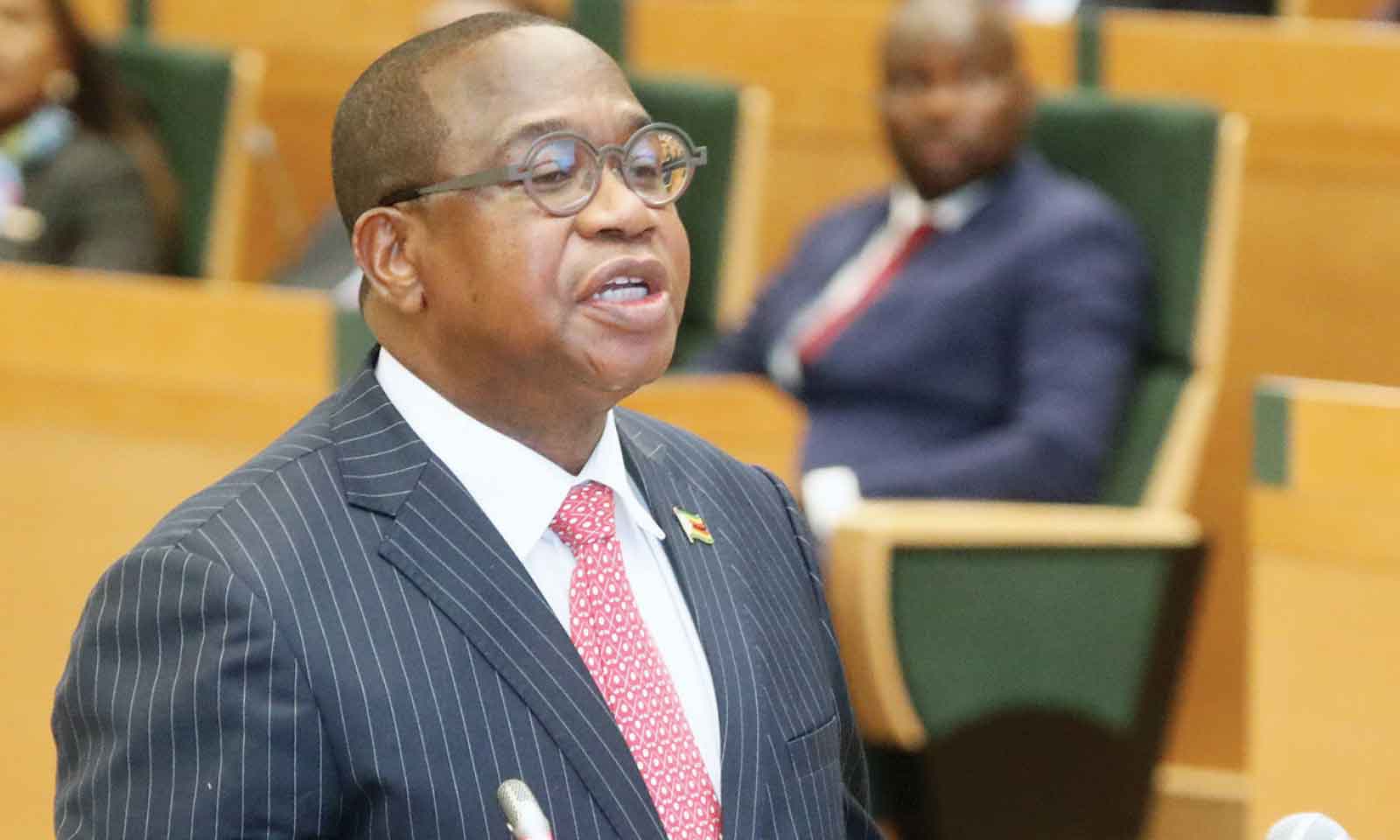
Persistence Gwanyanya
The 2026 Mid-Term Budget and Economy Review Statement this week will take place against the backdrop of macroeconomic stability and renewed growth momentum, notwithstanding adverse external shocks, notably the escalation in the conflict between the United States and Iran.
This resilience underscores the efficacy of current policy frameworks, suggesting that the upcoming review will prioritise policy continuity over structural deviations.
Fiscal performance has been particularly robust, demonstrating not only macroeconomic resilience but an expanded revenue capacity.
The Zimbabwe Revenue Authority (ZIMRA) recorded a 47 percent year-on-year increase in tax collections for the first five months of 2026, rising from US$2,95 billion to US$4,34 billion.
This revenue surplus, primarily catalysed by strong output in the agriculture and mining sectors, has prompted Treasury to revise the 2026 ZIMRA revenue target upwards to US$9,2 billion.
Consequently, an upward revision of the overall 2026 National Budget envelope — initially pegged at US$9,7 billion — is highly probable. Macroeconomic indicators corroborate this fiscal strength.
Finance, Economic Development and Investment Promotion Minister Professor Mthuli Ncube has indicated that first-half 2026 gross domestic product (GDP) growth is estimated at 6,8 percent, outperforming initial projections.
This follows the 2025 fiscal year, where the economy expanded by 8,3 percent, significantly surpassing the 6,6 percent target.
Critically, the fiscal review must prioritise the entrenchment of durable macroeconomic stability. While the economy has enjoyed relative stability in the first half of 2026 — with inflation averaging 4,4 percent and the parallel market premium anchored within a 20 percent band — market participants expect a comprehensive review of measures to institutionalise this permanence. To this end, Treasury has signalled the prioritisation of Zimbabwe Gold (ZiG) for the payment of duties and taxes.
This measure is designed to stimulate local demand for the domestic currency (ZiG) and systematically reverse structural dollarisation.
Beyond aggregate growth and stability, policy focus is shifting towards microeconomic efficiency and the improvement of the business environment.
Treasury has committed to streamlining regulatory frameworks across 13 key sectors to eliminate redundancies and reduce the compliance cost of doing business in Zimbabwe.
Stakeholders anticipate a detailed progress report on these sectoral reviews, alongside a clear road map for further institutional reforms to sustain private sector competitiveness.
A highly anticipated component of the review is a progress report on debt servicing and arrears clearance.
The 2026 National Budget revealed domestic arrears to creditors at US$1,7 billion, backed by a five-year repayment strategy.
Furthermore, stakeholders expect an update on the resolution of external debt arrears, which were last reported at US$11,5 billion — making up over 49 percent of the total national debt stock of approximately US$23,4 billion.
Concurrently, external financing prospects are expanding.
Minister Ncube has indicated Zimbabwe’s admission into the BRICS New Development Bank.
This development is expected to unlock concessional financing and positively impact the country’s medium-term debt sustainability and infrastructure funding.
Overall, as the economy demonstrates renewed potential and macroeconomic stability becomes more entrenched, structural policy pivots remain unlikely.
The market anticipates the enhancement of current frameworks to ensure sustainable growth, with a paramount focus on reversing structural dollarisation.
Persistence Gwanyanya is a member of the Reserve Bank of Zimbabwe (RBZ) Monetary Policy Committee and the founder and CEO of Bullion Group International. He writes in his personal capacity. For feedback, email [email protected]



 Bongani Ndlovu