

 Online Reporter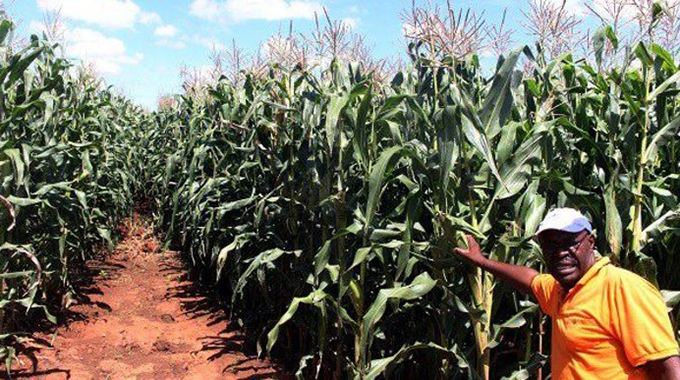
Theseus Shambare
ZIMBABWE’s food insecurity levels have dropped sharply to 15 percent of the population following an improved 2024–25 agricultural season, marking a huge recovery from last season’s El Niño-induced drought.
Currently, 1.2 million people across 34 districts nationwide require food assistance during the lean season compared to 2.7 million people during the previous lean season, between January and March 2024.
This was after the 2023–24 El Niño-induced drought took a heavy toll on summer crops, becoming the worst drought in more than four decades.
However, the outlook has improved significantly after the 2024–25 agricultural season recorded a strong rebound, with total cereal production estimated at about 2.24 million tonnes, prompting authorities to declare a bumper harvest and easing pressure on food relief programmes.
The recovery was further strengthened by the 2025 winter wheat season, which delivered an all-time record harvest of more than 620 000 tonnes, allowing the country to meet domestic demand and cut its wheat import bill.
According to the Reserve Bank of Zimbabwe and Government planning documents, the country’s overall food import bill — driven largely by grain and related products — stood at about US$976.1 million in 2024.
Authorities say boosting domestic agricultural output is expected to cut reliance on imports and save the country more than US$1 billion annually on food imports.
Improved rainfall distribution and sustained Government support programmes also stabilised the livestock sector, with better grazing conditions, improved dipping services and expanded vaccination programmes contributing to lower livestock losses compared to the previous drought season, boosting nutrition security levels.
In an interview, Department of Social Welfare chief director Mr Tawanda Zimhunga said the January to March period remained the country’s peak hunger season, but with a reduced caseload compared to last year.
“During this lean season, that is January to March, which we consider the peak hunger period, you are aware that the 2024–25 agricultural season was far much better than the previous one, which was affected by the El Niño end-of-weight drought, which affected more than 59 percent of the population.
“So this year we are going to look at a smaller number, a very small number, compared to what we did during the El Niño end-of-weight drought,” he said.
Mr Zimhunga said projections from the Zimbabwe Livelihoods Assessment Committee (ZimLAC) indicate that 15 percent of the population will be food insecure between January and March 2026, with the Government planning to provide food assistance to at least 1.2 million people across 34 districts nationwide.
“The Zimbabwe Liabilities Assessment Report indicates that 15 percent of the population will be food-insecure between January and March 2026, and we are looking at providing food assistance to at least 1.2 million people countrywide in 34 districts in the whole country,” he said.
Under the programme, each food-insecure household member is receiving 7.5 kilogrammes of cereal per month, translating to 21 kilogrammes per person for the three-month lean period, with the Government opting for a once-off three-month disbursement.
The Government is also working with the World Food Programme (WFP) to complement national efforts.
Under the partnership arrangement, WFP will support 155 700 beneficiaries across Kariba, Bulilima, Mwenezi and Mberengwa between January and March 2026.
In Kariba and Bulilima, the Government will provide cereals, while WFP supplies pulses and cooking oil, alongside logistical support.
WFP Zimbabwe Country Director Ms Barbara Clemens said food assistance programmes were designed to support recovery and productivity rather than dependency.
“Food aid is more of an empowerment programme to ensure communities can work as they wait for their crops to reach harvesting time.
“We look forward to having Zimbabwe become the breadbasket of the region and be able to assist other countries,” she said.



