admin
admin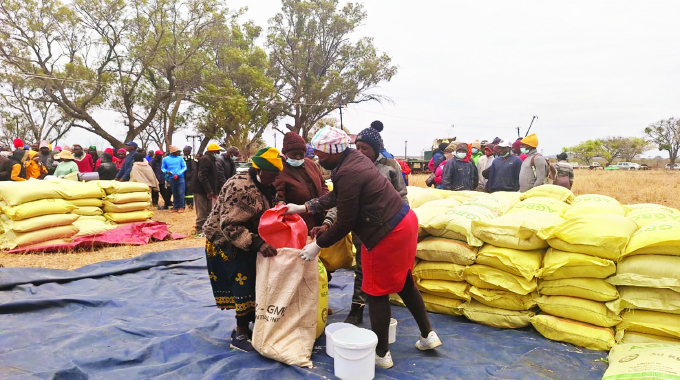
Rumbidzayi Zinyuke, Senior Reporter
THE drought-stricken Umguza district in Zimbabwe is facing immense challenges, and for 80-year-old Gogo Vaina Manjengwa, caring for her five grandchildren has become even more daunting.
This year’s poor harvest left her with limited resources, making the Government-led food distribution programme a vital lifeline for her family and many others.
Umguza district, located in the southern part of Matabeleland North province, is known for its arid climate, making agriculture a significant challenge.
The primary occupation in the area is animal ranching, but even that has been affected by the drought.
But with the Government’s support, families like Gogo Manjengwa’s are receiving the assistance they desperately need.
The Zimbabwe Drought Flash Appeal, which runs from April 2024 to March 2025, aims to provide humanitarian assistance to 3,1 million people in the most affected areas.
This initiative is crucial in ensuring that vulnerable families have access to food, water, and other essential resources.
Being one of the more than seven million beneficiaries of Government’s Food Deficit Mitigation Strategy, Gogo Manjengwa hopes that her family will not starve this year.
On Wednesday, Gogo Manjengwa collected her second allocation of maize meal at Heany Junction in Umguza, where 1 000 other villagers also received their share.
“This food aid came at an opportune time for me and my family. This year has been difficult because of the drought and I want to express my gratitude to the Government because if they had not come through, we would surely have died,” she said.
Echoing Gogo Manjengwa’s sentiments, villager Mr Peter Mabhena expressed his appreciation for the programme’s inclusivity.
“We want to thank the Government for taking everyone on board. This programme has truly been helpful,” he said.
Informed by the 2024 Zimbabwe Livelihoods Assessment, the Government has been ramping up efforts to ensure that more than 7 million food-insecure individuals across the country receive essential food assistance.
The programme is part of the Government’s broader efforts to mitigate the food deficit and ensure food and nutrition security in the face of the El Niño-induced drought.
The Second Phase of the blitz grain distribution programme, which started in August, has seen a significant increase in food deliveries nationwide, with a cumulative total of 68 745 tonnes moved as of September 26, 2024.
President Mnangagwa has made a commitment that no Zimbabwean will die of hunger.
In his State of the Nation Address this week, he highlighted the importance of nutrition-specific interventions to address the challenges faced by Zimbabweans.
“Regrettably, the El Nino-induced drought constrained our growth across all economic sectors, particularly the agriculture sector.
“However, under the Food Deficit Mitigation Programme, communities requiring food assistance in rural areas are receiving grain, while vulnerable households in urban areas are benefiting through the Cash-for-Cereals Programme.
“Of particular note is the School Feeding component which has been designed to avail at least one decent meal per day for all learners in communities hard hit by the drought.
“Be assured that no Zimbabwean will go without food,” he said.
In Matabeleland North province alone, over 500 000 individuals out of the total population of 800 000 are benefiting from the programme.
This means the programme is meeting the food needs of at least 70 percent of its population.
Matabeleland North provincial social development officer Mr Sicelo Nyathi emphasised the programme’s focus on supporting the most vulnerable communities.
“In line with the President’s mantra that no one should die of hunger, we are providing food aid to 520 254 people.
“We are prioritising the most vulnerable individuals, including the elderly, people with disabilities, child-headed families, and those struggling to put food on the table.
“Our aim is to reach over 80 percent of the vulnerable population with food assistance,” he said.
The inclusion of more beneficiaries has played a crucial role in bridging the food deficit gap created by the drought.
The programme has also seen chiefs receiving grain for vulnerable families in their areas.
As of September 26, all chiefs had been allocated five tonnes of mealie-meal per ward to assist families in distress despite the general allocation given to affected persons.
Furthermore, 9 600 tonnes of mealie-meal or maize grain had been collected under the Emergency School Feeding Programme, ensuring that school children receive nutritious meals.
The food distribution programme continues to provide a vital lifeline to communities across the country, offering hope and relief.
By addressing the immediate needs of vulnerable individuals, the programme is contributing to food and nutrition security.
It is also helping to build resilience in the face of climate-related challenges among vulnerable communities.
Gogo Manjengwa and others in her village are now eagerly awaiting the start of the rainy season so that they can plant a new crop to sustain them in the coming season.



 Online Reporter