peter
peter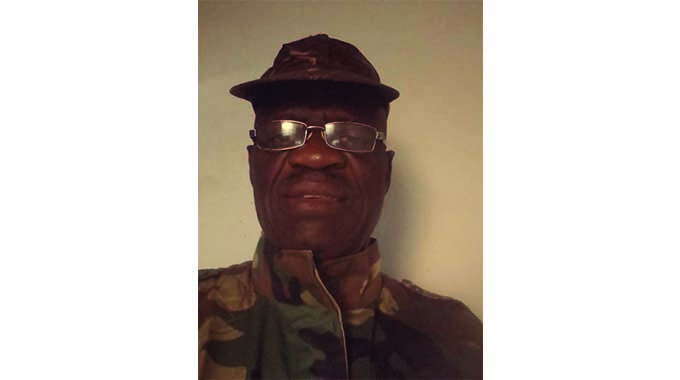
WE continue our interview with Colonel (Rtd) Ernest Mganda Dube pseudonym Cde Bookless Chizororo. Col (Rtd) Dube operated in Mashonaland West and Matabeleland South during the armed struggle. Today he tells our Assistant Editor Mkhululi Sibanda (MS) about how they lost their commander, Cde Reggie in a battle in Chikove area soon after their return from Zambia where they had gone to deliver a comrade who had been injured during a contact. Below are excerpts of the interview. Read on . . .
MS: In our last conversation you spoke about crossing the Zambezi River carrying a seriously wounded comrade to which the regional commander then, Cde Rodwell Nyika gave you just three days of rest. So what happened next?
Col (Rtd) Dube: Due to the prevailing circumstances two elderly comrades namely Fanton and another whose name I am forgetting were removed from our platoon and redeployed to the unit that operated dinghies. That unit was known as the ‘‘Navy Team’’. It manned the crossing points. That time around our crossing had few incidents. We nearly lost a comrade in the middle of Chewore Game Park who survived a buffalo charge which we had shot at. Luckily or whatever you might choose to call it the buffalo disappeared with his AK-47 dangling between its horns. We had to hunt it down and finally put it down to recover the rifle before proceeding with our march towards our operational area.
MS: Take us onto the next encounter.
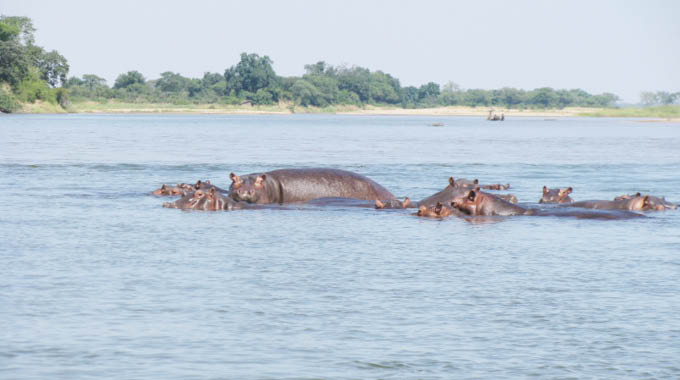
Col (Rtd) Dube: After crossing over the last fence of the game park, we realised that there were enemy patrols all over searching the area. In fact, we had met at some point where the trek was taking a bend as it descends into a river. Both the lead enemy and ours panicked as they bumped into each other face to face to which everyone dived for cover. Following this near fight we split ourselves into two as we marched towards the villages some 10 or so kilometres away. That was meant to evade the enemy from picking up our large spoor. We arrived at the first village that is Chikove around 5pm. On crossing the width of the village, moving towards the eastern end we marched under the cover of darkness and decided to sleep on a hill along the river. At first light, we noticed someone fetching water from the river. That happened to be a fellow comrade belonging to the other group we had separated from some three days ago. We were so excited to re-unite but to our surprise, our colleagues started telling us of how the previous afternoon they had spent their day monitoring an enemy unit they had seen in the village.
MS: So, how did you react on hearing of the presence of the enemy?
Col (Rtd) Dube: While we were listening to our colleagues, a comrade saw from a distance across Chikove River people advancing in a battle formation. The commander, Reggie reacted swiftly by ordering us to descend from the hilltop as the enemy moved to encircle us.
MS: Does this mean you were fleeing from the enemy?
Col (Rtd) Dube: No, we were going down to take up firing positions with me operating an American made 88mm shoulder held anti-tank propelled gun (RPG). In no time, we started opening fire from machine guns, RPG and mortar, among others. As per the ‘hit and run’ doctrine after 10 minutes or so the commander ordered a withdrawal which we pulled out while the enemy’s shots were hitting tree-tops and shoulder level, not having any effect on us. As we skirmished back to our first position to pick up our kit bags I happened to miss the bush I had hidden mine only to realise that it was towards the enemy side. I found myself being left behind alone and that saved me.
MS: How did remaining behind save you?
Col (Rtd) Dube: I heard some enemy fire in the direction where my platoon commander, Cde Reggie had run towards. I then skirmished towards the river, running parallel to our direction of withdrawal. I slowly moved, taking cover in the running water and reeds until I realised I was now out of enemy stop groups. When I finally joined the rest of the guys I was really saddened to see two comrades who could only walk with the assistance of fellow comrades. The most devastating news was that Commander Reggie had been shot dead and dropped on the spot. We failed to recover his body.
MS: Eish, so what did you do next?
Col (Rtd) Dube: It was exactly 10 days after having left Nkume Base across the Zambezi River from where Rodwell Nyika was directing operations from. The situation then demanded that we take the two injured comrades, July whose backside had been shot and Katusha whose heel had been ripped off. In carrying the wounded we would prepare log stretchers and then lift the wounded which was a torrid march. We had no choice but to carry our wounded comrades, navigating through the very unfriendly Zambezi Escarpment. We had to do such tasks knowing well that the next victim could be anyone among us.
MS: So you were moving to Zambia and back?
Col (Rtd) Dube: Yes, yes despite the dangers and the hectic way of crossing the Zambezi River. While taking the two to Zambia, imagine the disappointment we had. When we got to the Zambezi we found none of the ‘Navy’ comrades at the crossing and alternative points. So, we had to take the risk of sleeping there which was on the enemy side with the hope of locating our colleagues in the morning. With that expectation, we were surprised to hear the enemy bombing the base which was quickly followed by five helicopters flying across the river to the base. Luckily we finally crossed the Zambezi on our own after two Tonga speaking comrades, who were used to the river, Carious and John had swam across the slow-flowing water and brought the dinghies. After delivering the two wounded and after three days we were back at the river, going to the Karoi-Kazangarare Sector.
MS: It seems you were quickly gaining experience…
Col (Rtd) Dube: Very true. We were now quite knowledgeable with Chewore Game Park and the possible enemy likely hills they preferred to carry out their observations on the movement of guerillas. When we returned to the operational area we finally located ZPRA troops that had been deployed before us. Now without a commander of our own we smoothly joined the others, but the deputy to the departed Cde Reggie, Cde Nyerezinyere took over the command of our platoon. As for the company members whom we had split during our initial deployment and upon crossing the Zambezi River we finally met some of them at Nkume Base. They were operating in the Hurungwe-Kareshi Sector and we were never to re-unite.
MS: Having now joined the senior guerillas, then take us through your operations and experiences.
Col (Rtd) Dube: We were now operating in three sectors, Mwami Sector under the command of Cde Zuma, Kapiri Sector and Chikove Sector. We were also happy to hear that Karoro Sector was now under the command of Cde Mthunzi who had brought with him mainly guerillas trained in Angola under the second group. This time we stayed in the operational area up to December 1978 and had many successful ambushes, and attacks on the enemy including our attack on Kazangarare Police Station.
MS: At that time what was the casualty rate?
Col (Rtd) Dube: The issue of sustaining bullet wounds was now part of our life. However, I could manage to dodge going back to Zambia to face the Zambezi. Quite interesting this time, our commanders had been instructed not to re-arm any comrade who had lost his weapon in a battle as one was required to capture it back from the enemy. As such whoever would have lost his weapon would move around carrying a hand-grenade.

MS: How often would comrades lose weapons in battle?
Col (Rtd) Dube: Oh My dear, we had about three incidents. I recall we had comrades Mantintani and Ruredzo who were enforcers of hand-grenade carrying. They had a tendency of accusing comrades who lost guns of cowardice. We also had Commander Zinyerezinyere who had assumed the nickname of General Peter Walls. He was the younger brother of Tadius Ndlovu aka Cde Parks Tondolo. We called him Peter Walls because he always boasted that whatever Peter Walls was planning, he was also planning that. Commander Zinyerezinyere had so much energy that we would not spend seven days without attacking the enemy. He was very proud to praise himself by saying if the Rhodesian General Peter Walls was coordinating all attacks on us he was as well his match responsible for making sure the enemy was kept on its toes.
MS: Tell us more about the punitive order of the carrying of hand grenades in the case of one losing his weapon.
Col (Rtd) Dube: The penalty finally caught up with Cde Ruredzo the Morogoro trained guerilla, who was a veteran of many battles. It so happened that our spotters (mujibhas) reported to us after having seen the enemy descending from the hilly area toward KwaMushonga general area. Cdes Ruredzo and Mantimani then commanded us to hunt down the enemy. On moving towards the Mushonga homestead we heard that VaMushonga had brewed beer and there were locals drinking there. So, the brave Cde Ruredzo entered the homestead carrying a heavy machine gun known as PK46 also laden with a 50-rounds belt. As he was enquiring from the imbibers on the whereabouts of the enemy, he placed down the machine gun. Then there was a burst of gunfire. Although the enemy’s machine gun fire was missing him, he was hit on the face by some ricochet splinters. Not to be outdone the veteran guerilla put into use his instincts by crawling to safety. However, he had left his weapon to be captured by the enemy. It was a spectacle among the younger guerillas to see Cde Ruredzo moving around armed only with a grenade. We felt so happy that finally the ZAPU God of War had answered our prayers as Cde Ruredzo finally left for Nkume Base in Zambia to look for a weapon.


 Online Reporter