Edgar Vhera
Specialist Writer – Agribusiness
GOKWE village business units (VBU) are poised for growth through a partnership between the Agricultural Marketing Authority (AMA) and Transvaal Africa, which aims to connect members to export markets and develop infrastructure for diverse horticultural produce.
This arrangement essentially feeds into the Government’s Rural Development 8.0 vision that seeks to bolster local entrepreneurs and farming communities through enhancing opportunities for economic growth and sustainability.
When fully operational, the collaboration will benefit smallholder farmers, particularly women and the youth.
The actualisation of the collaboration officially started with a recent visit to several VBU sites in Gokwe by the two parties to assess production capacity and identify areas that require support.
Speaking during the visit, Transvaal Africa chief executive, Engineer Patson Moyo said his organisation could link farmers with overseas markets and provide logistical support.
“Transvaal Africa aims to establish state-of-the-art cold storage facilities tailored for horticulture produce, poised to meet the rigorous standards of export markets. Leveraging acquired airplanes, Transvaal Africa plans to launch logistic operations, ensuring efficient and timely freight of goods to the international market,” said Eng Moyo.
He emphasised that attention to detail was crucial for accessing export markets.
Key areas such as soil analysis, fertiliser and chemical use, cold-chain maintenance, certification and produce presentation need to be prioritised.
Eng Moyo said issues such as Maximum Residue Level (MRL) compliance (highest level of pesticide residue legally tolerated on food) could lead to market losses if not adhered to.
The initiative, he added, marks a significant step in enhancing Zimbabwe’s export capabilities while unlocking the nation’s agricultural potential.
“We engaged our partners in Harare, but said we need to be on the ground to see for ourselves the VBUs and where we can chip in to ensure sustainable production of quality horticulture produce from smallholder farmers, especially women and youth.
“Our being here is to fulfil President Mnangagwa’s vision of leaving no one and no place behind,” he said.
The team visited several VBUs in Gokwe, including Wachekwa, Dumba, Tafirauchena, Matikiti, Mahuni and Nyamuroro School Business Unit (SBU).
They assessed production levels and challenges faced by the units.
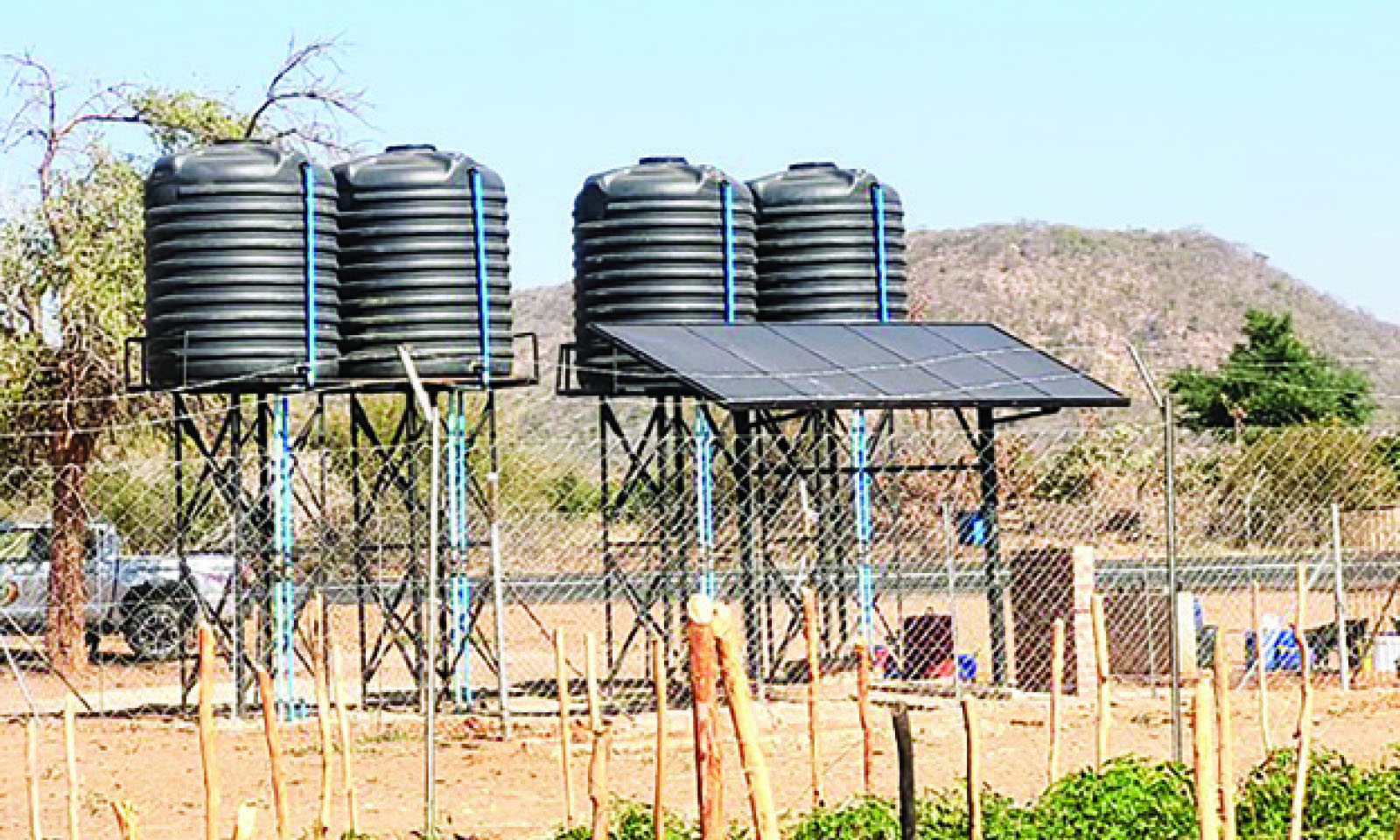
A common concern among the VBUs was that some of the solar-powered boreholes were failing to provide sufficient water for both drinking and gardening activities.
The 76-member (26 men and 50 women) Wachekwa VBU could not fully utilise their area due to irrigation constraints. The unit planted sugar beans on just a part of their plot due to inadequate water.
Wachekwa VBU chairperson, Mr Jemias Wachekwa said they were having challenges filling in the tank as their solar panels were not well positioned.
Beneficiaries were also having challenges identifying crops that thrive in their area, late delivery of inputs and lack of output markets.
Wachekwa VBU harvested an average maize yield of nine tonnes per hectare the past season.
As a result of the water challenges, they have planted sugar beans on less than half of their plot and are exploring the possibility of growing onions in the next crop cycle.
Dumba VBU is made up of 60 members, (59 women and 1 man) and they have planted sugar beans and onions.
“We hope to get two more tanks to make them four, that way, we will not have challenges accessing drinking and irrigation water.
“The pump is being strained as we are getting water straight from the pump and not a tank. We have been gifted another 1,5 horsepower pump, but it is yet to be installed,” Dumba chairperson Mrs Acquelina Charukwe said.
Tafirauchena VBU with a membership 25 (three men) had just started planting 2 205 and 1 051 of drum head and sweet cabbages respectively, 4 320 plants of capriccio onions and 1 051 SCV hybrid cabbages.
Matikiti VBU, with a membership 37 (19 women and 18 men) is growing tomatoes and cabbages.
The group also visited Nyamuroro SBU which was commissioned by President Mnangagwa during independence commemorations this year on April 17.
The SBU cultivates cabbages, rape and tomatoes and has two fish ponds. They also run a successful poultry and pig enterprises.
Nyamuroro High School agriculture senior teacher, Mr Govero Mutizwa said their pig herd had grown from the donated two in 2022 to the current 41 and they were looking for markets for their pork.
The team also made a stop at Nembudziya growth point, where Engineer Moyo announced plans to refurbish a selected building to establish an aggregation centre for produce from surrounding VBUs and SBUs.
“There is need for satellite packing houses and cold chain facilities across the country in all rural district councils to aggregate high-quality produce for export,” he said.
AMA’s horticulture and livestock expert, Mr Simon Pande, described the visit to Gokwe as the first step in actualising their partnership with Transvaal.
“Farming is a business, and production should be informed by market dictates. Gokwe is our first port of call as we go on a nationwide visit of VBUs to identify their horticulture production capacity and constraints,” he said.
He said AMA’s mandate included the regulation of the production, marketing, and processing of agricultural products in Zimbabwe.
Mr Pande said market research should be the first to inform the type and quantity of crop to be produced.
“A bucket of tomatoes which should be sold at US$10 on a normal competitive market can be sold for as little as US$2 when it floods the market due to uncoordinated production and no market search.
“We have engaged Transvaal to bridge the gap, we want farmers to know that they have a ready export market, before they even start planting their crops,” he added.
Zimbabwe stands to benefit significantly from the United Kingdom and European Union Economic Partnership Agreement (EPA), which guarantees market access for local produce. This unique selling point, particularly for produce grown by small-scale farmers, women, and youth could unlock new economic opportunities for the country.
Rural Development 8.0 is an outcome-based Presidential initiative aimed at driving rural industrialisation through agricultural development. This is intended to catalyse rural economic growth, ultimately contributing to Zimbabwe’s Vision 2030 objective of building a prosperous and empowered upper middle-income society.
VBUs are registered rural enterprises designed to stimulate economic activity and improve livelihoods in rural areas. In alignment with the Government’s rural industrialisation agenda, the Agricultural and Rural Development Authority (ARDA) is spearheading the establishment of 35 000 VBUs, alongside 9 600 school business units (SBUs) and 450 irrigation schemes across the country.
The VBUs are structured as one-hectare self-sustaining units powered by solar-driven boreholes to support horticulture development.
There Agricultural Rural Development Authority (ARDA) oversees agronomy and business management, while the Zimbabwe National Water Authority (ZINWA) and the department of irrigation in the Ministry of Lands, Agriculture, Fisheries and Rural Development are responsible for irrigation infrastructure development.
Funding of the VBUs is mostly provided by the Agricultural Finance Corporation.
AMA is tasked with the marketing of produce, while the Agricultural and Rural Development Advisory Services handles training and extension activities.