Online Reporter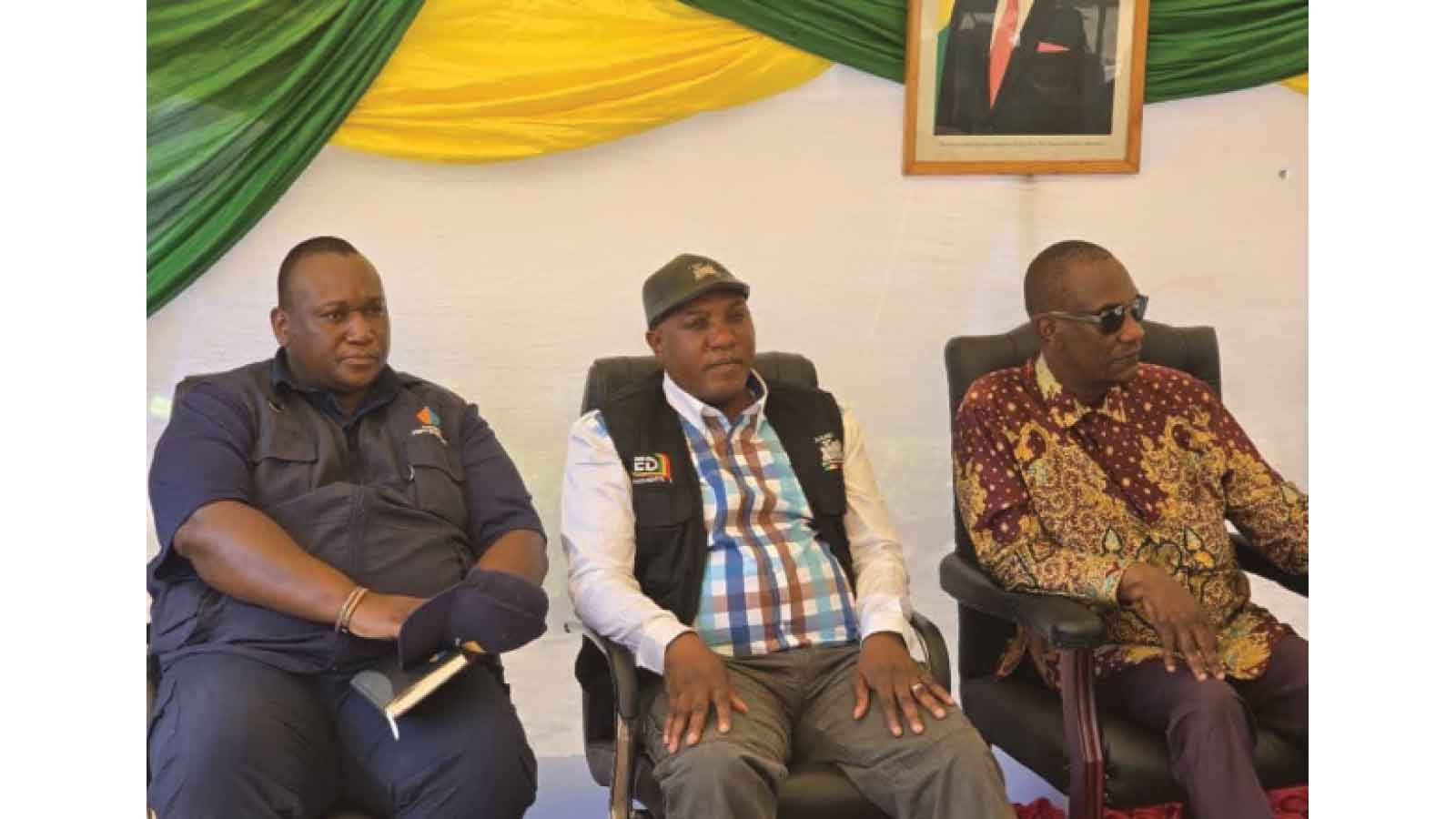
Johnsias Mutonhori-Herald Correspondent
GOVERNMENT is pressing ahead with efforts to formalise the mining sector, seeking to lift productivity, efficiency and value while restoring order to an industry long dominated by prohibited operations that offer limited direct benefit to the wider economy.
The drive is also intended to help the country surpass last year’s gold production output of 46 tonnes, with artisanal and small-scale miners expected to benefit from mechanisation programmes and tighter regulation.
Official estimates suggest that more than 50 percent of gold produced by artisanal and small-scale miners is sold through the black market.
The sector has also drawn sustained criticism for environmental damage.
Around 200 500 square metres of land, out of Zimbabwe’s 39, 6 million hectares, has been extensively degraded by illegal mining activities, largely due to the use of chemicals and the absence of land rehabilitation plans.
In Shurugwi, Chenxi Chengetai Mining Investments has emerged as a key private-sector partner in the Government’s formalisation programme.
Last year, the company invested more than US$1 million in support of the initiative.
The company formalised approximately 1 295,758 hectares of mining land, with the most significant development being the relocation of long-established artisanal miners from the old Wanderer site to a new location at Bonza, a move initially met with mixed emotions.
For some miners, leaving Wanderer was painful.
The site had become familiar over many years.
Yet those who aligned themselves with the new arrangement soon found fresh opportunity at Bonza.
Chenxi Mining donated mining equipment and built basic infrastructure to enable a smooth start to operations at the new site.
“We thought Wanderer was the alpha and omega for us, and leaving that place was so painful.
“To our surprise, the Bonza mining area has been more productive, and efficiency has improved through the equipment we received from Chenxi Mining Company through the Government programme of formalising the mining sector,” said one beneficiary, Jessica Zingoma.
For many artisanal miners, Wanderer was more than a workplace. It had evolved into a home and a trading Centre.
A significant number of residents could not recall the last time they visited Shurugwi, the nearest town.
Some families had lived at the site for more than two decades, settling in makeshift housing.
Marriages were formed, children raised, and a sizeable makorokoza population emerged.
This community played a role in stimulating business in Shurugwi and neighbouring Gweru, particularly in retail and nighttime entertainment.
“The relocation of makorokoza from Wanderer temporarily reduced our sales due to customer turnover, which I assume was affected by the relocation, but now everything has come back to normalcy,” said one bottle store owner in Shurugwi.
Yet the informal model raises difficult questions.
Do more than a thousand makorokoza operating on rich gold deposits make a meaningful contribution to gross domestic product?
Do informal miners prioritise environmental sustainability? Can the Government rely on illegal operations to channel gold through Fidelity Printers and Refiners for national benefit?
Do such miners contribute meaningfully to employment, infrastructure development, and social responsibility?
The answer, many officials argue, is no.
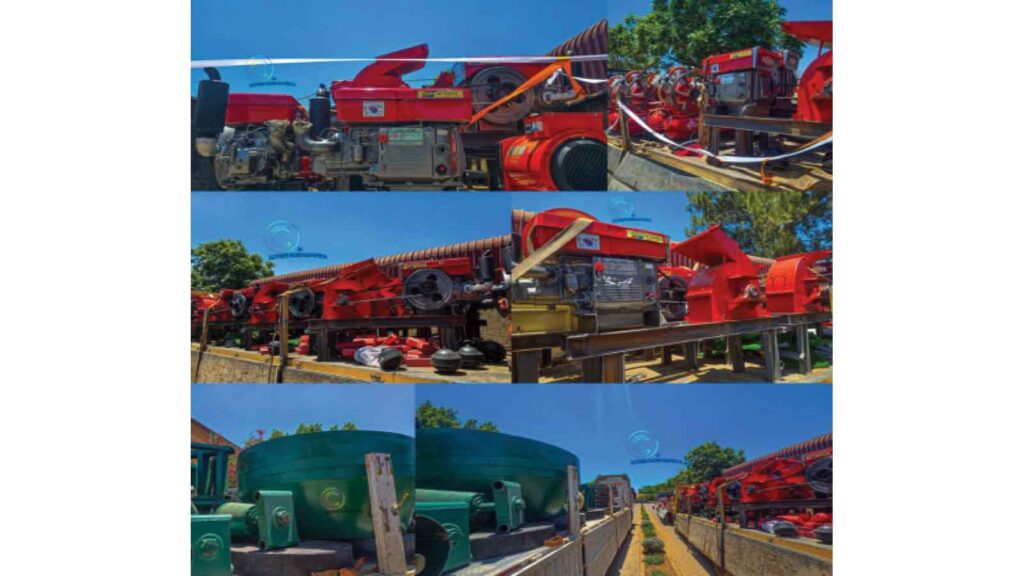
Equipment donated to Shurugwi artisanal miners by Chengxi late last year.
Beyond the economic concerns, informal mining settlements have often been associated with serious social challenges, including violent crime, HIV infections, accidents, drug abuse, and prostitution.
Wanderer has also become a hiding net for criminals on police wanted list. In this context, the formalisation of mining activities in Shurugwi has extended beyond economics.
It has also aimed to save lives, protect the environment, and strengthen social fabric.
Chenxi Chengetai Mining Investments has invested more than US$1 million, in partnership with the Government, to bring structure and mechanisation to operations that were previously informal and unregulated.
Shurugwi North National Assembly Member , Honourable Joseph Mpasi, said formalisation had already reduced fatal incidents.
“The formalisation of the mining sector reduces illegal mining and accidents which were happening almost every day in Wanderer, leading to loss of life and permanent injuries,” he said.
“Moreover, formalisation, enabled by the donation of hammer mills, crushers, and ball mills by our development partner Chenxi, has boosted efficiency in the hardworking Shurugwi community”
He added that the Government’s vision to formalise the sector was yielding far-reaching benefits for stakeholders and the environment.
In an interview recently, Chenxi Chengetai Mining Investments director, Mr Simon Karimanzira, said formalisation was central to the company’s strategy to raise productivity while aligning mining with environmental sustainability.
“Chenxi Investments has made a meaningful contribution to the formalisation of Zimbabwe’s gold mining sector, particularly in areas traditionally dominated by informal or semi-formal mining activities,” he said.
“The company’s engagement with statutory requirements, environmental management, safety, mine planning, reporting and licensing, sets a benchmark that contrasts with informal practices common in the sector.”
Mr Karimanzira said structured employment arrangements had improved job security, safety standards, and skills development.
“The company employs more than 1 000 workers, with the number set to increase as mining operations scale up,” he said.
He added that formal production reporting and structured gold-marketing channels were reducing leakages linked to informal trade, while consistent production supported national gold-output targets and foreign-currency inflows.
Formalisation had also encouraged technological adaptation, he said, aligning local operations with global mining trends through improved grade control, geotechnical planning, processing technologies, and skills transfer.
“The formalisation of the mining sector also directly enhances social and community development, employment creation, and boosts local businesses and service providers,” Mr Karimanzira highlighted.
“Collectively, these factors strengthen the mining sector’s productivity, resilience, and credibility.”
He described Chenxi Investments as an important transitional model, bridging the gap between artisanal mining and large-scale corporate operations.
“The company’s multi-site structure allows for economies of scale, shared technical expertise, and centralised governance, which is rare but highly beneficial in the local context,” he said.
Formalisation has also laid the groundwork for improved corporate social responsibility and land rehabilitation areas largely neglected under informal mining.
Last year, Chenxi Mining planted more than 20 000 trees, including 11 200 within the Boterekwa escarpment, as part of efforts to rehabilitate a once-scenic area badly degraded by illegal mining.
“Our operation is aligned with President Mnangagwa’s vision of sustainable development. This year alone, we have planted over 20 000 trees, with 11 200 planted within the Boterekwa escarpment,” Mr Karimanzira stated.
At the official opening of a mortuary in Shurugwi last year, the Minister of State for Midlands Provincial Affairs and Devolution, Owen Ncube, said formalisation was delivering tangible benefits to communities through structured corporate social responsibility.
“The generous gesture by Chenxi illustrates deep and multi-faceted strategic public-private partnerships as key enablers towards innovation, industrialisation, modernisation, and the attainment of a prosperous and empowered upper middle-income society by 2030,” he said.
He cited projects, including the establishment of the Shurugwi Community Empowerment Trust gold-milling centre, acquisition of mining claims for youths and women, donation of equipment to artisanal miners, construction of a hostel at Shurugwi Female Prison, resurfacing of Gwenhoro Road and prison access roads, food donations for drought relief, and the provision of information communication technology equipment to schools.
“This is clear testimony that the formalisation of the mining sector has far-reaching benefits, from communities to the nation at large,” Minister Ncube said.