admin
admin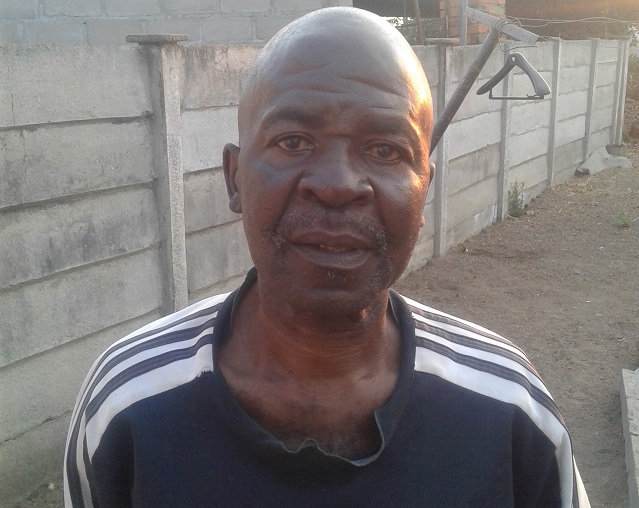

Danisa Masuku
DOES the use of juju or biblical spiritual power help teams win football matches?
Well, this is a question that has dominated football talk among soccer pundits and fanatics alike. How Mine coach Kelvin Kaindu, a devout Christian, was seen at some games donning regalia inscribed with biblical verses and during his tenure at Highlanders he led his entire technical bench and players to church to seek divine power.
On the other hand former How Mine coach, Philani “Beefy” Ncube, was caught in the eye of a storm in a match against Caps United in Harare when their dressing room was allegedly found with burning candles surrounded by bottles with liquid in them during the match. He however, denied the use of juju.
With that in mind, in domestic football there have been claims and counter claims regarding the two contesting beliefs. A former Bata Power FC midfielder Reuben Tsengwa also known as “Exe” says back then juju and biblical spiritual power were used in equal measure. Just like now!
But with no experience in the use of juju he had to believe that juju had power after his team (Bata Power) was advised by a sangoma (juju man) to sleep at the graveyard for them to beat Gweru United. He lifts the lid:
“Gweru United was a powerhouse and Ascot stadium was their fortress. As such every team that went to play there knew that it would at least be beaten or hammered at most. We desperately wanted to win the match, as such the entire team went to put up at the grave yard. We won the match by 1-0,” he recalls with a chuckle.
But he has a bitter memory of that match. Why? Because after that derby violence broke out: “Gweru United supporters could not stomach a defeat from a small outfit at their fortress and resorted to violence. Police fought running battles trying to contain rowdy fans,” he recounts.
The outfit was coached by Lovemore Nyabeze and had the following arsenal Lucky Dube, Sebastian Chikwature, Zakaria Chironda and Onias Musanha, among others. The highlight of his career was when he scored a winning goal against Highlanders at Barbourfields.
“It was a sweet victory for me because I was shut out at Highlanders so after scoring I felt a sense of satisfaction and had made a bold statement to the coaching department,” he shares.
He recalls that what made him even happier was that he was not a regular scorer: “Along the way back to Gweru in a celebratory mood I threw my soccer boots into a river.”
When he returned for a Cup match at BF things turned ugly for him.
“I was booed by Highlanders fans and they called me names saying: ungumthengisi, wabaleka (you are traitor) because I had left the club to join Bata Power. Although we drew 5-5 it turned out to be a bad game for me,” he remembers.
He says although he executed his duties well in the middle of the park, 1985 Soccer Star of the Year and former Black Rhinos and Zimbabwe national team stalwart Stanley Ndunduma gave him headaches.
The former Highlanders coach credits his wife, Naomi Phiri, for being a great inspiration in his soccer career.
“Whenever we were defeated or I had made a costly mistake my wife would stand by me and be a source of inspiration,” he says.
In 1985 the Gweru shoe makers kissed goodbye to the elite league after posting 25 defeats. In 1986 he left with his coach (Nyabeze) to join a Division One outfit Surie Surie FC. He served the side for seven years.
After a seven-year stint with the Division One outfit Tsengwa retraced his footsteps to Bulawayo. He took a recess. While at one point he was relaxing with his friends at Highlanders Clubhouse he met former Highlanders and Caps United player Ernest “Maphepa” Sibanda. During a chat Maphepha advised him to do coaching badges.
“His advice changed my life, now I am a holder of Caf B coaching licence. If it was not for his worthwhile advice I could be wallowing in poverty because I had nothing to survive on,” he says.
After he completed Caf B coaching licence Maphepha facilitated for him that he gets a coaching job at Highlanders juniors. When Methembe Ndlovu landed the head coach job in the senior team in 2006 he roped in Tsengwa.
“I will always cherish that period with Highlanders because we won the league title after occupying top spot in the first half of the season with 40 points. We performed well at home, accumulating 36 points and collected 29 points on the road. My former head coach Methembe was named the Coach of the Year while Honour Gombami was Soccer star of the Year 1st runner-up. I also take pride in that under Methembe we beat Dynamos home and away,” he recalls with a smile.
Accordingly, the Methembe and Tsengwa coached side participated in the Caf Champions league. They were booted out in the first round by former world club champions El Ahly of Egypt. As fate would have it, Mayor as Methembe was warmly known, felt it was time up for him during 2008 season. Tsengwa was given the nod by the powers that be at Highlanders to lead the black and white army to the end of the season.
He took a break in 2009 and had to reconnect with Methembe at Bantu Rovers in 2010.
“In 2010 Methembe invited me to help him with his football team. I was coaching the Under-14 up to Division One side. I spent six years with the outfit and had to resign last year as I wanted to explore other avenues,” he said.
Turning to Highlanders Reuba believes Highlanders Division One outfit Bosso 90 coached by Melusi Sibanda should be given a chance to have a dance in the senior team.
“Those boys should be given a chance to play in the first team and I believe they have what it takes to deliver. They have zest and hunger for success and they want to make a name for themselves,” he said.
The former Highlanders coach has three children namely Shylet (11), Kuziva (29) and Hlanganani (36). They worship at United Methodist Church.
Fact file
Reuben Tsengwa was born 56 years ago at Mpilo Central hospital. He grew up in Mzilikazi, Bulawayo. He was inspired to play soccer by his late father Scotch Tsengwa who turned out for Eastlands FC. His father was also a midfielder. Reuba attended schools in the suburb. He kick-started his football career at Highlanders Under-14 and rose through the ranks to play in the reserve side. He left Highlanders with his former teammate Lucky Dube and joined Bata Power in 1978. His son Hlanganani turned out for the now defunct Njube Sundowns and was a midfielder.


 Online Reporter