Online Reporter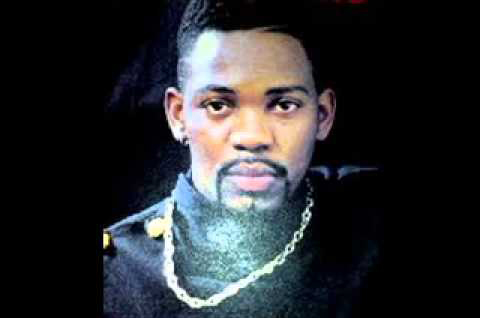
Liberty Dube
Entertainment Correspondent
AT one time, there was a musical genius whose sound arrived before the nation was ready to fully understand it.
Fortune ‘Wofman’ Muparutsa was one such rare figure.
Born in Mutare on June 14, 1968, Muparutsa would grow into one of Zimbabwe’s most gifted artiste, composer, producer and sound engineer, leaving behind a catalogue that still feels fresh decades later.
Though he died in 2008 after relocating to the United Kingdom, his music continues to echo through the country’s creative memory, quietly reminding listeners of a man who lived far ahead of his time.
Muparutsa’s journey began in Mutare, particularly in Dangamvura, where his exposure to music started early.
Coming from a family with musical leanings, he absorbed sound naturally, developing an ear for melody, rhythm and harmony long before formal studios were within reach.
In those formative years, he was already experimenting with mixing, turntables and arrangement, skills that would later define his signature style.
By the late 1980s, after stints with RUNN Family, his ambition pushed him towards Harare, then the heartbeat of Zimbabwe’s recording industry.
What separated Muparutsa from many of his contemporaries was, not only his ability to sing or write songs, but his deep understanding of sound itself.
His productions stood out instantly.
While much of the music of the period followed predictable arrangements, Muparutsa layered instrumentation with care, blending warm keyboards, subtle bass lines and crisp drum programming to create a sound that felt international yet unmistakably local.
His work carried a smooth Rhythm and Blues flair at a time when such textures were still unfamiliar to many Zimbabwean ears.
This ingenuity reached a defining moment with his album, Wheels of Fortune, which cemented his place as one of the pioneers of urban grooves music. Long before the genre became mainstream, Muparutsa was already shaping its direction.
Most of his hit songs were released in the early 1990s, and their impact on the trajectory of local music was profound.
Listening to his productions alongside other releases of that era reveals just how far ahead he was. His arrangements were cleaner, his harmonies richer and his song-writing more daring.
Veteran music commentator and disc spinner, Trynos Chigwidi, popularly known as DJ Ranga T, recalls Muparutsa as a man whose talent could not be ignored.
“Muparutsa was very talented. It is true, he lived way ahead of his time. He was among the first artistes who started with mixing and doing wonders on the turntable, which subsequently led him into being an excellent producer. He was also into break dancing, which used to be sponsored by reputable companies then. After his humble beginning in Dangamvura, Mutare, penetration into Harare in production and singing was not a problem to him because he knew his stuff. He had his own stable, WofMan Productions. It was not an easy thing to have someone owning a recording studio. Owning a studio and rubbing shoulders with Gramma Records and Mosiah Tunya was not a joke. He stood among the great, thanks to his unwavering talent and finesse,” said DJ Ranga T.
Indeed, WofMan Productions became a symbol of Muparutsa’s independence and vision.
At a time when studio ownership was rare, he carved his own space, producing, not only his music, but also shaping the careers of others.
He produced In My Dreams by Innocent Utsiwegota, featuring Major E and Marvin S, one of the era’s most beloved love songs.
His production touch also elevated tracks such as Kumba Kwenyu by Alexio Kawara, Boy U Got To Know by Tia and Come To Party by Major Playaz. Each carried his signature clarity and emotional depth.
As a solo artiste, performing under the name Wheels of Fortune, Muparutsa released songs that resonated deeply with listeners.
Wangu Ndega became a favourite for many, its tender lyrics wrapped in a gentle but confident arrangement.
In 1992, he released Kure Kwaunoenda, a song that showcased his ability to marry storytelling with sound.
The instrumentation was restrained, yet powerful, allowing the lyrics to breathe. The song’s reflective tone invited listeners to think about distance, longing and emotional journeys, themes that remain relevant even today.
Two years later, Simbarashe further revealed Muparutsa’s philosophical depth. Released in 1994, the song reflects on the cycle of life, reminding listeners that we are born, we live and we die. Its melody is haunting, supported by layered vocals and a steady rhythm that mirrors the inevitability of time.
Songs like Sangoma, The Way I Look At You and Dream Girl displayed his versatility, moving effortlessly between introspection and romance, always anchored by thoughtful lyrics and polished sound. Muparutsa also used his music as a tool for social commentary.
In the 1990s, at the height of the HIV and AIDS crisis, he released Wangu Ndega, a song some people christen, Kanda Matombo, a bold track that encouraged the use of condoms.
At a time when openly talking about condoms was considered taboo, the song shook the nation. It was fearless, responsible and ahead of public discourse, further cementing his reputation as an artiste unafraid to challenge norms.
David Wislam, popularly known as DJ Guvnor, who grew up in Dangamvura and witnessed Muparutsa’s rise, remembers him as a complete musician.
He said: “Muparutsa was one of those rare talents who understood music from the inside out. As a young man in Mutare, he was already experimenting with sounds that many of us had never heard before. He could sing with soul, write songs that touched the heart, and then go into the studio and engineer them to perfection. What impressed me most was his discipline and confidence. He knew where he was going. His passion for R and B helped popularise the genre locally, and his productions inspired a whole generation of artistes who came after him. Even then, we knew we were witnessing something special.”
In the months leading to his death, Muparutsa’s star was rising internationally. After relocating to the United Kingdom, his music began attracting attention beyond Zimbabwe. His song, Dream Girl received airplay on Northants 96FM, catching the ear of United States-based star, Akon. Plans were underway for a possible signing, a moment that could have introduced his brilliance to the world.
By then, producers in the UK had also started to take notice, recognising the depth of his talent.
When Muparutsa died in 2008, Zimbabwe lost one of its quiet architects of modern sound.
Later that year, veteran artiste, Alexio Kawara, together with Solomon Mareza and Christopher Joe, honoured him with the touching, yet danceable track, Samanyika Waenda, a tribute befitting a man whose music moved both body and soul.
Fortune Muparutsa played a critical role in the evolution of Zimbabwean music in the 1980s and 1990s. His songs remain relevant, his productions timeless and his influence undeniable.
Though his life was cut short, his legacy continues to inspire.
He was, without question, an artiste who lived ahead of his time!