malvernmugadzikwa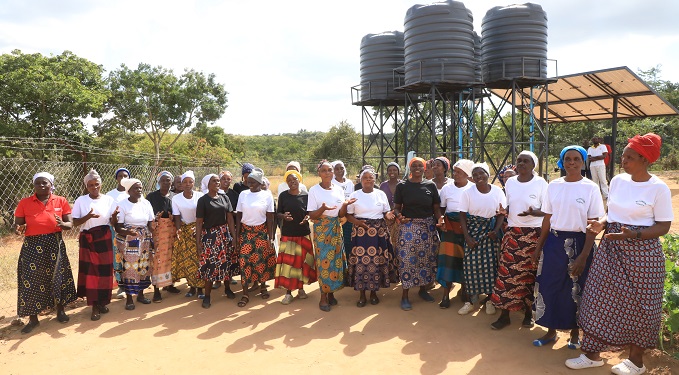
Tanyaradzwa Rusike recently in MT DARWIN
AN economic revolution is underway in Mt Darwin, Mashonaland Central province.
For years, people in some parts of this rural community faced familiar challenges like limited job opportunities and a struggle to make ends meet.
But since the Government started establishing village business units (VBUs) in the area, there is growing optimism of a bright future on the horizon.
In fact, some beneficiaries are already seeing their lives changing for the better.

VBUs are registered rural development enterprises designed to boost economic activity and improve livelihoods.
They are typically one-hectare plots equipped with solar-powered boreholes, irrigation systems, greenhouses and other agricultural infrastructure, where villagers engage in horticulture, with the produce sold to ready markets.
The Zunde VBU in Ward 28, Mt Darwin, is sustaining 60 households, with members benefitting from a one-hectare irrigated garden that produces horticultural crops, including cabbages, vegetables and tomatoes. The project manager, Mr Talent Kamoto, said the company was raking in over US$5 000 per month and supplying produce to supermarkets and schools in Mt Darwin and surrounding areas.
“Our members are the shareholders of the company; they work for three days a week. For the days they come, we pay them at the end of the month depending on shifts done,” he said.

“Our project has 60 beneficiaries and every month we realise about US$5 400. We then decide which crops to put next and its expenses. Usually, each person gets a monthly dividend of US$50 per month, plus the US$5 allowance they get for every shift. This means every month, they can get about US$90.
“We want to commend the Agricultural Marketing Authority (AMA) for helping us to get local markets and now we are supplying supermarkets like Choppies and Pick n Pay.
Recently, we supplied Choppies with cabbages and we will also supply these tomatoes when they get ripe.”
Another 62 households in Mt Darwin’s Dotito area are getting their sustenance from Chaka VBU.
One of the beneficiaries at Chaka, Ms Eustina Chihuri, a widow, said since the VBU started operating last year, she is now capable of meeting her basic needs such as paying school fees for her children.
“We work for two days a week for two hours. For each shift, per day, we are paid US$5, plus our monthly dividend of US$25. That means in total we are each getting a minimum of US$65 monthly. This money is a lot to us, considering that we started this project just last year and the income will grow as we expand. This is improving our way of life in this community,” she said.
“We are happy because most widows in our villages had the opportunity to be part of this huge project. Before the coming of this project, we had so many challenges in looking after our families.
“Now, we can afford to buy cooking oil and take our children to school. It is my wish that these gardens can be extended to other villages.”
Another member of Chaka VBU, Ms Matiness Kunyenzura, said the project has transformed her life.
“I am a widow and I stay with my three daughters. My husband died some years ago after a short illness when my children were still young, and it was a challenge to take them to school.
“I survived through part-time jobs, but they were not paying that much. I want to thank President Mnangagwa for remembering us, widows, by introducing this VBU, which has transformed our lives,” said Ms Kunyenzura.
“From the proceeds we are getting from this project now, I have managed to start a chicken project at my homestead. I take care of my children by putting food on the table.”
The Government initiated both VBU projects in Mt Darwin through the Zimbabwe National Water Authority, and the Agricultural and Rural Development Authority (Arda).
Arda assists the VBUs in registering as formal companies and giving agronomy advice.
It is envisioned that under the Presidential Rural Development Programme, 35 000 VBUs will be established countrywide by 2025 to spur rural industrialisation, address food security and create employment.
The VBUs are not only focusing on increasing agricultural productivity, but also improving communities’ diets.
Chaka VBU project manager Mr Pride Nhewenyoka said the programme improves food security in rural communities.
“We started this project in August last year. Our first crop was the rape vegetable plant and then cabbages. At the beginning of this year, we started planting green mealies and we have since harvested them.
“As we all know, we had poor rains this year, so we decided to replant the maize. We also planted tomatoes that we are currently harvesting together with the vegetables,” he said.
“Before the introduction of the business units, we had challenges with water supply, and we couldn’t do any gardening. However, we are now able to plant our crops throughout the year because of the availability of water.
“Our nutrition has been improved because the community can now eat balanced diets. We are now able to do other projects in our homes from the money we are getting from the project.”
Ward 28 councillor Gift Madziwa said the village companies have reduced drug and substance abuse among young people.
“The project also has young people participating and by the end of each month, they get a reasonable amount to take care of themselves.
“The time they were spending on abusing drugs is now being used productively,” he said.
The VBUs programme was launched by President Mnangagwa in Jinjika village, Mangwe district, Matabeleland South province, in December 2021.
It is envisaged that up to 1,8 million households will benefit from the initiative by 2025.
The development of VBUs is part of the Rural Development 8.0 initiative spearheaded by the Government to develop rural economics for the attainment of an upper middle-income economy by 2030.


 Online Reporter