Chronicle Editor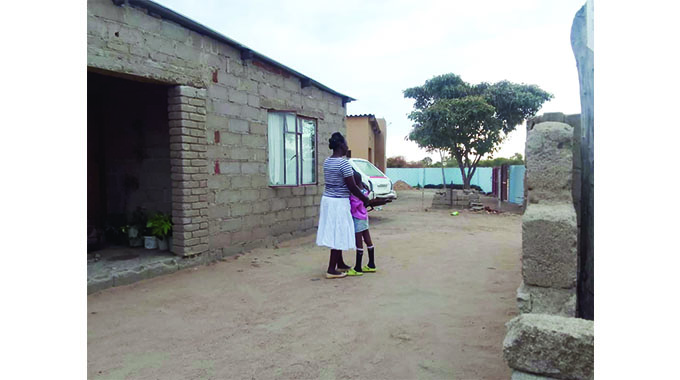
Flora Fadzai Sibanda, [email protected]
WITH her school bag still strapped to her back, nine-year-old *Lisa comes running into her mother’s arms with a wide smile that stretches from ear to ear.
She safely rests her head on her mother’s chest before they exchange pleasantries.
Her mother hugs and tickles her for a moment before she bursts into laughter. In the room are other people but they don’t seem to care as they share a special moment between mother and daughter.
Lisa eventually leaves the room to remove her uniform and have her lunch.
Many would think this is how every mother is expected to behave towards their child and there is nothing special about these two but there’s in fact something special about Lisa and her mother, Mrs Simangele Ndebele.
Mrs Ndebele who is from Tsholotsho is not Lisa’s biological mother but a foster parent who took her in when she was just two weeks old.
Despite sharing such a special bond with Lisa, Mrs Ndebele lives with the heartbreaking reality that she might have to separate with her foster child when a permanent home is found for her.
“I feel like just yesterday when my husband and I took in our daughter. The Social Welfare Department called and told me they had a new child who needed a temporary home and because I had always been doing it, I didn’t hesitate taking her in.
Nine years later, we’re still with her and I can safely say she is a happy child who has not been giving me trouble,” said Mrs Ndebele who started fostering children more than15 years ago.
In the past year, she has taken care of more than 35 children who all needed a temporary home before their relatives took them in or were legally adopted by other families.
She said although it has been blissful taking care of all these children, it sometimes breaks her heart when they have to leave because most of the time, it will be the last she will ever see of them.
“I only have one child from my previous marriage and because of circumstances that I can’t mention, I’m not in contact with her.
My husband and I were not blessed with any children so nurturing these foster children warms my heart and that’s why I sometimes get heartbroken when I have to let them go especially with the one I’m currently taking care of. We’ve been staying with her for so long so letting her go will not only break my heart but I’m afraid hers will also be broken,” said Mrs Ndebele.
She said being a foster parent takes a special soul as it can be very difficult taking care of a child who is not related to you.
“Being a foster parent is not easy but I can guarantee you it’s one of the best things that one can ever do. If anyone gets the chance to do this humble act, I would advise them to do it with lots of love and patience.”
Another foster mother, Mrs Margaret Nyathi said every child is different so one needs to take a different approach with each child so that they feel loved and at peace.
Mrs Nyathi said she has taken care of more than 40 children in the last 35 years.
Some are now married and gainfully employed, she said.
“It’s such a blessing to see the children grown up after having taken care of them. I sometimes lose contact with some of them just after they leave my home but I have always been lucky that most of the children look for me after they become independent.
They all still refer to me as mama because that is who I was to them during the short time they were here,” said Mrs Nyathi.
She said when she was still new to foster parenting, she used to have a hard time adjusting when the children had to leave but after some time, she taught her heart to accept the eventuality of separation as the children reunite with their families or are adopted into a more permanent set up.
Children are among the most vulnerable members of society and their upkeep and security are a matter of concern for everybody especially if they are to lose both parents.
The Covid-19 pandemic left some households with no source of income and sustenance creating even more insecurity and vulnerability for children.
The recent high death tolls seen in Zimbabwe due to the pandemic are a representation of the many children who are becoming orphaned almost over night accross the country.
This has made foster care and adoption all the more pertinent as more children require a safe home where they can grow and reach their full potential.
A social worker who spoke on condition of anonymity said a child should be in foster care for an average period of between 9 to 12 months so that both the child and the parent do not end up having attachment issues which cause an emotional strain when they have to separate.
He however said in some instances, a child may end up staying with one foster parent for years adding that it is always important that both parties are regularly prepared for separation and they are both counselled on separation so that they are not emotionally strained.
“The problem with keeping a foster child in one place for a long time is that when they are moved, the emotional wreck becomes too much and they have to master how to keep their emotions in check after learning how to live with a particular person for so long.
It also makes life difficult because the parent they knew will not be their parent anymore and it might be confusing if proper counselling is not given to a child as they might feel like no one loves them enough to keep them forever in one place,” said the social worker.
He said when a child lives in one place for long, they get used to that home and its rules and they might not understand the importance of following rules in the new place they are placed.
“There are a lot of therapy sessions that are supposed to be given to a foster child who will be moved from one place to another so that when they’re finally moved, they know how to manage their emotions correctly and adjust to the new place because if that’s not done, it becomes difficult for both the child and the parent to get used to the idea of being moved to a new place after staying in one place for such a long time.
It is important for foster parents to cut all communication with their foster children after separation so that they don’t hinder the progress of the child in adjusting in a new pace,” said the social worker.
The Social Welfare Department received and processed a total of 310 adoption applications from January 2015 to December 2017.
There are types of adoption that include de facto, whereby a couple jointly adopts a child belonging to the other spouse or is related to the other spouse, that is, where there is some prohibitive degree of consanguinity between the adopters and the child.
Under the non de facto adoption type, a couple or an individual adopts a complete stranger.
In Zimbabwe, as a way to ensure a child is not adopted by people with ulterior intentions, adoption requires extensive initial screening and court procedures.
To be eligible to adopt in Zimbabwe, parents should adhere to the Children’s Act (Chapter 5:06) Sections 57 to 75 which provide for the manner in which adoptions are carried out. — @flora_sibanda



 Online Reporter