Sundaymail Editor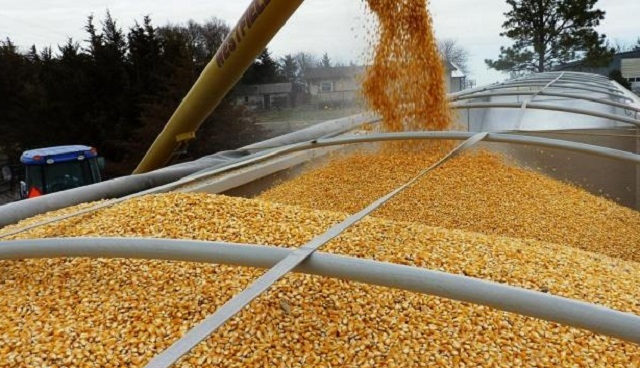
Clemence Machadu
IN his timeless song titled “Tsika Dzedu”, the late music legend Oliver Mtukudzi asks: “Kudya kwedu kuye kwakaendepiko?”, which loosely translates to “Where has our traditional diet gone?”
Tuku goes on to mention some of the traditional foods that are now virtually elusive in the local mainstream food system — the likes of manhanga, magada, bumbe rinenge nyama, munyemba and mufushwa.
You probably might have last tasted some of these ancient vittles a long time now.
Growing up in Zaka, I remember how we used to enjoy traditional delicacies such as rupiza, munamba, mbwirembwire, hwakwa and shomhwe. However, we no longer see much of these nowadays.
Sadly, some of these traditional foods are now being demonised and associated with barbarism, poverty and backwardness, much to their continued disappearance into oblivion.
Madzetse are demonised, harurwa is looked down upon, masonja are caricatured, tsenza is ridiculed — it is a whole catalogue.
Traditional foods are our shadow that we cannot run away from; they are a shadow that reflects our culture and identity, a culture shaped through generations.
I applaud the First Lady, Dr Auxillia Mnangagwa, who has been championing the consumption of traditional foods and promoting awareness on them, as well as their nutritional and medicinal benefits.
I believe that through such high-level advocacy, we are going to see more traditional foods being consumed and, in doing so, contributing to food and nutrition security.
Presently, there is excessive consumptive pressure on the few starches that are grown commercially such as maize, wheat, rice and potatoes. These starches are susceptible to adverse weather, such as the El Niño-induced drought experienced in the last summer season.
This also affects the production of our main sources of protein, such as beef, chicken and pork, as prices of feeds rise, while the shortage of water and pastures also results in livestock fatalities.
Increases in food prices are, therefore, inevitable, compromising the attainment of the United Nations’ Sustainable Development Goal 2 (SDG 2) — creating a world free of hunger by 2030.
According to assessments conducted by the authorities, a total of 7,7 million people in Zimbabwe, being 51 percent of the population, will require food assistance; while a further 4,5 million learners will need school meals. The authorities deserve to be applauded for taking measures to ensure that food is available to those in need.
A lot of money is going to be spent importing cereals such as maize and rice this year. Already, maize imports between January and April this year stood at US$162 million compared to US$42 million during the same period last year.
Rice imports during the first four months of the year also surged to US$60 million, up from US$46 million during the same period last year. As stated above, there is a lot of consumptive pressure on the few starches.
For instance, mealie meal is used to cook porridge in the morning, sadza in the afternoon and sadza again in the evening in some low- income households.
The same goes for sources of protein such as chicken, beef and pork, which become unaffordable for many as prices increase, possibly resulting in malnutrition.
The stark realities of climate change should compel us all to get down to brass tacks.
How sustainable is our current mainstream diet in light of the climatic vagaries that continue to manifest?
While conventional agricultural approaches have their limitations, some of which have already been alluded to above, there is one largely untapped resource that holds the key to fostering resilience and self-sufficiency — Zimbabwe’s forests.
There are a lot of neglected and underutilised food species in Zimbabwe’s forests that can be harnessed as sustainable supplements in the mainstream food system.
These are the very time-tested foods that have been consumed for many generations and have provided nutrition and medicinal benefits to our people.
Our nation is consuming a lot of processed food that contains artificial ingredients, have high sugar content and refined carbohydrates. Some of these processed foods have been linked to increased cancer risks, heart diseases, high blood pressure, diabetes and other health risks.
If we scale up harnessing of foods provided by our forests, this can contribute to food and nutrition security. At the same time, this will further contribute to more sustainable and resilient food production systems.
Sadly, most of these foods just rot in the forests every season without being harnessed and preserved for consumption.
Imagine how much hacha, matamba, makwakwa, masawu, maonde, mutsine, mapfura, mauyu, tsenza, majuru, ishwa, mandere, harurwa and hwiza that go to waste every season because we are not doing enough to optimally harvest them for sustainable consumption!
And while at it, millions of people will ironically be food-insecure!
This is not just a Zimbabwean phenomenon, as 815 million people worldwide are going hungry every day.
And with the world population projected to reach about 10 billion by 2050, and pressure continuing to mount on current food production methods, it also necessitates the need to explore foods that are neglected and underutilised in the forests.
The 2017 Food and Agriculture Organisation of the United Nations’s High-Level Panel of Experts on Food Security and Nutrition report titled “Sustainable Forestry for Food Security and Nutrition” called for greater recognition of the crucial role that forests and their diverse products play in supporting food security and improving nutrition, particularly for vulnerable and marginalised communities.
The document highlighted the untapped potential of wild-collected and forest-based foods, such as fruits, vegetables, nuts and game, to contribute to more sustainable and resilient food supplies.
The report further stressed the importance of incorporating sustainable forest management practices into food security and nutrition policies, ensuring that the harvesting and use of forest-based foods are done in a way that preserves the long-term health and productivity of these vital ecosystems.
The recently held 2024 South Korea-Africa Summit has also stressed the importance of enhancing sustainability to address global challenges, including climate change and food insecurity.
African Heads of State expressed their wish to advance cooperation on food security and sustainable agriculture.
We are now living in an era where commercially grown crops are becoming increasingly vulnerable to droughts, heatwaves and other extreme weather conditions. However, you will realise that forest-based foods are more resilient to these climatic shocks.
These indigenous foods are more adapted to our local climatic conditions and ecosystems and usually just grow on their own without being tended to.
These blessings of nature can, therefore, be harnessed to boost our food security as we seek to achieve SDG 2.
Other nations take pride in their food and are not ashamed of enjoying their traditional cuisines such as crabs, octopuses, prawns, lobster and snails.
The same foods have also been introduced in our local cuisines and are served in local hotels and restaurants, and people take pride in consuming them as status foods. However, our very own harurwa, madora, makurwe, nyenze and mandere are regarded as inferior.
We have all seen how our food import bill balloons astronomically during a drought year.
But imagine how much we could save in foreign currency by resorting to local substitutes found almost freely in the forests!
Going forward, it is crucial for the authorities to demystify traditional foods found in the forests by fostering awareness on them and highlighting their nutritional profiles and how to harvest and prepare them.
We must also develop systems to commercially process, store and distribute the forest foods, while also creating economic opportunities for rural communities and ensuring that they reach a wider scale, including hotels and restaurants.
The authorities must also prioritise the integration of forest-based food systems into their broader food security and climate adaptation policies and strategies.
We can build long-term resilience to climate change and other shocks by embracing the abundant food resources of our forests.
Clemence Machadu writes about socio-economic issues. Feedback: [email protected]



 Online Reporter