Online Reporter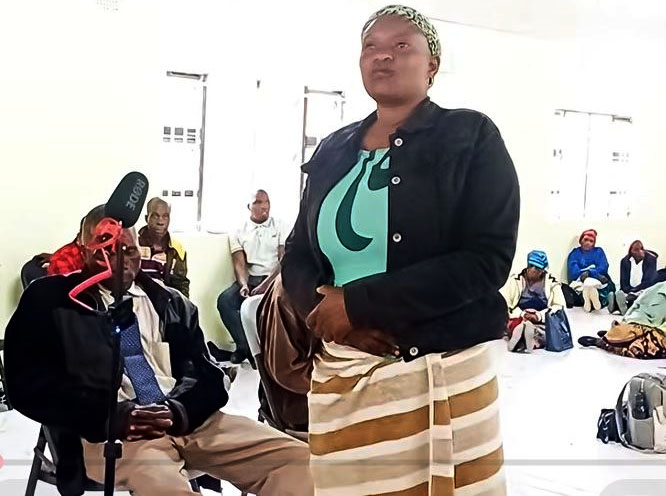
Tendai Gukutikwa
Weekender Reporter
A GWERU woman has turned to Chief Mutasa’s community court after her polygamous marriage allegedly collapsed when her husband disclosed that he was suffering from a sexually transmitted infection (STI) and reportedly refused to seek medical treatment.
Viola Konyana, the second wife of Shelton Jinja, approached the traditional court seeking intervention after Jinja allegedly abandoned her and initiated steps to end their marriage.
Konyana said the dispute had left her homeless despite the couple having jointly built a three-roomed house during their union.
She said the family, consisting of her husband and two wives, had previously lived together in South Africa before tensions began to emerge.
“We stayed together in South Africa, my husband and his two wives. The problems started becoming serious when Jinja began spending long periods away from our home in Gweru, claiming that he was travelling to Zvishavane for work,” she said.
Konyana said she became suspicious of her husband’s explanations because of his unusual routine whenever he claimed to be out of town.
“I found it strange that he would call me every day at around 6pm to say goodnight while supposedly away on business. When I questioned him, he would simply say he was tired and wanted to sleep early,” she said.
The situation allegedly took a dramatic turn when Jinja informed her over the phone that he had contracted an STI and no longer wished to continue the marriage.
“He told me he had an STI and that he was moving away. After that, he stopped coming to my house and it appeared as though he blamed me for the infection,” she said.
Hoping to salvage the relationship, Konyana said she later travelled to her husband’s workplace and pleaded with him to return home so they could address the matter together.
“He came home, and I asked him to show me the affected area so that I could better understand what was troubling him, but he refused,” she said.
Konyana further claimed that she became alarmed after noticing blood in his urine.
“I realised there was blood in his urine when he relieved himself in a bucket. I immediately urged him to seek medical attention, but he refused to go to hospital,” she said.
She said his refusal to seek treatment raised serious concerns about their health and future as a couple.
“I asked him how we could resume our marital relations when he did not even know what was causing the problem or was unwilling to get treatment. He responded by saying he would use three condoms. I refused, and I believe that is when the relationship completely broke down,” she said.
Konyana alleged that Jinja later removed her furniture from their home and dumped it at her late parents’ homestead, which is currently unoccupied.
She subsequently sought assistance from her mother-in-law, Shuvai Jinja of Honde Valley.
Konyana said her mother-in-law offered her support and encouraged her to remain strong during the difficult period.
“She told me to persevere and indicated that similar behaviour had allegedly been exhibited by my husband’s late father,” said Konyana.
The complainant further alleged that Jinja became displeased after learning that his mother had accommodated and supported her.
“This has been very painful for me, especially after enduring four miscarriages before eventually giving birth to our child,” she said.
Konyana said she felt she was being unfairly pushed out of a marriage into which she had invested years of commitment and sacrifice.
The court heard that the dispute had previously been brought before a civil court, where a default judgment reportedly granted Jinja ownership of the couple’s three-roomed house and most of the household property.
Konyana said she was ordered to vacate the property within 10 days.
She maintained that she failed to defend the matter because she did not receive the court summons on time, resulting in the default judgment being entered against her.
The ruling left her with only a bed, refrigerator and a few household items, while Jinja retained the house and the bulk of the property, she said.
However, although Konyana made allegations regarding her husband’s health condition, the traditional court was unable to verify the claims or establish the cause of the alleged blood in his urine, as Jinja did not attend the proceedings despite being expected to answer the allegations.
In her testimony, Shuvai Jinja dismissed suggestions that she had played any role in Konyana’s eviction.
“The court papers make it appear as if I am the one driving her away, yet I have stood by her throughout this dispute. I supported her and never sided with my son,” she said.
Presiding over the matter, Chief Mutasa advised Konyana to pursue the issue through the appropriate legal channels by challenging the civil court’s default judgment.
He directed her to approach the Legal Aid Directorate for assistance in applying for a rescission of judgment if she believed she had been prejudiced by the proceedings.