admin
admin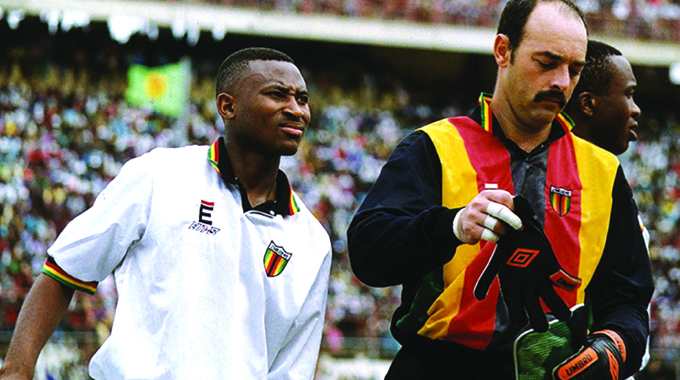
Phillip Zulu-Sports Correspondent
THE recent decision by the new ZIFA normalisation committee to freeze the parcelling out of all local coaching courses comes at a time when our football demands more urgent solutions that will give direction to a new vision of competitive modern intensive development curriculum that seeks to nurture competent coaches, footballers and administrators.
The shortcomings of the current system of coach education serves to remind anyone engaged in modern sport that local football needs urgent scrutiny and solutions that broaden the pathways of quality training and intensive learning to revolutionise coaching systems and modules that help to adapt to the global trends.
ZIFA need to remodel the system and the move by the normalisation committee to stop the courses should give way to a new approach.
By looking at the current FIFA world rankings, one has to ponder on our position — 128 — and proffer the possible reasons for this drastic freeze on coaching courses run by the technical department.
When a national football federation fails to articulate its long-term vision, goals, and targets, then this free-fall in world rankings becomes the order of the day.
We have been crying out for the formulation of our football philosophy for more than 10 years now, and it has fallen on deaf ears, without a pronounced system of coaching that underpins all national development programmes to bring uniformity in the agreed coaching and player training modules that measure both the technical and tactical inputs from the formative years of 5-9, adopt this newly acquired knowledge base for further development in the 10-14 year age group where serious proper intensive football integration is accelerated rigorously, disaster looms large in our football landscape.
Missing this DNA in our football structures has been a huge setback in trying to raise the local standards to a decent level.
The major discussion we had with the previous TDs was to build a functional football structure in Europe that is indexed in the developmental programs of the local top leagues such as the English Premiership League, where our coach education engagement with both the Germany Football Federation and English FA managed to produce more than 20 coaches who have a minimum of FA Level 2 and 8, qualified up to an equivalent of UEFA B Licence.
We adopted Futsal as a development tool that is applied in the early stages of coaching young players in their formative ages of 5-9.
The philosophy of our coaching modules based on the concept of Pass and Move, a highly competitive technical approach towards modern football demands by top professional clubs, increases awareness in decision-making of either dribbling in tight spaces or, selection of a first time pass with positive movement relating to the flow of the game, becomes supernatural and part of their DNA.
Coaching such players becomes critical, hence the call to establish a clear vision of how to develop our national grassroots structures using a standardised template that allows for the teaching of the fundamentals without putting pressure on results, encouraging both players and coaches to explore the instinctive intellect of solving problems in split seconds during preparatory stages of their small sided games routine training.
Until such a design construct is formalised in the grand architecture of our new football philosophy and DNA, our football is on a roller-coaster of disaster.
In 2010 I had an opportunity to participate in a UEFA B Licence course in Leeds and mingled with one Japanese coach working on an attachment with Huddersfield Town FC Academy where he was being mentored by the club to adapt to the demands of the course.
My discussions with him opened my mind as to the Japanese model then, was to build a vision of robust coach education modules that are influenced by the detailed guidelines on junior and youth football development for both boys and girls.
Today Japan has more than 20 players in top professional clubs in Europe.
Zimbabwe had Peter Ndlovu and Bruce Grobbelaar in 1992; contrast this scenario with Japan if we had taken their approach in terms of establishing a vision for their development programs that instil growth, raise standards in coaching systems and players, thus improving the football gamut of our sport.
In 2015 Zimbabwe Under-23 national team was invited by Morocco to play a friendly game that included the likes of Marouane Chamakh, a good player in the EPL then, our performance was splendid and the then coach Callisto Pasuwa was hugely impressed. Fast forward 2022, Morocco were semi-finalists at Qatar World Cup 2022 in men’s football and achieved major success in continental tournaments for their clubs and women’s football.
Zimbabwe is coming from a FIFA ban and ranked 128 on the global stage. Then one wonders why the coaching course program should not be suspended?
Morocco’s players can now be sold straight to Europe or anywhere in top leagues for lucrative fees way above €2m, something that has never happened in African football at any stage.
The quality player and coach bases in Morocco have improved significantly since 2015, whereas in our case, we are sinking to the lowest ebbs of poor standards.
Our education system has undergone two critical seven-year national periodic reviews since 2009 to identify, evaluate, and assess the possible grey areas of weakness in the delivery and affecting the offering of quality education.
We have never witnessed our Technical Department engaging in similar periodic curricular reviews (of coach education programs) that seek to identify areas of incompetence and failure at the earliest opportunity to allow for timely interventions that instil stability, growth and success.
By failing to align our coach education programs with the current curriculum review being undertaken by the education ministry, our local football continues to suffer collateral damage in both the human resource development under the NDS1 and, on the economic returns of global sport.
Phillip Zulu is a former Arcadia United football player, who is now into grassroots football development. He writes in his own capacity.


 Online Reporter