Online Reporter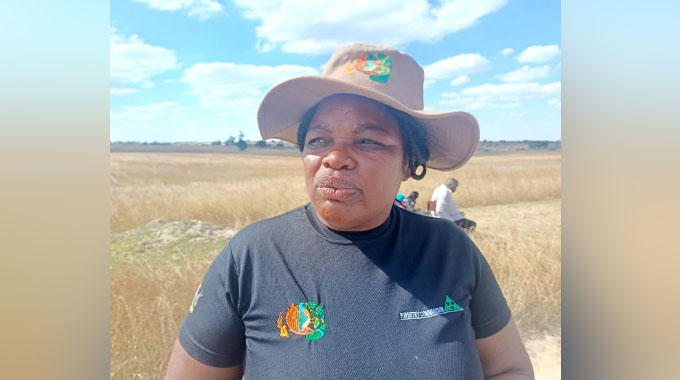
Patrick Chitumba, Midlands Bureau
A FEW metres from Poshayi Shopping Centre in Poshayi Village near the Tongogara Rural District Council offices in Shurugwi District, the earth drops away into a scar that keeps growing.
The gully started as a crack after heavy rains. Today, it is wide enough to swallow livestock, deep enough to swallow hope. It creeps closer each season, threatening the shops, the cattle path and the homes of families who have lived there for generations.
Two years ago, the land was almost bare. Wind lifted topsoil and carried it away. Rain carved the soil into trenches. Grass would not grow. The village started slipping towards a semi-desert. For many elders, it felt like watching a slow death.
That began to change in December 2023. With support from the government and the Global Environment Facility’s Seventh Replenishment (GEF7) Dry Lands Sustainable Landscapes Impact Programme, villagers led by the Poshayi Community Nursery started fighting back. One tree, one contour ridge, one stone wall at a time.
Mrs Revai Masusela, secretary of Poshayi Nursery, remembers the first day: 5 December, 2023. Thirty villagers from Marufu, Chanyuka and Poshayi villages gathered with picks, shovels and hope.
“We started digging holes. We planted trees but some died because water was scarce. In 2024 we planted again. Some died, others survived. We learned to bottle the seedlings so they could resist drought,” she said, her hands stained with soil.
The nursery now sits on one hectare. Over 50 000 trees have been raised and planted. There’s a borehole drilled by the Government and its partners through the Environment Management Agency (EMA).
The Forestry Commission is also offering guidance to villagers on proper ways of growing trees and maintaining the forests.
There are fire guards cut around every member’s homestead. There is pruning training and there is a plan: 350 000 trees for their area and agroforestry plots to give families food and income.
“Some 102 years ago, this was a forest,” Mrs Masusela said softly.
“But people moved during the Ian Smith regime and the trees went with them. We want them back. We are conserving the environment.”
The nursery is not just about saving soil. It’s about selling trees and hay bales. The Forestry Commission trained villagers to make hay bales from grass that could not grow before. Now that grass feeds cattle through the dry season. It is food, it is money, it is dignity.
Forestry Commission Officer for Shurugwi, Tendai Mudzinganyama, said the transformation is stark.
“Before we introduced tree planting, even grass was not growing. Now they are making hay bales, which are food for their cattle. They have planted over 10 000 trees and they have their own nursery.”
While the nursery grows trees, engineers are trying to stop the gully that threatens Poshayi Shopping Centre.
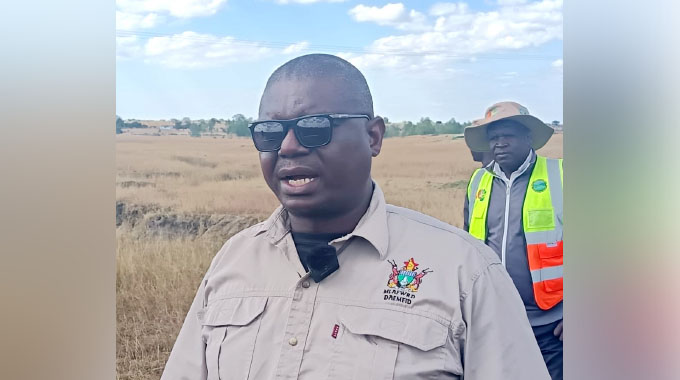
Engineer Andrew Mupariwa, Provincial Director of Agricultural Engineering, Mechanisation and Farm Infrastructure Development for Midlands Province, said the team is putting in contour ridges and stone structures to reclaim the gully.
“Gullies are reclaimed to halt severe soil erosion, protect infrastructure like roads and buildings, and recover lost agricultural land,” he explained.
“By slowing down rainwater runoff and trapping sediment, reclamation transforms dangerous, deepening trenches into stabilised, productive environments that secure local livelihoods and improve community safety.”
Contour ridges are raised strips of soil built across the slope, not up and down it. They act as natural dams and slow water. They let it sink into the soil instead of racing downhill with topsoil. They are simple, but they work.
“We are working on gully reclamation using stones to hold the water that will be running off,” said Engineer Mupariwa.
“We plan to plant 10 000 trees and put contours to slow down runoff that causes soil erosion. Over 200 hectares here are now bare because of deforestation. Poshayi Shopping Centre is under threat.”
The work started in 2023. It is slow, labour intensive and often done by hand. But the results are visible. Where there was only dust, there is now soil trapped behind stone checks. Where water once roared, it now seeps.
Headman Hativagoni Makanyera of Poshayi Village puts it plainly. “The gully is a threat to infrastructure, livestock and general livelihoods of the people,” he says. He chairs a village committee that works with government departments. The committee’s job is to keep people engaged, to stop illegal tree cutting and to ensure every household digs fire guards.
“This land fed our grandparents. We cannot let it die under our watch,” he said. The emotion in his voice is not anger. It is resolve.
The fight in Poshayi is part of a bigger battle across Shurugwi. The district sits in Agro-ecological Region III. Farmers depend on mixed rangelands and communal land for cattle and goats. Wealth and food security rest on grass.
But land-use changes — settlement expansion and subsistence farming — have degraded those pastures. Dense woodlands have shrunk. Bare, cultivated ground has spread.
Mr Oswald Ndlovu from EMA said the department is capacitating schools on sustainable land management and supporting rangeland restoration under GEF7 and DSLIP.
GEF-7 is dedicated to tackling urgent global environmental issues.
In Zimbabwe, the GEF-7 framework —including the Dryland Sustainable Landscapes Impact Program (DSLIP) — focuses on rehabilitating degraded landscapes, protecting forests and supporting rural farming livelihoods.
“Ward 13 had pits left by chrome miners. They were a threat to people and animals. We have been working on afforestation of the area,” Mr Ndlovu said.
He noted that the goal is not just planting more trees but it is promoting better grazing, healthier livestock and communities that can withstand drought.
“The DSLIP programme aims to boost agricultural productivity, improve livestock health and expand grazing pastures,” he said.
Assistant District Development Coordinator Mr Tavonga Mufarachisi said community buy-in is the key.
“We have been partnering with EMA since they started their project, making sure the community buys in for sustainability. This area was bare but now there is evidence of trees and soil.”
That evidence is what keeps villagers digging when their backs hurt. It is the green shoot after months of nothing. It is the sound of cattle eating hay in August instead of wandering in search of grass.
Land degradation is not just an environmental issue in Shurugwi. It is personal. It is the child who walks further for firewood. It is the farmer who loses a field to a gully and the fear that the next heavy rain will take the road, the school or a life.
The people of Poshayi, Marufu and Chanyuka know that fear. They have also learned that they are not powerless. Through the nursery, contours, stone walls and fire guards, they are rewriting the story of their land.
Mrs Masusela smiled when she talked about the future.
“We are doing agroforestry. We are conserving the environment. We benefit — knowledge and financially.”
For her, and for the 30 members of the nursery, the fight against degradation is also a fight for income through selling seedlings, hay and timber one day. The trees they plant now are an investment their children will harvest.
The gully at Poshayi shops is still there. It is still dangerous but it is no longer winning. Stone checks slow the water, grass is taking hold on the edges and trees are being planted upstream to soak up the rain before it becomes a flood.
Engineer Mupariwa is clear: reclamation is not a one-year job. It takes time, precision and constant maintenance. But every contour ridge, every tree, every stone placed is land recovered.
As the rainy season approaches, the stakes rise. Floods in Gweru and Shurugwi are often man-made — caused by blocked drains and stripped land. The work in Ward 12 is a warning and a promise. If you heal the catchment, you protect the homes below.
“The land was dying. Now it’s breathing again,” said a village elder Mr Thomas Mwale as he stood at the nursery.
“As you can see around us, seedlings are waiting in black bags to be planted in and around the village. As villagers of Poshayi, we cannot stop the rain, we cannot undo every year of deforestation overnight but we have decided that bare land will not be our legacy.
“We are planting trees, building ridges and teaching our children that soil is not dirt — it is life,” he said.
Mr Mwale noted that as the first green leaves push through the red soil of Shurugwi, there is a feeling in Poshayi that is stronger than fear. It is hope. Stubborn, practical, rooted hope.