Online Reporter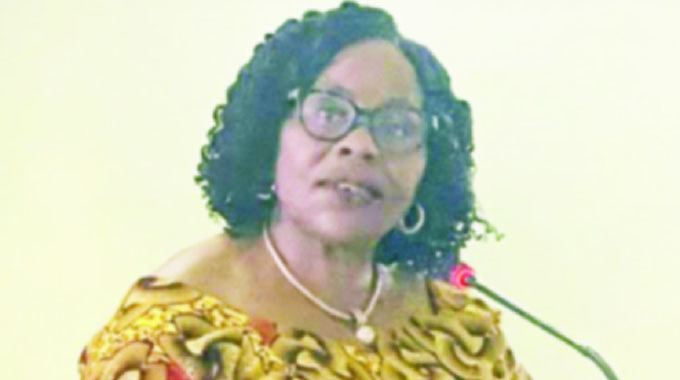
Kuda Bwititi in Beijing
The two-day Global Leaders’ Meeting on Women started in Beijing, China, yesterday, with the Minister of Women’s Affairs, Community, Small and Medium Enterprises, Monica Mutsvangwa, representing Zimbabwe.
Several Heads of State and dignitaries from around the world are attending the high-level event.
The conference is themed “One Shared Future: New & Accelerated Process for Women’s All-round Development.”
Delivering the keynote remarks at the opening ceremony, China’s President Xi Jinping called on all countries to create a peaceful and stable environment for women’s development.
The presence of Zimbabwe’s Minister of Women’s Affairs, Community, Small and Medium Enterprises, Monica Mutsvangwa, at the Global Leaders’ Meeting on Women in Beijing is a symbolic moment.
Commemorating the 30th anniversary of the landmark Beijing Declaration and Platform for Action, the conference serves as a poignant benchmark against which Zimbabwe’s progress can be measured.
In 1995, the Fourth World Conference on Women in Beijing was a watershed moment for the global feminist movement, with Zimbabwe being represented at the event.
The resulting Beijing Declaration and Platform for Action set a comprehensive agenda for achieving gender equality, moving beyond abstract principles to outline twelve critical areas of concern, including poverty, education, health, and participation in decision-making.
For a nation like Zimbabwe, the declaration provided an international framework to bolster domestic efforts. Since the Beijing Declaration in 1995, Zimbabwe’s journey reveals significant gains that align directly with the ambitions of the Beijing Platform for Action.
In agriculture, programmes such as the Pfumvudza climate-resilient scheme have boosted women farmers in Zimbabwe to forge new paths toward economic autonomy and sustainable farming.
Women are making waves in other key sectors of the economy, such as mining, energy, and tourism.
Perhaps the most notable achievement lies in the political sphere.
The Constitution of Zimbabwe (2013) stands as a monumental gain. Section 17 mandates the State to promote gender balance, and Section 56 enshrines full gender equality.
Additionally, the Constitution introduced a quota system (Sections 124 and 120b), which reserved at least 60 out of 270 parliamentary seats for women in the National Assembly.
This policy directly catalysed an increase in women’s political representation. Following the 2018 elections, women held 31,5 percent of the seats in the National Assembly, a figure that, while still below the 50 percent SADC goal, represented a substantial leap from previous years.
After the 2023 elections, female representation increased to 34 percent.
Beyond the political arena, Zimbabwe has made strides in legal and educational empowerment.
The enactment of laws such as the Domestic Violence Act (2007) provided a legal framework to combat gender-based violence, addressing one of the key barriers to women’s safety and autonomy.
In education, the Government has largely achieved gender parity in primary school enrolment, a foundational step towards long-term empowerment.
The number of female graduates at some universities is outnumbering their male counterparts.
Furthermore, the Education Amendment Act safeguards pregnant girls from expulsion and encourages female enrolment in Science, Technology, Engineering, and Mathematics through affirmative action policies.
Moreover, the establishment of a dedicated ministry, now encompassing “Community, Small and Medium Enterprises,” institutionalises the issue of women’s empowerment within the Government structure.
This has facilitated targeted programmes, often in partnership with NGOs and international donors, focused on women’s economic participation, particularly in the informal sector where they are disproportionately represented.
In June of this year, the Zimbabwean Cabinet approved the National Gender Policy (2025), a comprehensive framework designed to advance gender equality and empower women nationwide.
The policy aims to dismantle entrenched stereotypes and address the diverse needs of all groups, including persons with disabilities.
Structured around ten key goals, it prioritises critical areas such as legal justice, gender-balanced leadership, equitable economic empowerment, and the prevention of gender-based violence.
Other focal points include ensuring equal access to education, healthcare, climate-resilient solutions, and digital technologies.
Providing a clear roadmap for gender mainstreaming, the policy seeks to enhance coordinated planning, implementation, and monitoring across all sectors.
The Zimbabwe Gender Commission has been tasked with overseeing its execution, ensuring that these initiatives translate into tangible progress toward a more equitable society.
In a significant intensification of the campaign against gender-based violence, President Mnangagwa introduced the High-Level Political Compact on Eliminating Gender-Based Violence and Harmful Practices in 2021.
This commitment provided the foundation for the Zimbabwe National Strategy to Prevent and Address Gender-Based Violence (2023–2030), firmly establishing the eradication of such violence as a core national objective.
A major legal reform occurred in May 2022 with the harmonisation of marriage laws into the Marriages Act, which legally established 18 as the minimum marriageable age.
This provision effectively prohibits both child and forced marriages.
The same legislation mandates a minimum 15-year sentence for rape and aggravated indecent assault, with life imprisonment applicable for crimes involving aggravated circumstances.
Legal protections for survivors have been strengthened under the Domestic Violence Act of 2007, which offers survivors legal recourse and establishes long-term preventative measures.
Workplace rights have also seen progressive changes, with the Labour Amendment Act (2019) guaranteeing equitable working conditions for women.
This legislation aligns with International Labour Organisation Convention 190 by confronting violence and harassment, prescribing penalties that range from dismissal to imprisonment for offenders.
Complementing this, the 2022 Public Service Commission’s Sexual Harassment Policy represents a further critical step in combating harassment within professional environments.
For Zimbabwe, the path forward requires not only celebrating these legislative victories on the global stage but also redoubling domestic efforts to ensure that the promise of empowerment reaches every woman and girl, from the halls of Parliament to the markets and rural homesteads.
The Beijing conference provided the blueprint, and the ongoing work of implementation should continue in Zimbabwe.
Zimbabwe’s representation at this year’s Global Leaders’ Meeting on Women is a testament to its engagement with the global project of women’s empowerment.



 Bongani Ndlovu