Ray Bande
Senior Reporter
FOR years, stories have circulated that anyone who attempts to sell a pangolin inevitably ends up in handcuffs.
On the streets and in villages, some even joke that a pangolin moves around with its own detective, giving rise to the popular Shona saying: “Chinofamba nemuCID wacho.”
While the claim is rooted more in folklore than fact, one thing remains undeniable: people involved in the illegal trade of pangolins almost always get caught.
Known in Shona as haka, and in some regions as hambakubvu or harakabvuka, while Ndebele speakers call it inkakha, the pangolin occupies a unique place in both Zimbabwean culture and wildlife conservation.
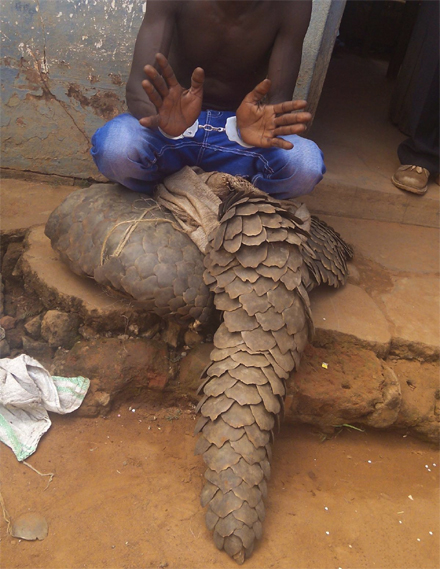
The shy, nocturnal mammal is covered in hard overlapping scales and survives largely on ants and termites, which it captures with a remarkably long, sticky tongue.
Unlike most wild animals, the pangolin has almost no means of defending itself. When threatened, it curls into a tight ball, relying on its armour-like scales for protection.
That strategy works against many natural predators.
Unfortunately, it also makes the animal easy prey for poachers, who can simply pick it up and carry it away.
For centuries, pangolins have been regarded as rare and special creatures.
In many African societies, including parts of Zimbabwe, they are associated with royalty, traditional leadership and spiritual significance.
Yet despite their cultural importance and protected status, they continue to be targeted by wildlife traffickers seeking quick profits.
This week, four suspects allegedly discovered just how costly that pursuit can be.
The accused, Tendai Simione Massimhonda (52), Rosario Balaque Jeque (66), Bento Neto Sicreta (30), all from Mozambique, and Shingirai Brown (41) from Tegwe Village under Chief Mutasa, were arrested while allegedly attempting to sell pangolin scales.
They now face charges of contravening Section 45(1)(b) of the Parks and Wildlife Act for possessing or dealing in trophies of specially protected animals.
According to investigators, detectives from CID Nyanga received information on October 22 that the suspects intended travelling to Honde Valley carrying pangolin scales reportedly destined for ritual use.
Acting on the intelligence, detectives teamed up with Parks and Wildlife officers and launched an undercover operation.
Posing as traditional healers and dressed in white ceremonial robes, the investigators arranged a meeting with the suspects through an informer who had pretended to be an aide to a traditional healer interested in purchasing the scales.
At around 9pm on October 23, the suspects reportedly arrived at Hauna Business Centre, where the undercover operation reached its climax.
Instead of securing a lucrative deal, the alleged traffickers found themselves in handcuffs.
The scales were seized and the four suspects arrested.
It was yet another chapter in a long list of failed attempts to profit from pangolins.
The pangolin possession arrests pattern is striking.
Many traffickers are arrested after being lured into seemingly attractive deals by undercover investigators posing as interested buyers.
The result is often the same: lengthy prison sentences.
In 2016, eight species of pangolins were granted the highest level of protection under the CITES treaty, rendering any commercial international trade completely illegal.
Countries like Zimbabwe and South Africa impose harsh mandatory jail sentences, often nine to 10 years, for mere possession.
Police in Manicaland warn members of the public against the illegal possession, hunting, killing, buying or selling of pangolins and their products.
Pangolins are specially protected animals in Zimbabwe, and anyone found unlawfully possessing a live pangolin, its skin or scales risks facing serious criminal charges.
Acting Manicaland provincial police spokesperson, Assistant Inspector Wiseman Chinyoka, said: “Unlawful possession of or trading in a pangolin or its trophy attracts a mandatory minimum sentence of nine years’ imprisonment. What should you do if you see a pangolin? Do not touch, capture, injure or kill it. Do not attempt to sell it or remove it from its natural environment. Keep a safe distance and allow it to move freely.
“Immediately report the sighting to the nearest police station or the Zimbabwe Parks and Wildlife Management Authority (ZimParks). If you suspect someone is keeping, trafficking or selling pangolins or their products, report the matter to the police. The ZRP urges the public to protect these endangered animals and cooperate with law enforcement agencies. It is important to note that no one have succeeded in terms of trading with this specially protected animal and several arrests have so far been made to those dealing with. Our detectives from CID Minerals, Flora and Fauna Unit are highly alert in terms of monitoring and detecting this cases.”
Zimbabwe National Traditional Healers Association (ZINATHA) president, Mr George Kandiero, said: “It (pangolin) possesses some spiritual significance and value. It is a crime even under local traditional customs to be found in possession of that animal. One can be made to pay a herd of cattle at a chief’s court for that. When you see many people who are found in possession of that animal being caught it tells you a lot about the spiritual significance or value that the animal possesses.
“It is like rhino horns. Very few successfully get away with it. When one finds it, they must hand it over to local traditional leadership or law enforcers. We are also told that it was mainly meant to be food for traditional leaders and the meat possesses some qualities that give the consumer longevity and healthy life.”
A cursory internet research revealed that the commercial and economic value of a pangolin varies dramatically depending on the location and whether it is sold by a local poacher, a middleman, or on the international black market.
As the world’s most heavily trafficked mammal, its total illegal trade network is estimated to be worth between US$19 and US$23 billion annually.
While local poachers sell it for a price ranging from US$300 to US$500, shady middlemen resell individual whole pangolins to consumers in urban or international markets for US$1 500 to US$2 500.
The scales are the most lucrative part.
Google research revealed that in countries (like Nigeria), scales can be bought for as little as US$5 per kilogramme. By the time they reach wholesale and retail markets in Asia, they command US$500 to US$1 800 per kilogramme.
Supposed uses, when its scales are ground into powder or roasted for traditional Chinese medicine and African traditional healing practices, purported to be able treat 42 or more conditions, including rheumatism, arthritis, asthma, skin diseases, poor blood circulation, and low breast milk production.
Be that as it may, medical research shows scales have no proven healing or medicinal properties.
Pangolin meat is a symbol of status, and considered a luxury food or delicacy in parts of Asia and Africa.
Its demand is as a result of it being eaten at high-end banquets or local bush meat markets, contributing significantly to unsustainable hunting.
In various regional traditional practices, blood, bones, and specific organs are used for spiritual protection, warding off evil forces, or financial and cultural rituals.
Pangolins are also used for decorations as the hardened scales are sometimes used to make jewellery or ritual ornaments.
Its poachers in Zimbabwe, like flies, foolishly continue being guests of the State for years!
Ends
From bush to jail: The pangolin trade’s predictable end