Ray Bande
Senior Reporter
MANICALAND Under-16 boys and Under-14 girls scooped gold medals in the just-ended BancABC Grassroots Impact Programme.
The Under-16 girls and Under-14 boys from Manicaland settled for silver medals.
This year witnessed the return of the Zimbabwe National Youth Games, where winners, Harare finished with 15 gold, 11 silver, and 14 bronze medals for an overall tally of 40 medals.
Manicaland and Bulawayo followed closely, each securing eight gold medals. Manicaland ultimately finished ahead on the overall medal count with 19 medals compared to Bulawayo’s 18.
On the international stage, Zimbabwe ended its FIFA Under-15 World Cup and Festival Group C campaign on a losing note after a 0-2 defeat against England in a match played in Baku, Azerbaijan.
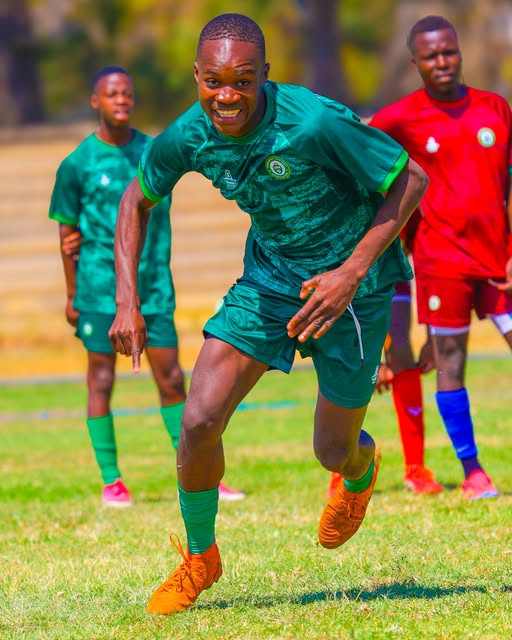
Four players from Mutare made the trimmed squad that travelled to Baku, and during the group stage, Sakubva United Soccer Academy starlet, Ngoni Tombo, scored a remarkable seven goals in a display of individual brilliance.
The list of tournaments where Manicaland excelled in national, regional and international football competitions is extensive. Yet, for reasons that continue to baffle observers, the province remains among the worst performers when it comes to top-flight Premiership football.
Its highest achievements in top-flight football remain the 1993 Tanganda FC Castle Cup triumph, Chibuku Super Cup won by Triangle in 2018, and Manica Diamonds’ historic second-place Premiership finish in 2023.
Beyond these milestones, the narrative is largely a difficult cycle of fighting relegation and ultimately getting demoted.
Just this season, both Manica Diamonds and Triangle kissed goodbye to Premiership football.
The persistent question remains – where does all this abundant talent go when they reach the senior ranks?
In simple terms, bottom-heavy structures concentrate more weight, volume, or visual focus in the lower tiers rather than the top.
The ZIFA Eastern Region mirrors this exact structural imbalance.
Weighing in on the administrative struggles, founding Manica Diamonds team manager, Ticharambana Zikai, cited constant turnover of technical and executive personnel.
“Changing of coaches and executive committee members when results are not coming is our biggest challenge. The problem we have here is that everyone wants to be a club executive committee or technical staff member. That is not realistic. In the end, it is unfortunate that those who feel sidelined because they not part of the administration or technical staff seek to destroy the project. That is bad. We end up losing the Premiership slot. We should support and respect those holding club administration and technical staff posts. This is what happens in other provinces. Clubs like Dynamos give the person in charge full support, but when one fails, they are removed. They would have enjoyed everyone’s support. You look at Manica Diamonds, we survived for a number of years because the club executive never changed. Do not just chase away people for nothing substantial,” he said.
ZIFA Eastern Region chairman, Simba Wisdom, cited systemic governance issues.
“The main challenges are administrative. This covers a host of issues like coach recruitments, which then culminate into player selections. The other issue is lack of meaningful financial resources, which is a key factor on the day-to-day running of a club. When Buffaloes was sponsored by Mbada Diamonds, they did extremely well. Manica Diamonds did well as they were well sponsored. They lured good coaches and some of the best players,” said Simba.
Former Manica Diamonds administrator, Owen Sango, echoed same governance concerns, stressing dangers of relying on single funding streams.
“In my opinion, one of the biggest problems is that many clubs depend too much on one individual or a single source of funding. When that support dries, the club struggles to stand on its own. Poor financial planning, lack of proper structures and failure to develop other sources of income contribute to the problem. The Eastern Region has a rich football culture, talented players and passionate supporters. Surely, we should be doing more to build clubs that can stand the test of time.
“I believe our focus should, not just be on getting clubs into the PSL, but also on making sure they have the right structures and resources to remain competitive and financially stable. We need to stop building clubs around individuals and start building clubs that can survive beyond individuals. A club should not lose its existence simply because one person can no longer afford to fund it. I think it is time we have an honest conversation about why this keeps happening, especially in the Eastern Region, and what we can do differently. We owe it to our supporters, communities and the future of football in our region to build clubs that will still be around for generations to come,” said Sango.
Cecilia Gambe highlighted institutional funding and executive competence as crucial missing links.
“Our teams are not staying in the PSL because of lack of sponsorship, especially for women football. The reason being that grants coming from FIFA for women football should be used for women, and the same for developmental grants. I also think we now have people with money. The people have come on board in football to revive football, but when they come, they should take seasoned football administrators to manage these clubs to survive. They should just demand results from an executive made up of football-oriented executive, not just stuffing colleagues into football management,” said Gambe.
ZIFA Manicaland vice-chairman, Gift Mapinda, identified recycling as a major developmental barrier.
“There is too much recycling from the coaches, players to the executives as well. Football has evolved from the old archaic system to a booming multi-million industry,” said Mapinda.
Munyaradzi Zinomwe emphasised urgency of strategic reform.
“We need serious soul searching for the Eastern Region. The demise of Triangle and Manica Diamonds to join the likes of GreenFuel and Bikita Minerals in the less fashionable Eastern Region Division One is a serious concern. Considering that all these teams are corporate backed raises alarm to the football public. We seem to be getting it wrong administratively and technically. Recycling of coaches is another factor. Players have become too nomadic such that every season teams are starting from afresh instead of continuity. Patience is needed to build a proper team which might put Eastern Region back on the map. Also, as a region, football indabas can be valuable as well where football think-tanks exchange notes,” said Zinomwe.
Why Manicaland football keeps failing