Tendai Gukutikwa
Health Reporter
ZIMBABWE is set to have nearly 300 trained family therapists as efforts gather momentum to tackle maternal mental health challenges and ensure women receive the psychological and emotional support they need during pregnancy and after childbirth.
The therapists, trained through the Society for Pre- and Post-Natal Services Zimbabwe (SPANS), are expected to strengthen community-based mental healthcare by identifying common mental health conditions, providing family counselling and linking affected women to specialised treatment where necessary.
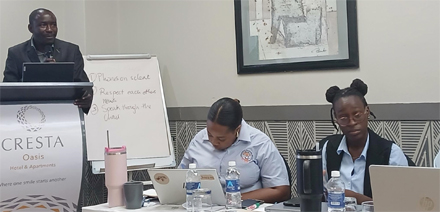
Speaking during a Mind Her Health media training workshop organised by the Community Working Group on Health (CWGH) last week, SPANS representative, Mr Linos Muvhu, said the initiative was introduced to bridge critical gaps in maternal mental health services across the country.
He said the organisation is preparing for its fourth graduation ceremony, which would bring the total number of trained family therapists to about 300.
“Through our partnership with the Ministry of Health and Child Care, we introduced a diploma programme to train family therapists who can help address mental health challenges within communities. We are approaching our fourth graduation, and we expect to have trained about 300 family therapists who are ready to provide support in Zimbabwe and beyond,” said Mr Muvhu.
He said the programme complements existing healthcare services by strengthening early identification, counselling and referral systems, particularly for women who often go without help because of stigma, lack of awareness or limited access to specialist care.
Mr Muvhu said the therapists are regulated by the Allied Health Practitioners Council of Zimbabwe and are attached to hospitals and clinics through the Ministry of Health and Child Care.
“The need is not only for specialist psychiatric services. A great deal can be done at community level where women live and interact with their families. We need people who can recognise when someone is struggling, provide appropriate support and help them access further care where necessary,” he said.
He noted that maternal mental health challenges can emerge during pregnancy and persist after childbirth, affecting a woman’s emotional wellbeing, relationships, daily functioning and ability to cope with the demands of caring for a newborn.
The perinatal period, which stretches from the discovery of pregnancy to 12 months after delivery, can expose women to conditions such as anxiety, depression and post-traumatic stress disorder.
Mr Muvhu stressed that family involvement is crucial in addressing maternal mental health challenges.
“Maternal mental health is a family issue. Women need support from those around them, including their partners and relatives. Family support plays a critical role in raising awareness, treatment and recovery,” he said.
He added that screening tools already available within the healthcare system should be used more consistently during antenatal and postnatal visits to ensure early detection and intervention.
Mr Muvhu said Zimbabwe has made notable progress in elevating maternal mental health on the national agenda through SPANS’ partnership with the Ministry of Health and Child Care and sustained advocacy efforts.
SPANS Assistant Programmes Team Lead, Ms Vongai Muzavazi, said the deployment of family therapists comes at a critical time when many mothers are silently battling mental health challenges with limited support.
“The provision of family therapists is very important because there has been a shortage of them in the country, while mothers are facing maternal mental health challenges every day,” she said.
Ms Muzavazi noted that public attention often shifts entirely to the newborn after childbirth, leaving mothers’ emotional wellbeing overlooked.
“When a woman gives birth, people usually ask how the baby is doing. We also need to ask how the mother is doing. She will be undergoing a major life transition, and her emotional and psychological wellbeing matters,” she said.
She explained that pregnancy and childbirth bring significant hormonal, physical and emotional changes, compounded by concerns about infant health, financial pressures, relationship difficulties and the uncertainties of parenthood.
Following childbirth, women must also cope with sleep deprivation, physical recovery and the demands of caring for a newborn, factors that can heighten emotional distress.
“Sometimes when a woman speaks about how she feels emotionally or psychologically, people dismiss it as just part of pregnancy. Yet she may be trying to communicate that something is wrong. We need to listen instead of dismissing her experience,” said Ms Muzavazi.
She urged women experiencing emotional or psychological difficulties to seek professional help without fear of stigma or judgment, stressing that early intervention can prevent conditions from worsening.
Ms Muzavazi said maternal mental health challenges are often driven by factors such as poverty, food insecurity, unemployment, intimate partner violence, relationship conflict, previous trauma and limited access to healthcare services.
She called for maternal mental health support to be fully integrated into routine maternal healthcare so that emotional and psychological wellbeing receives the same attention as physical health.
CWGH executive chairperson, Mrs Maria Chiwera, said maternal healthcare should go beyond physical wellbeing to include women’s mental and emotional health throughout pregnancy and the postnatal period.
“Maternal mental health conditions, including depression and anxiety, often remain under-recognised and poorly understood. Stigma continues to prevent many women from speaking openly about their experiences or seeking assistance,” she said.
Mrs Chiwera said improving awareness, strengthening community support systems and expanding access to mental health services would be critical in ensuring that mothers receive the comprehensive care they deserve.
300 family therapists ready to support mothers