Tendai Vambe
Post Reporter
FOR many former inmates, the journey back into society is often marked by stigma, rejection, and the struggle to rebuild their lives.
Yet, for 52-year-old Mr Stephen Shamu, of Nyadongo Village in Dora, Mutare, life after prison has begun with a rare opportunity to turn a long-held dream into reality.
Through a piggery start-up initiative, the Zimbabwe Prisons and Correctional Service (ZPCS), has given Mr Shamu more than just a sow.
It offered him a chance to rebuild his livelihood, restore hope, and prove that a past mistake does not define one’s future.
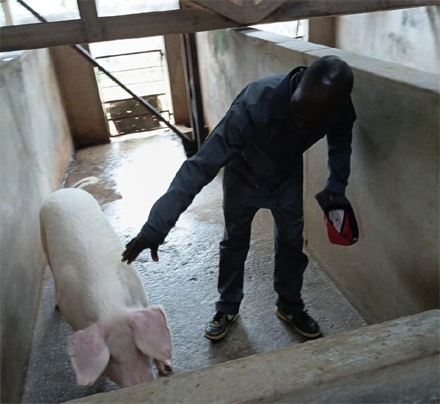
Mr Shamu received a serviced sow from ZPCS Commissioner-General, Dr Moses Cyril Ngawaite Chihobvu, following his release from prison.
The pig, procured from Mutare Farm Prison, was handed over by the farm’s Officer-in-Charge, Superintendent Mercy Tsodzo, on behalf of the Commissioner-General.
The gesture represents a practical approach to rehabilitation, one that recognises that successful reintegration requires more than the completion of a prison sentence.
For former inmates, access to opportunities that promote self-reliance is a crucial step towards rebuilding their lives.
Mr Shamu’s journey towards this opportunity began while he was serving a sentence for fraud at Mutare Remand Prison.
During his incarceration, he worked with the ZPCS Building Brigade on the construction of Chimbike Clinic under the Service’s Corporate Social Responsibility programme.
It was through this work that his path crossed with Dr Chihobvu, who visited the construction site and was impressed by his work ethic.
When the Commissioner-General asked how he could assist him, Mr Shamu expressed his desire to venture into pig farming, a dream he had nurtured long before his incarceration.
That conversation opened the door to a new beginning.
“I always wanted to venture into piggery projects before I was incarcerated. I never knew that this is what the Commissioner-General was planning for me. He has blessed, not only me, but my family as well. This project will not fail,” said Mr Shamu.
For a man seeking to rebuild his life, the support carries both economic and personal significance.
The project offers an opportunity to earn an income while contributing to the family welfare, allowing him to approach life after prison with renewed determination.
Dr Chihobvu urged Mr Shamu to make good use of the opportunity, assuring him that the correctional service will continue to monitor and support the project.
“This sow is a major boost towards your piggery business. This venture will support your family and the community as well. As ZPCS, we will be there to monitor and support you through this project,” he said.
Mr Shamu also expressed gratitude to Officer Commanding ZPCS in Manicaland, Commissioner Spetosomusa Chinobva, whom he credited with facilitating his participation in construction projects across the province during his incarceration. These opportunities enabled him to demonstrate his abilities and contribute to community development.
However, beyond the promise of income generation, Mr Shamu’s story highlights another vital aspect of rehabilitation and the role communities play in giving former inmates a second chance.
ZPCS Manicaland Rehabilitation coordinator, Correctional Officer Grade Three Edwell Mariga, appealed to community members to welcome Mr Shamu and support his efforts to establish the piggery project.
He noted that community acceptance is essential to ensure that rehabilitation initiatives achieve their intended purpose, warning that marginalising former inmates can undermine efforts to help them rebuild their lives.
Village head Face Katoma also welcomed Mr Shamu back to the community, encouraging him to use the assistance responsibly.
She acknowledged his past wrongdoing, but noted that he had previously maintained good relations with those around him.
Her remarks reflect the importance of looking beyond a person’s criminal past and recognizing their potential to make a positive contribution to society.
As Mr Shamu embarks on his piggery project, the real test lies in transforming initial support into a sustainable livelihood.
With commitment, guidance, and community backing, the sow can become the foundation of a thriving enterprise.
It marks an opportunity to begin anew, rebuild his family’s future, and demonstrate that with proper support, a former inmate can become a productive member of society.
For ZPCS, the initiative underscores how rehabilitation extends beyond prison walls through practical skills, entrepreneurship, and economic empowerment.
Sometimes, a second chance begins with a single opportunity.
Ex-inmate’s second chance on four legs