Online Reporter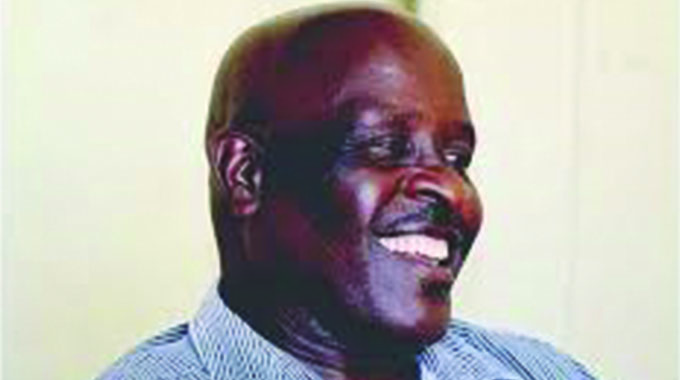
Raymond Jaravaza, [email protected]
ON a seemingly ordinary Tuesday morning in October 1975, while dipping cattle in Beitbridge District, 16-year-old Cde Wilson Dube made a fateful decision that would alter the course of his life.
Until that moment, the thought of leaving home to join the armed struggle against colonial rule had not crossed his mind. However, inspired by his cousins’ plans to escape Rhodesia for Botswana, Cde Dube felt an irresistible pull towards the fight for freedom.
Born on September 11, 1959, at Manama Hospital in Gwanda District, Matabeleland South Province, Cde Dube spent his early years in Malibeng before returning to his father’s home in Nhwali.
His visit to Malibeng that October led him to overhear discussions among older boys about crossing into Zambia. Initially they dismissed him due to his age which was 16 at the time but Cde Dube’s persistence paid off when they eventually agreed to let him join their perilous journey.
“Doubts lingered about my trustworthiness due to my age and the presence of Rhodesian security forces near my home in Nhwali. Eventually, the group relented and my journey to liberation officially began that morning, right from the community dip tank,” he recounted during a recent interview at his home in Mpopoma suburb.
The group set out towards the Shashi River, crossing into Botswana under the cover of darkness at around 4AM.
Their survival depended on finding grazing areas known as imilaga yamaTswana, where they sought directions from local herders.
“We had to locate those grazing areas so that they could guide us on the safest route,” Cde Dube said.
They were guided by a local man who had previously fled Rhodesia, making their journey safer and more assured.
The group stayed at Bononge before moving to Selibe-Phikwe where they found a number of people who were coming from other areas such as Kezi and Plumtree.
After a brief stay in Francistown, they were flown to Zambia.
Upon reaching Zambia, Cde Dube was assigned the pseudonym Cde Jonas Donga and began rigorous military training under esteemed instructors like the late national hero Cde Stanley Gagisa.
“From the airport, we were taken to Nampundwe Transit Camp, and it was there that we realised that training camps were no child’s play. We only spent three days at Nampundwe before moving to Mwembeshi for the real military training,” he said.
Cde Dube and other recruits were physically conditioned to survive the rigours of the liberation struggle where he trained with the now Major-General (Retired) Stanford Khumalo and the late Ngoni Dutsa among others.
His commitment led him to further training in the Soviet Union in 1976, where he specialised in military engineering — skills that would prove invaluable on the battlefield.
“In Russia, I trained in military engineering, learning about the manufacturing and composition of explosives. After six months, I returned to Zambia, and the skills I acquired were crucial in sabotaging enemy infrastructure, including bridges,” said Cde Dube.
His leadership qualities emerged as he commanded both Zipra and Zanla forces during critical operations in Mashonaland Central Province, an operational area code named Northern Front Three (NF3).
“We were tasked with dismantling enemy strongholds,” he shared with pride, recalling a particularly successful mission against the Mushumbi Pools garrison.
On the frontline of the liberation struggle, Cde Dube commanded a Zipra unit that operated in Mashonaland West.
“We were deployed inside Rhodesia, and I remember crossing the Zambezi River during the rainy season between 1977 and 1978. The directive from our commanders was clear — cross into Rhodesia and fight the enemy,” he said.
After Zimbabwe gained independence in 1980, Cde Dube chose not to join the newly formed Zimbabwe National
Army. Instead, he returned to Manama to pursue his passion for cattle rearing — a commitment he maintains to this day.
“My message to today’s youth is one of empowerment. Take advantage of our hard-won freedom and remember education and entrepreneurship are your keys to success,” he said.