Online Reporter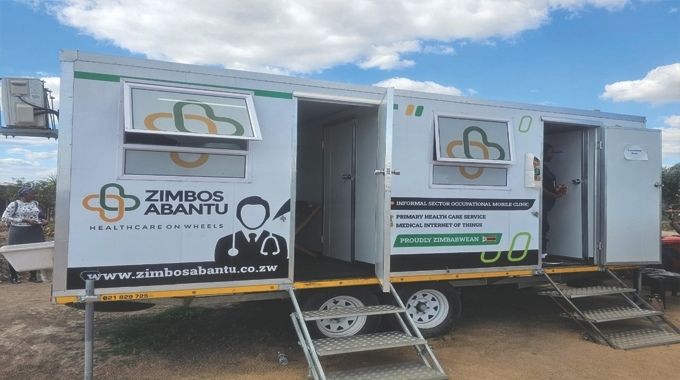
Robin Muchetu, [email protected]
The Government’s National AIDS Trust Fund (AIDS Levy) is proving to be a critical lifeline for communities in Bulawayo, with thousands of residents in Cowdray Park accessing free healthcare services aimed at addressing the growing burden of non-communicable diseases (NCDs) among people living with HIV.
As people living with HIV grow older, many are increasingly battling conditions such as cancer, diabetes, hypertension and asthma, creating a need for integrated healthcare services. Through the Zimbos-Abantu Health Care on Wheels programme, implemented in partnership with the National AIDS Council (NAC), more than 8 900 residents have received free medical care since the initiative was launched in August 2025.

Cowdray Park, Bulawayo’s most populous suburb with more than 78 000 residents, is among the areas benefiting from the programme.
Chief executive officer and founder of Zimbos-Abantu Health Care on Wheels, Mr Tawanda Mushawedu, said the project, which is being implemented in conjunction with NAC, demonstrates how the AIDS Levy is being effectively utilised to address the health challenges facing communities.
“NAC is ploughing back into the communities through the proper management of the AIDS Levy. It is this fund that is being ploughed back to the people. Residents save US$15 for consultation fees, if you multiply that by 8 900 residents, that’s a lot. This is a good saving for the residents.
“This money can be ploughed back for other household uses. This is how we breakdown the impact of the programme in Bulawayo and other communities,” said Mr Mushawedu.
He said the organisation focuses on providing primary healthcare services to communities that are often underserved.
“This is usually where there is no health care facility at all or if there is, there is too little for the population that is there. Here in Cowdray Park the health facilities are there but too few for the huge population. So, we are coming in to bridge that gap,” said Mr Mushawedu.

Residents visiting the mobile clinics also receive free diabetes screening, with the organisation having conducted more than 5 000 screenings.
“Ordinarily one would need to pay for that screening but NAC is providing the platform and the utilities and commodities for us to use as a social contracting partner. Communities are avoiding the cost of owning a glucometer, glucose strips, all that cost is being kept in the pocket of the recipient of care,” said Mr Mushawedu.
“They would have paid about US$3 had they gone to a pharmacy. At this point we will have saved US$18 for the patient through the good use of the AIDS Levy in the context of integrating NCDs with HIV health care.”
He explained that patients also save money that would otherwise be spent travelling to health centres for blood pressure checks.
“In this regard we have impacted over 10 000 people we have screened for BP and that is another US$1 kept in the pocket of the recipient of care. STI screening is also available at our clinics, which would cost a client about US$3,” said Mr Mushawedu.
“Prostate cancer screening is also available at no cost, a man could have paid about US$15 for screening at other institutions, leaving this cost now at US$38 when we add all costs a person incurs,” he added.
The mobile clinics provide a one-stop service, allowing patients to access two or more services free of charge during a single visit.
Mr Mushawedu said that in the face of dwindling donor funding, the AIDS Levy has become crucial in ensuring continued access to healthcare for people living with HIV, enabling the payment of doctors’ consultation fees and the employment of healthcare personnel.
The partnership between Zimbos-Abantu and NAC is also providing communities with health education during outreach programmes, as well as free cervical cancer screening for women. Mr Mushawedu praised the support received from the Cowdray Park community, saying the programme’s success depended on community acceptance.
“The community is playing a critical role in providing water that is used by the mobile clinic and a local church within the vicinity of the church offers the clinic its toilet for use,” he said.
“The clinic is manned by a doctor, registered general nurses, nurse aides, community health mobilisers and several others who ensure the community accesses health care.”
Mr Modern Sibanda, chairperson of the Bulawayo Urban Residents Association in Ward Six, Cowdray Park, said residents had welcomed the initiative.
“We realised that in ward six the nearest clinic is too far, their being here reduces the distance that we walk to access health care,” he said.
“We are being treated for various diseases like hypertension, diabetes and prostate cancer free of charge. When we purchase tablets from her they are much cheaper than in private pharmacies so it is a good thing for us,” said Mr Sibanda.
Mr Nicholas Ngwenya, of Segment 11 in the Empompini area, said the mobile clinic had brought more than healthcare services to the community.
“Zimbos-Abantu introduced projects that are sustaining the community, they came with incubators and also health clubs were resuscitated and people have joined them,” he said.
Community members said they jealously guard the clinic and ensure that it is not vandalised because it provides healthcare services that would otherwise cost them significant amounts of money.
The organisation also operates another mobile clinic in Emganwini suburb, where residents are accessing free healthcare services.
Mr Mushawedu said the social contracting programme seeks to provide a safety net for underserved communities.
— @NyembeziMu
CKD NT